Tanzy Ward's new book reclaims Black Victorian and Edwardian jewelry history
Tanzy Ward’s new book brings Black Victorian and Edwardian jewelry codes back into view, from lockets and mourning pieces to personalized adornment that still feels wearable now.

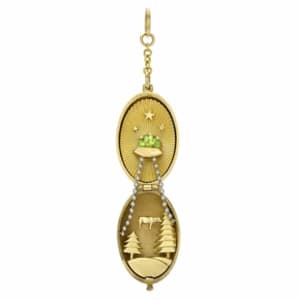
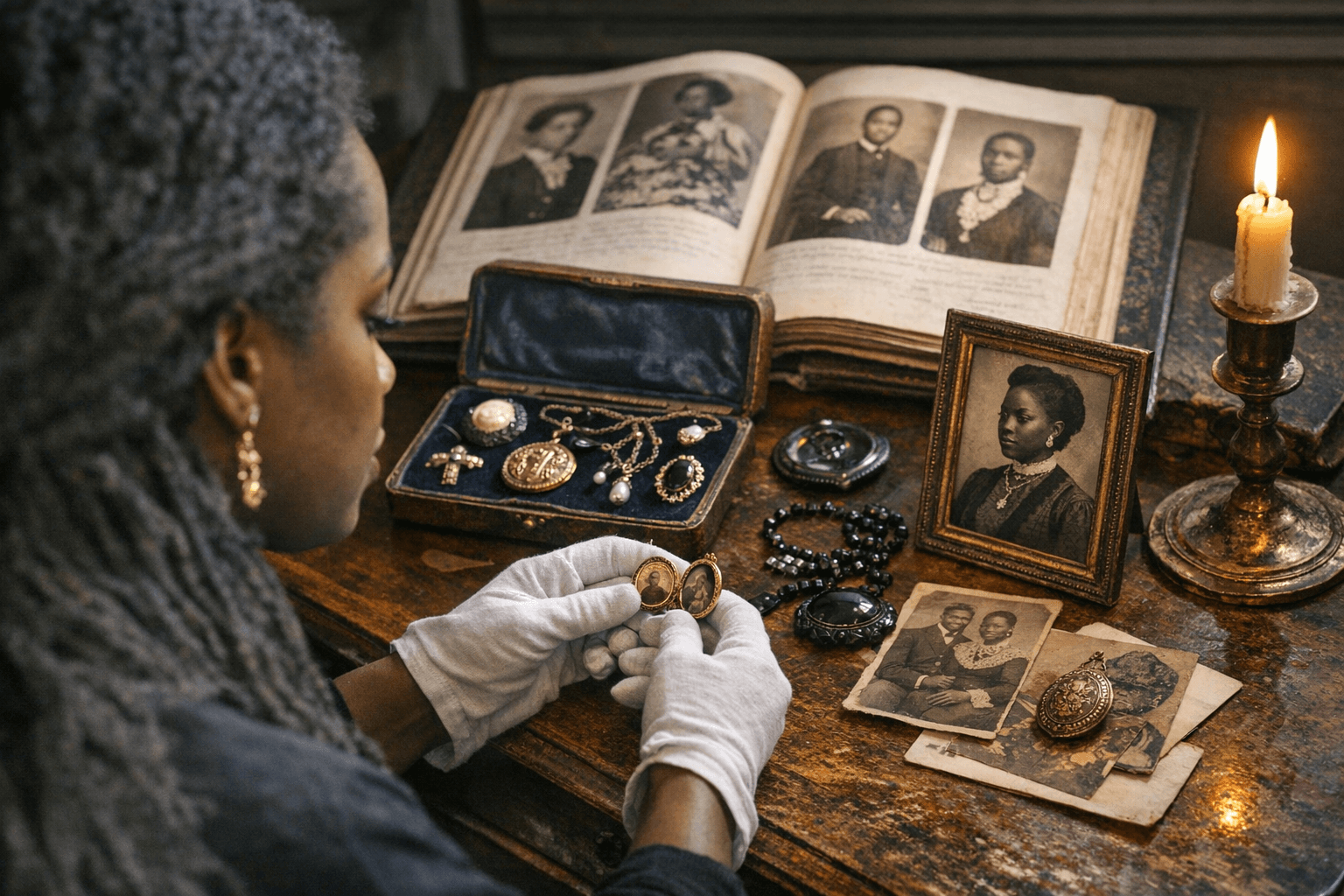
A locket, a brooch, a chain and a mourning pendant were never just decoration in Tanzy Ward’s reading of Black Victorian and Edwardian style; they were portable records of identity, grief, status and taste. Ward’s new book, Precious Black Jewels: The Bijou Material Culture of Black Victorians & Edwardians, pushes those details back into the center of jewelry history and makes a strong case that the archive still has something to say to the everyday jewelry box.
Ward released the book earlier in 2026 as her third title. She is an antique jewelry dealer and preservationist, and her work has long focused on bringing Black Americans into the story of decorative arts instead of leaving them at the edge of it. Her earlier books, Hidden Legacies: African Presence in European Antiques, published in 2020, and Unsung Portraits: Anonymous Images of Black Victorians and Early 20th Century Ancestors, published in 2022, set up the same mission: recover the people and objects that traditional histories have missed.
The timing matters. The Victorian era ran from 1837 to 1901, the reign of Queen Victoria, and the Edwardian years followed into the early 20th century, commonly dated to 1910 or 1915 in jewelry references. That span covers nearly 80 years of ornament in which jewelry could signal mourning, social standing, faith, family ties and personal style. Ward’s book places Black wearers inside that visual language, not outside it.
For readers thinking in wardrobe terms, Ward’s subject offers a clear set of working principles. Lockets still carry the power of private keepsakes. Brooches still give a blazer, coat or knit a quick point of view. Chains remain the most versatile bridge piece, moving easily from solitary wear to layering. Mourning jewelry, with its sober symbolism, reminds modern buyers that sentiment can be sharp-edged and beautiful at once. Personalization, meanwhile, still turns jewelry from accessory into declaration.
Ward has also brought the project into public view through a January 21, 2026 lecture and signing at Hapeville Depot Museum in Hapeville, Georgia, where the museum said Black Victorians and Edwardians have long been absent from authentic decorative-arts narratives. Her published materials also connect her work with the APEX Museum, Cherokee County History Center, Yale University Divinity School and National Jeweler Magazine, underscoring how broad the interest in this history has become.
Ward’s argument is bigger than a single period book. It says Black jewelry history was always there, built into the objects people wore closest to the skin, and that those same forms still offer a practical vocabulary for dressing with memory, intention and care.
This article was produced by Prism’s automated news system from verified source data, official records, and press releases, then run through automated quality and moderation checks before publishing. The system is built and supervised by the people who set the standards it runs under. Read our full AI policy.
Did this article answer your question?