Timeless Jewelry Essentials That Elevate Every Day Style
A small jewelry wardrobe should earn its keep daily, with pieces that hold up to real life, carry meaning, and polish even the simplest outfit.
A jewelry wardrobe should work like a well-cut coat
The smartest collection is not the largest one. It is the one that moves from morning errands to dinner without asking for special treatment, the kind of pieces that can handle handwashing, commuting, cooking, gym bags, humidity, and daily skin contact without losing their shape or their appeal. That practical idea sits inside a serious market: Statista values the global luxury jewelry market at about 31 billion euros in 2024, and the U.S. jewelry market at about 63 billion dollars in 2023, while Signet Jewelers reported more than 7.1 billion dollars in 2024 revenue. Jewelry is clearly more than a finishing touch. It is a category built on habit, desire, and repetition.
A useful everyday collection starts with a simple question: what job does each piece do? One pair of earrings should provide instant polish. One chain should disappear into outfits and reappear as the quiet backbone of a look. One ring should withstand constant wear. One bracelet or layering piece should add movement without becoming precious. Once that logic is clear, the best purchases stop feeling aspirational and start feeling architectural.
Jewelry has always done more than decorate
The Metropolitan Museum of Art has long framed jewelry as something charged with meaning, noting that it has been worn for millennia to adorn, empower, and protect. Its exhibition Jewelry for America, which ran from June 10, 2019 to May 9, 2021, traced three centuries of jewelry in this country, while the catalog Jewelry: The Body Transformed described jewelry as capable of extending, accentuating, concealing, or transforming the body. That is the deeper reason a small collection matters: the right pieces do not just sit on you, they shape how you are read.
This helps explain why everyday jewelry should never be treated as an afterthought. A slim gold chain can sharpen a T-shirt. A single ring can make a hand look finished in a way polish alone cannot. A pair of studs can make a face look awake in seconds. The pieces you wear most become part of your visual language, which is why they deserve the same scrutiny you would give a coat, a bag, or shoes.
Start with the workhorse earrings
If there is one category that earns immediate rotation, it is earrings. Bergdorf Goodman’s classic-jewelry guide places diamond stud earrings among its timeless staples, and for good reason: they are the most efficient form of polish in jewelry. Studs sit close to the ear, avoid snagging, and work with everything from a blazer to a knit sweater, which makes them especially useful for readers who want one pair that can survive a crowded week.
For daily wear, construction matters as much as sparkle. A low-profile setting is easier to live with than something that catches on scarves or hair, and a secure backing matters if earrings are going to be worn often. Diamond studs remain the cleanest answer for maximum versatility, but if your wardrobe leans softer or more romantic, pearl studs or small hoops can play a similar role with a different mood.
Choose one chain that can do most of the work
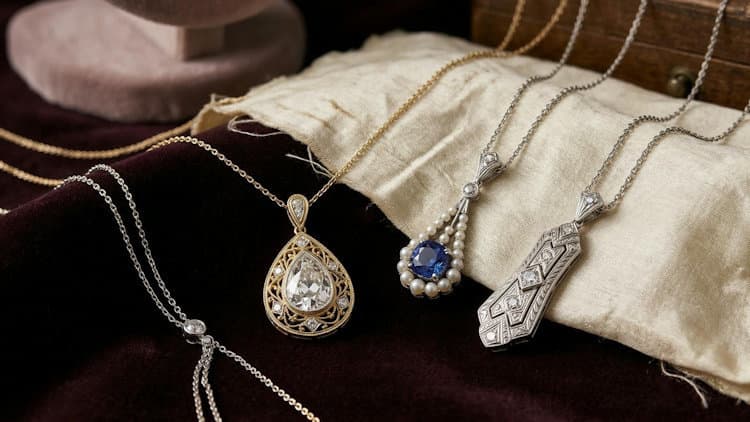
A gold chain is the quiet hero of a small jewelry wardrobe. Bergdorf Goodman includes gold chain necklaces in its essentials list, and that makes sense because a good chain can be worn alone, layered, or used to anchor a pendant later. It is the piece that can move from a white shirt to a silk top without needing a costume change.
If you wear jewelry every day, choose a chain for durability as much as style. A solid, well-made link will outlast a delicate chain that feels airy but behaves like a liability. A medium-weight chain also gives you options: it can sit close to the collarbone for a clean line or be lengthened to layer with a second necklace. For readers building slowly, this is often the first major purchase worth making after earrings because it earns repeat wear across seasons and dress codes.
A ring should be beautiful enough to forget and sturdy enough to keep on
Bergdorf Goodman’s list also includes sterling-silver signet rings, a smart reminder that the best ring for daily life is often one with a strong shape and a relatively low profile. A signet ring has presence without requiring delicate handling, which is exactly why it suits everyday wear. It is also one of the clearest examples of jewelry that feels personal without being fragile.
For a ring you plan to wear constantly, the setting and the height matter. A bezel setting, which frames a stone in metal, is generally better suited to an active routine than a higher, more exposed prong setting because it protects edges and resists snagging. If your hands are constantly in water, soap, or motion, that practical difference becomes obvious quickly. The goal is not to baby the ring, but to choose one that can live with you.
Add one piece for texture or softness
Not every everyday collection needs the same visual temperature. A pearl necklace brings softness, and Bergdorf Goodman’s classic-jewelry guide includes it for exactly that reason: it can read formal, but it can also calm down a simple sweater or shirt. A tennis bracelet, also on Bergdorf Goodman’s list, adds a clean line of light at the wrist and works beautifully when you want just enough sparkle to register without overtaking the outfit.
These are the pieces that reward restraint. A pearl strand looks most modern when it is worn with ease, not ceremony. A tennis bracelet becomes especially elegant when the rest of the wrist is uncluttered. Both can bridge daytime and evening, which is why they belong in a small collection only if they fit the way you actually dress. If your life is highly physical, a bracelet with a secure clasp and a lower profile will be more realistic than something decorative but fussy.
How to prioritize the first purchases
For a limited budget, begin with the piece that solves the most problems. If you need instant polish, buy the earrings first. If your wardrobe is built around shirts, knits, and tailored basics, a gold chain will do more work than almost anything else. If you prefer one signature object, a signet ring gives you daily character without demanding attention.
If you have room for a second layer, add a piece that changes the mood of the others. That might be a pearl necklace for softness, a tennis bracelet for luminosity, or a second chain for depth. The key is not to duplicate effects. A small collection feels expensive when each piece has a different function, not when everything is merely shiny.
Why sustainability and vintage matter now
The market is also shifting toward values as much as aesthetics. Statista notes rising demand for ethically sourced diamonds and sustainable materials, and also a resurgence in vintage and antique jewelry. De Beers Group says sustainability considerations are influencing jewelry decisions, and that diamond jewelry is increasingly seen as both a versatile accessory and a desirable gift. Those are not minor changes. They suggest that more buyers want pieces that can be worn often, loved for years, and traced to responsible origins.
That makes vintage especially compelling for an everyday wardrobe. A well-chosen antique or pre-owned piece often brings better character than something bought solely to look new, and it can be easier to justify when you are building slowly. The best jewelry wardrobe is not assembled in a rush. It is edited until every piece has a clear purpose, a real-life role, and the kind of beauty that improves with repetition.
A small collection built this way is not minimalist for the sake of restraint. It is intelligent, durable, and personal, which is why it still feels right after the outfit has changed and the day has already begun.
This article was produced by Prism’s automated news system from verified source data, official records, and press releases, then run through automated quality and moderation checks before publishing. The system is built and supervised by the people who set the standards it runs under. Read our full AI policy.
Did this article answer your question?