Town & Country Jewelry Awards spotlight Cartier, Louis Vuitton, Tiffany and more
Town & Country’s jewelry awards point to the next wave of wearable luxury: panther motifs, botanical lines, talismanic stones, and stackable bracelets.
The new luxury signal is not volume, but recognition
Town & Country’s jewelry awards land like a style forecast. Framed as part of the magazine’s 180th anniversary celebration and dedicated to “the mavericks and visionaries shaping the jewelry world today,” the package makes a clear point: high jewelry is no longer just about scale, but about the motifs and house codes that can be distilled into pieces people want to wear often. Cartier, Louis Vuitton, Tiffany & Co., Van Cleef & Arpels, Chopard, and Bulgari all sit inside that conversation, but the strongest everyday clue is simpler: the motifs that feel the most legible at the top end are the ones most likely to descend into more searchable, wearable jewelry next.

That matters because the market is increasingly shaped by self-purchasing, collectible design, and storytelling. A piece does not need to be massive to feel meaningful. It needs a recognizable line, a memorable stone combination, or a silhouette that reads instantly on the hand, wrist, or collarbone.
Cartier’s panther is still the sharpest template
If there is one symbol that explains why high jewelry keeps spilling into daily wear, it is Cartier’s panther. The story begins in 1914, when the spotted motif first appeared on a watch. Jeanne Toussaint, the creative force who helped define the animal in the 1930s, gave it the sculptural, three-dimensional presence that still makes the Panther feel modern. Cartier nicknamed Toussaint “La Panthère,” and that association gave the motif its mythic charge.
The scale is part of the message: Cartier’s Panthère collection includes more than 150 models, a reminder that the strongest house symbols are endlessly adaptable. On Cartier’s U.S. site, a Panthère de Cartier bracelet is priced at $15,300, a pendant paved in white gold, onyx, emeralds, and diamonds at $30,500, and a brooch in the same white-gold, onyx, emerald, and diamond vocabulary at $28,900. Those are high-jewelry prices, but the design language is easy to decode for everyday wear.
Expect to see the panther translated into slimmer cuffs, smaller medallions, black-and-white contrast, and pointed details that hint at claws, eyes, or spotted coats without becoming costume. The enduring trick is the contrast of onyx and emerald against bright metal and diamonds. In accessible jewelry, that becomes a useful formula for pieces that feel polished even when worn with a white shirt and jeans.
Louis Vuitton’s Mythica turns storytelling into a design system
Louis Vuitton takes a different path, but the principle is the same. Mythica is presented as a story of self-creation inspired by myth structures, and the collection spans 11 themes and 110 pieces. It is embodied by house ambassador Ana de Armas, whose cinematic presence reinforces the collection’s theatrical ambition.
For everyday jewelry, the important takeaway is not the full scale of Mythica. It is the way myth becomes a design system: one idea, broken into many forms. That is the kind of thinking that often trickles down into pendant necklaces, rings, and earrings with a single symbolic element, whether a curved line, a talismanic shape, or a gemstone arrangement that suggests movement rather than symmetry. The broader appeal is emotional as much as visual. Jewelry that feels like a private emblem is easier to wear every day than jewelry that simply performs wealth.
Louis Vuitton’s approach also reflects a wider shift in luxury. The house is not just selling materials, it is selling a narrative that a client can step into. For the everyday customer, that usually translates into smaller pieces that carry the same sense of authorship, especially when a motif is distinctive enough to be recognized at a glance.
Tiffany’s Hidden Garden makes botanical jewelry feel intimate again
Tiffany’s 2026 Blue Book, Hidden Garden, offers a more literal path into the next wave of daily jewelry. Designed by Nathalie Verdeille and the Tiffany Design Studio, the collection reinterprets Jean Schlumberger’s flora-and-fauna motifs and casts them as a secret landscape. That combination of nature, imagination, and house history is precisely what gives Tiffany’s high jewelry its reach.
Botanical jewelry is hardly new, but this version feels useful because it is not florid for its own sake. The garden is hidden, which suggests intimacy rather than display. That is the clue for daily wear: expect more sculptural petals, leaf-like curves, and animal-inspired details that suggest life and movement without turning into literal blossoms. The appeal lies in how easily these shapes sit against the body. A vine-like ring, a bird-inspired earring, or a small floral pendant can read refined without looking ceremonial.
Schlumberger’s influence is especially important here. His work has always balanced whimsy with discipline, and that balance is exactly what modern everyday jewelry buyers want. Pieces should feel expressive, but not precious in the fragile sense. They should be able to move from desk to dinner without losing their shape or their point of view.
Van Cleef & Arpels keeps proving that bracelets are the everyday gateway
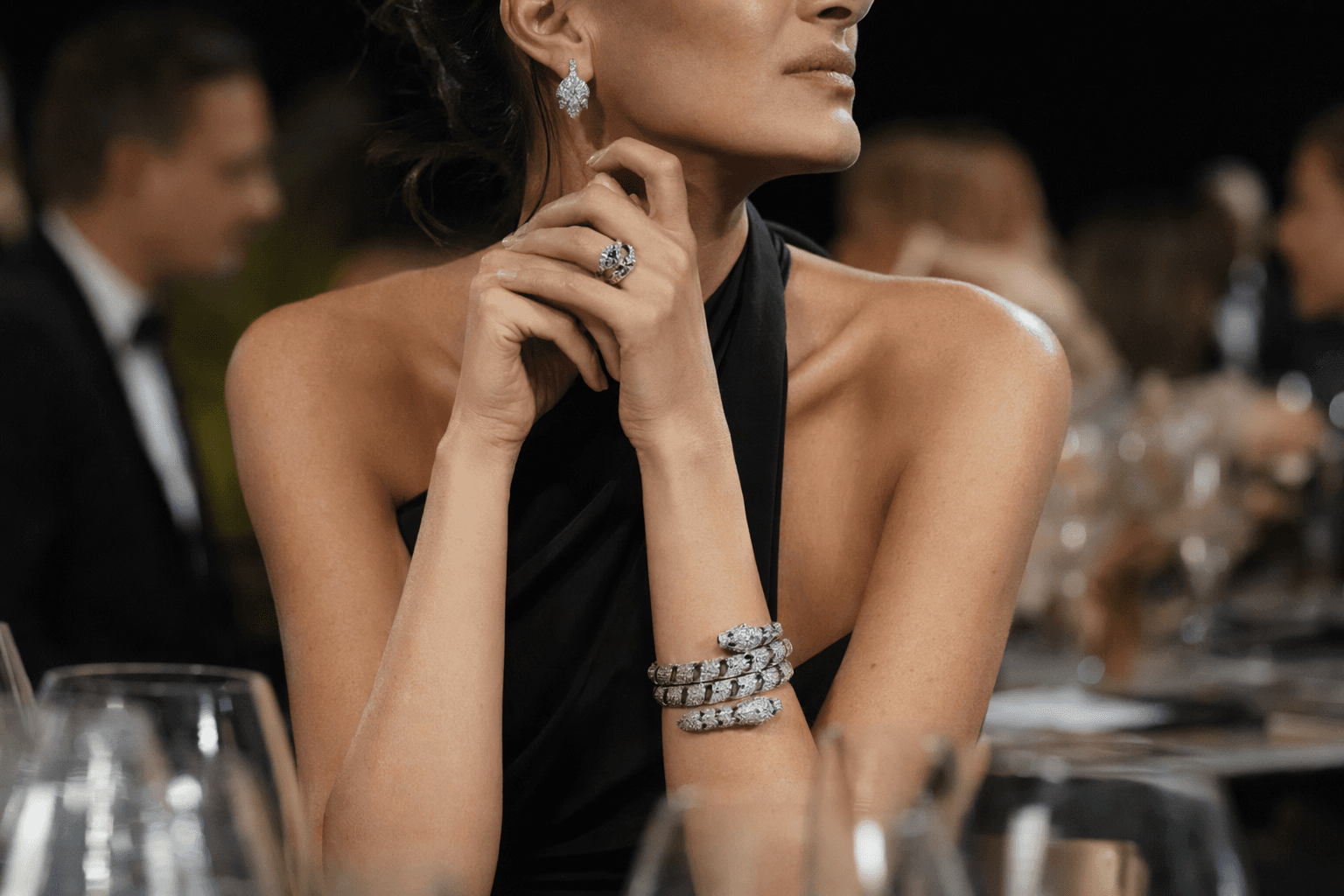
Van Cleef & Arpels remains one of the clearest examples of how high jewelry becomes part of daily dressing. The house continues to anchor its bracelet category in signature collections such as Perlée and Alhambra, and it emphasizes variety and flexibility. That language matters. In a market full of statement pieces, bracelets are the category most likely to cross from collectible to constant wear.
Perlée’s beaded edge reads tactile and playful, while Alhambra’s motif-based structure has long made it one of the most recognizable forms in jewelry. Together, they point to an everyday formula that is easy to replicate in more accessible pieces: a strong motif, a wearable scale, and enough polish to stack or wear alone. For readers, the lesson is straightforward. The bracelets that matter next year will not be the heaviest ones. They will be the ones that can live on the wrist without asking for a special occasion.
What will trickle down next
The strongest luxury signals from this season are already clear:
- Panther motifs will slim down into smaller charms, studs, cuffs, and black-and-white contrast pieces, often using onyx, emerald, and diamond accents.
- Myth-driven designs will appear as symbolic pendants, curved rings, and talismanic details that suggest a personal narrative.
- Botanical jewelry will lean into leaves, petals, and fauna-inspired silhouettes that feel organic rather than ornate.
- Bracelet collections will continue to favor stacking, motif repetition, and flexible proportions over rigid, one-note showpieces.
- White gold and high-contrast stone pairings, especially with onyx, emeralds, and diamonds, will remain the easiest path from high jewelry fantasy to daily wear.
The larger story is that prestige jewelry is becoming more legible, not less. Cartier, Louis Vuitton, Tiffany, and Van Cleef & Arpels are competing on heritage, but the real modern advantage is recognizability: a panther, a hidden garden, a myth, a motif. Those are the design languages that make jewelry feel personal in the morning and unmistakable at night, which is exactly why they are the ones most likely to shape what gets worn every day next year.
This article was produced by Prism’s automated news system from verified source data, official records, and press releases, then run through automated quality and moderation checks before publishing. The system is built and supervised by the people who set the standards it runs under. Read our full AI policy.
Did this article answer your question?