Affordable Engagement Rings Gain Ground as Average Spend Falls
The average engagement ring now sits at $5,200, but spring shoppers are finding room to save without losing the look. Smaller stones, yellow gold and lab-grown center stones are doing the work.
A $5,200 ring is no longer the floor
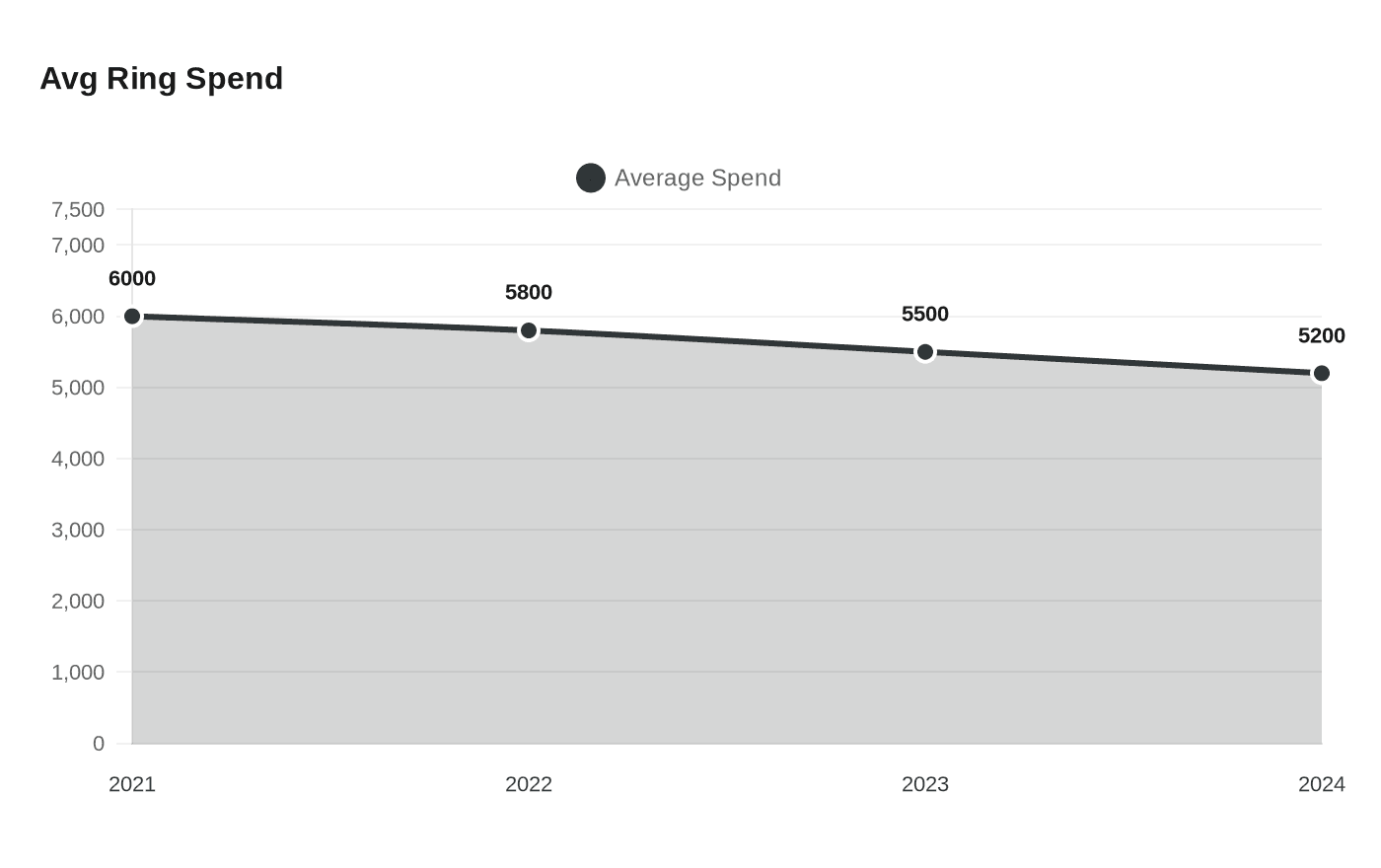
The average U.S. engagement ring still lands at $5,200, but that figure now reads more like a reference point than a ceiling. The Knot’s 2024 Jewelry & Engagement Study, based on more than 7,000 recently engaged or married couples, shows the market has been stepping down for years, from $6,000 in 2021 to $5,800 in 2022 and $5,500 in 2023.
That slide matters because it changes the psychology of the purchase. A ring can still signal commitment, permanence and gold quality without chasing the biggest possible invoice, and spring shoppers are increasingly treating the budget as a design tool rather than a test of devotion.
Carat count is where the first real savings appear
The easiest place to make a ring look less expensive without making it feel less special is the center stone. The Knot’s 2024 survey found the average engagement-ring carat size rose to 1.7 carats from 1.6 in 2023, which tells you how strong the pull toward a larger-looking stone remains even as budgets soften.
That is the tension shaping the current market: buyers want visual presence, but not at any price. Choosing a slightly smaller diamond or a lab-grown alternative often keeps the face-up look intact while freeing money for a better mounting, a warmer gold finish or a cleaner setting.
Lab-grown stones are now part of the mainstream brief
What was once framed as a compromise now reads as a preference. In The Knot’s 2025 data, 40% of couples said it was specifically important that their stone be lab-grown, and more than half of center stones were lab-grown for the first time.
That shift explains why affordability is not just about chasing discounts, it is about changing the center of gravity of the whole purchase. A lab-grown stone can deliver the same visual drama many shoppers want at a lower entry point, which is why retailers are leaning so heavily on it in spring promotions.
Yellow gold has become the warm-metal default
The gold story is just as revealing. JCK reported that 39% of couples chose yellow gold engagement rings in 2025, up 140% over five years, while white-metal settings declined.
That is not simply a trend story, it is a value story. Yellow gold gives a ring a richer, more traditional glow, and it can make even a modest stone feel more intentional, especially when the setting is clean and the proportions are balanced.
The setting can do more work than the diamond
A smart setting can make a budget stretch further than a bigger center stone ever will. Forbes Vetted’s roundup of affordable rings highlights how pricing often splits cleanly between the mount and the diamond itself, with Brilliant Earth settings starting at $650 and diamonds starting at $1,110.
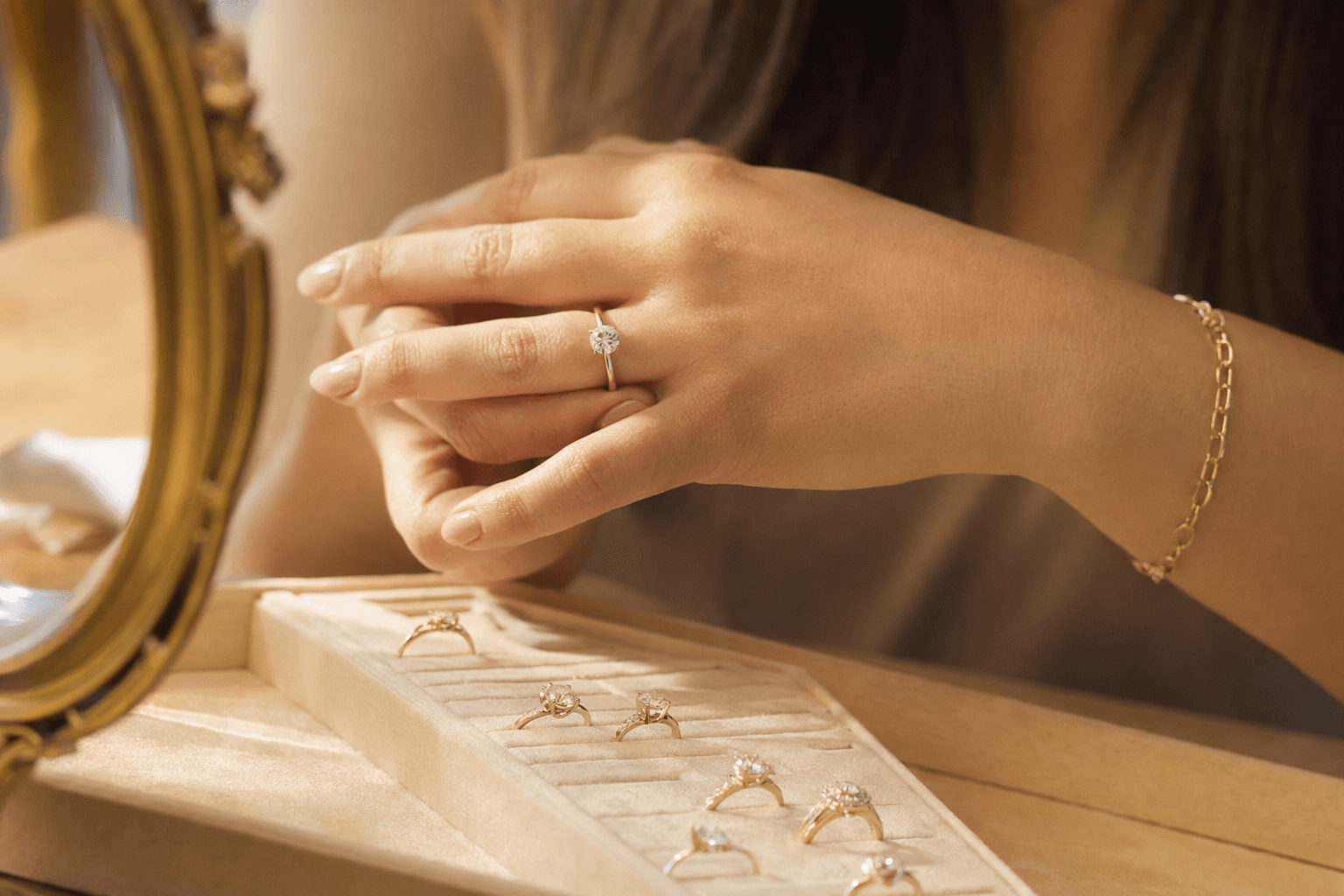
That kind of pricing architecture is useful because it lets buyers decide where to spend for impact. If the stone stays modest, a finely made gold setting can carry the design, which is often the difference between a ring that looks simply cheap and one that looks considered.
Quince lowers the entry bar without stripping out the romance
Quince’s engagement rings starting at $900 show how far the lower end of the market has moved. That number would have felt almost startling a few years ago, yet it now sits squarely inside the conversation about accessible luxury.
The reason is not that the category has become less meaningful. It is that younger buyers, and plenty of pragmatic older ones, are demanding the symbolism of the ring without the old markup attached to it.
Rare Carat and Blue Nile are using discounts as a sales engine
Promotions are doing a lot of the heavy lifting this spring. Rare Carat’s sitewide sale reaches up to 40% off, while Blue Nile’s Mother’s Day promotion goes up to 30% off, which gives shoppers an obvious incentive to compare timing as carefully as they compare carat weight.
This is where affordability becomes strategy rather than austerity. A discount on an already streamlined ring can make a premium-looking piece reachable, especially if the buyer has already decided to keep the stone smaller and let the design read as more substantial than the price suggests.
The wider retailer field shows how competitive the category has become
Forbes Vetted’s list reaches well beyond the usual luxury names, bringing in Ritani, James Allen, With Clarity, Friendly Diamonds and Kay Jewelers alongside Rare Carat, Blue Nile, Quince and Brilliant Earth. That breadth matters because it shows affordability is no longer confined to one corner of the market.
The smartest shoppers are moving between online-first specialists and heritage retailers, looking for the right mix of stone quality, setting construction and sale pricing. In practical terms, the field is crowded enough that a buyer can compare a direct-to-consumer lab-grown ring against a more traditional mall or bridal counter option without giving up style.
The editorial team behind the roundup reflects a new kind of value hunt
The Forbes Vetted roster attached to the piece includes Claire Epting, Jane Sung, Kari Molvar, Lisa Ingram and Nathalie Morrison, a reminder that affordability is now being covered with the same scrutiny once reserved for marquee diamond stories. That matters because value is no longer a niche beat, it is the center of the conversation.
When a major style outlet devotes this much attention to lower-priced engagement rings, it signals a broader shift in taste. Readers are not being told to settle, they are being shown how to make a better case for each dollar.
Spending has been drifting down for several years
The long view is unmistakable. The Knot’s figures show the average spend falling from $6,000 in 2021 to $5,800 in 2022, then $5,500 in 2023, before landing at $5,200 in the 2024 study and $4,600 in 2025.
That is not a tiny correction, it is a real recalibration. It suggests buyers are becoming more disciplined, more comparison-driven and more willing to trade size or brand prestige for a ring that looks right on the hand.
De Beers Group and Lightbox show the industry is still divided
The rise of lab-grown stones is not happening without resistance. De Beers Group said on May 8, 2025 that it intended to close its Lightbox lab-grown diamond jewelry brand, a sharp sign that the industry remains split over how to position synthetic stones.
Even so, consumer demand keeps pulling the market in the other direction. The closure underscores a wider truth: buyers have already made lab-grown diamonds central to the affordability conversation, and companies are still figuring out how to respond.
The best savings come from choosing what to shrink, not what to sacrifice
The smartest budgets are being built around four decisions: stone size, setting style, metal choice and promotion timing. A slightly smaller center stone, a simpler setting, a yellow gold mount and a real sale can change the final number far more than a shopper might expect.
That is why spring’s lower-priced rings still feel desirable. They are not asking buyers to give up the look, the symbolism or the gold they want most, only to spend where the eye notices and save where the market no longer demands excess.
The new engagement ring is bought with intention
The current market rewards clarity. If the old script was bigger stone, bigger price, the new one is better proportion, smarter material choices and a sharper eye for retailer value.
That is what makes affordable engagement rings more than a budget story. They are a measure of how quickly the meaning of luxury is shifting, from pure spend to better judgment.
This article was produced by Prism’s automated news system from verified source data, official records, and press releases, then run through automated quality and moderation checks before publishing. The system is built and supervised by the people who set the standards it runs under. Read our full AI policy.
Did this article answer your question?