China’s ancient-gold brands battle Laopu for luxury mall dominance
Five ancient-gold brands now crowd Nanjing Deji Plaza as rivals chase Laopu Gold’s luxury-mall formula.
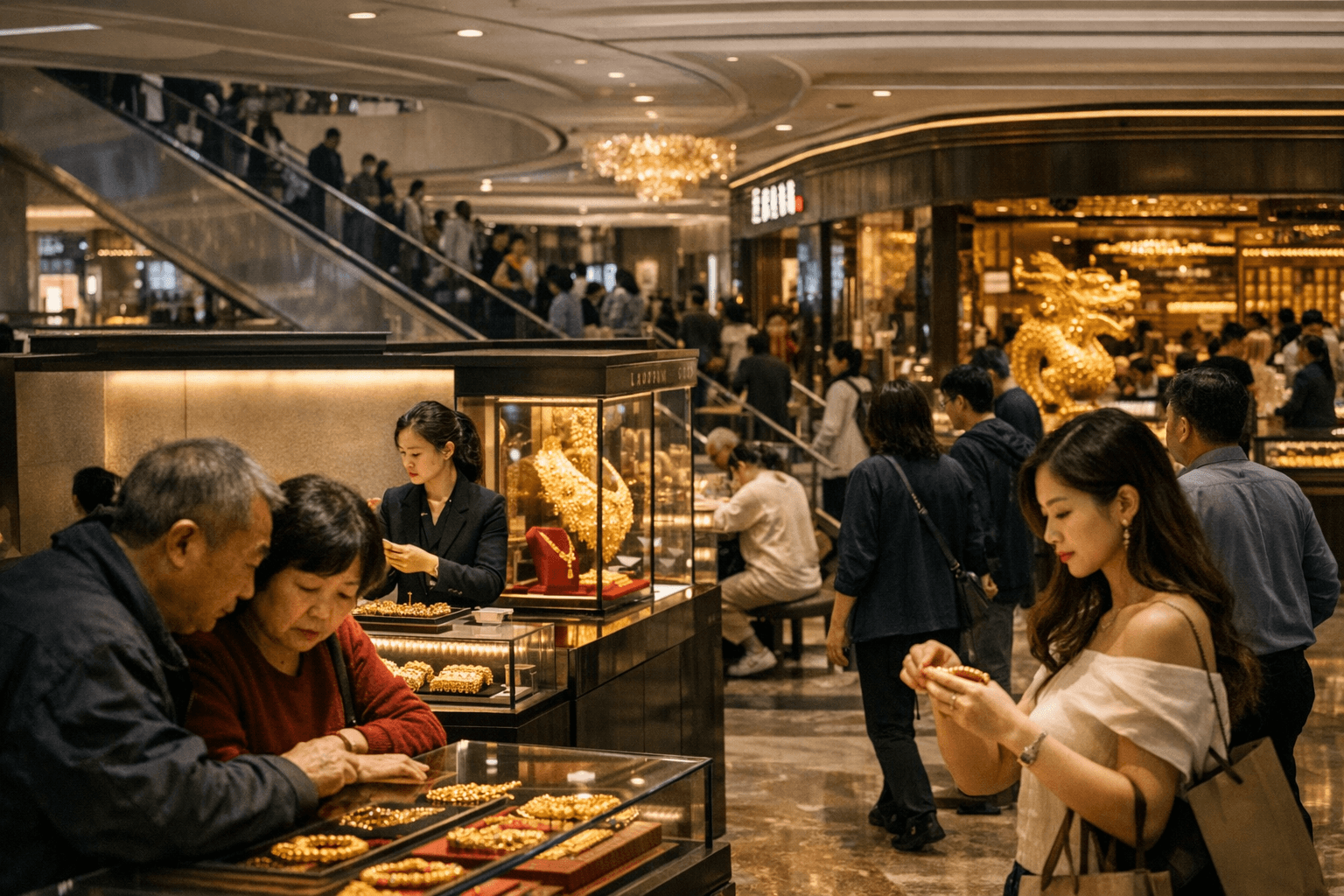
Five ancient-gold brands now share the same polished real estate at Nanjing Deji Plaza, a clustering that shows how quickly Laopu Gold has turned heritage-gold jewelry into a fight for luxury-mall territory. In China’s top shopping centers, the question is no longer whether gold sells, but which brand can sell it as status.
Laopu Gold has become the reference point. Founded in Beijing in 2009, it listed on the Hong Kong Stock Exchange on June 28, 2024, in a deal that raised about HK$905 million to HK$906 million. Its 2025 full-year revenue exceeded 27.3 billion renminbi, or about $3.95 billion, with net income up 230% to 4.87 billion yuan. Xu Gaoming has said Laopu’s real rivals are global luxury groups, not Chinese chain jewelers, and the company’s pricing backs up that claim: it reportedly lifts prices two to three times a year, regardless of gold price swings, to signal that customers are paying for design and craftsmanship, not just bullion.
That strategy is now being copied in the mall leasing wars. Jemper has placed nine of its 12 existing or planned stores in malls that already host Laopu, while Lamchiu, Baowangfu and Kering-backed Borland are all opening in the same premium corridors. Ting Zhou, founder of Yaok Institute, said the imitation wave is already visible in retail real estate, with Nanjing Deji Plaza alone hosting no fewer than five ancient-gold brands. The message to shoppers is unmistakable: ancient-method gold has become a status uniform.
Each rival is trying to carve out a different badge of credibility. Lamchiu leans on craftsmanship and original design. Baowangfu points to an intangible cultural heritage craftsman training base. Borland, founded by Xu Zewei, draws on a family history in made-to-order jewelry dating to the 1980s. Laopu, meanwhile, has gone furthest in recasting gold jewelry as a branded luxury category, and its Hong Kong debut helped formalize that position. Linklaters described it as the only brand among key players in China focused on the design, manufacture and sale of heritage gold jewelry.
The momentum matters because China’s luxury market has been slowing, and mall traffic has been under pressure. In that environment, placement in the right mall and a sharper story about craftsmanship can matter as much as the weight of the gold itself. Laopu has shown that ancient-gold jewelry can command luxury pricing. Its rivals are now betting they can do the same.
This article was produced by Prism’s automated news system from verified source data, official records, and press releases, then run through automated quality and moderation checks before publishing. The system is built and supervised by the people who set the standards it runs under. Read our full AI policy.
Did this article answer your question?