Chunky yellow-gold jewelry finds renewed pull as prices reshape demand
Chunky yellow-gold jewelry is regaining force as nostalgia, self-reward, and smaller but more meaningful luxury buys reshape demand.
Chunky yellow-gold jewelry is finding fresh relevance because it answers three instincts at once: the urge to self-reward, the pull of nostalgia, and a younger buyer’s preference for pieces that feel meaningful rather than merely expensive. The result is a market that still prizes gold, but increasingly rewards strong silhouettes, wearable size, and a clear stylistic point of view.
The return of warm-metal volume
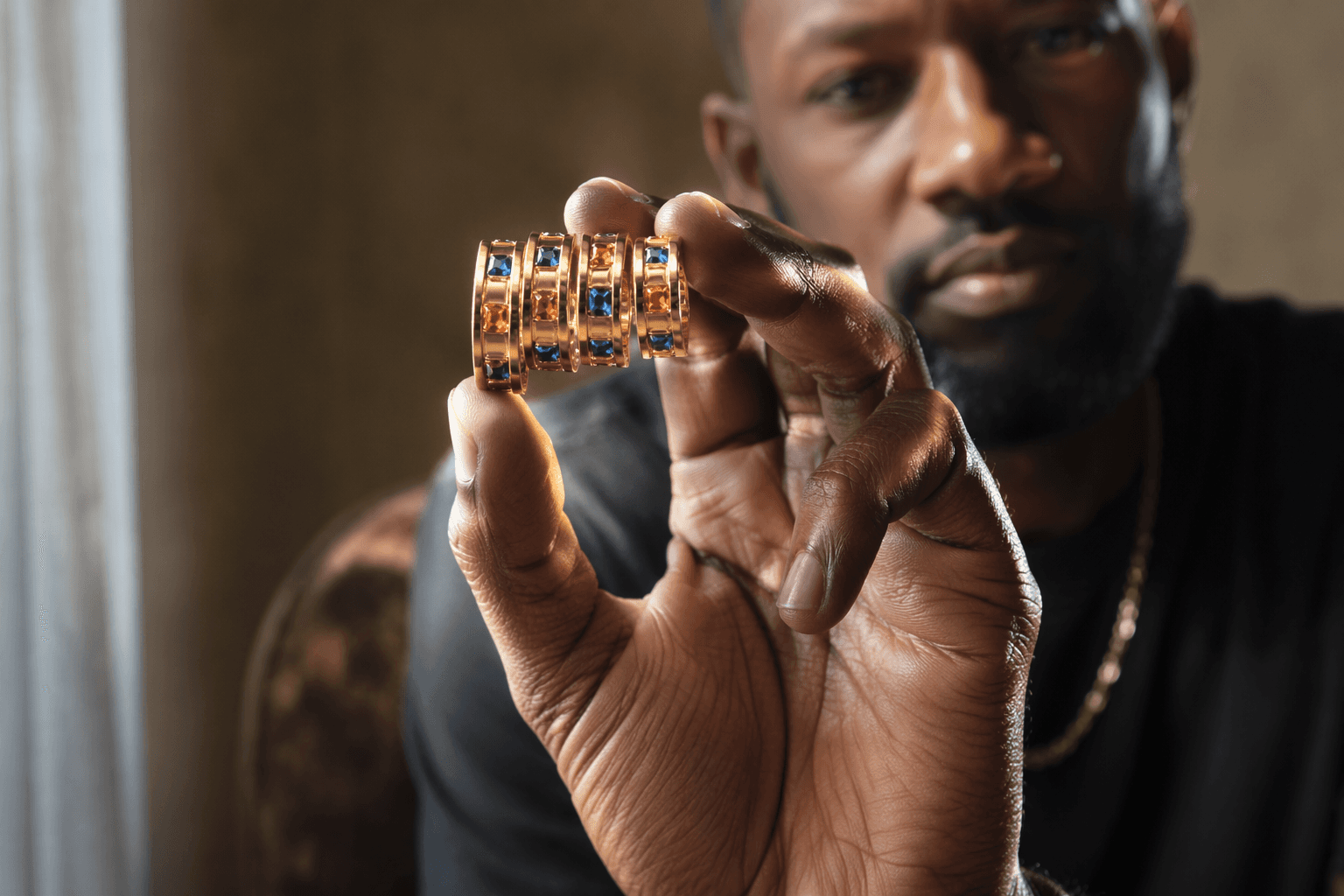
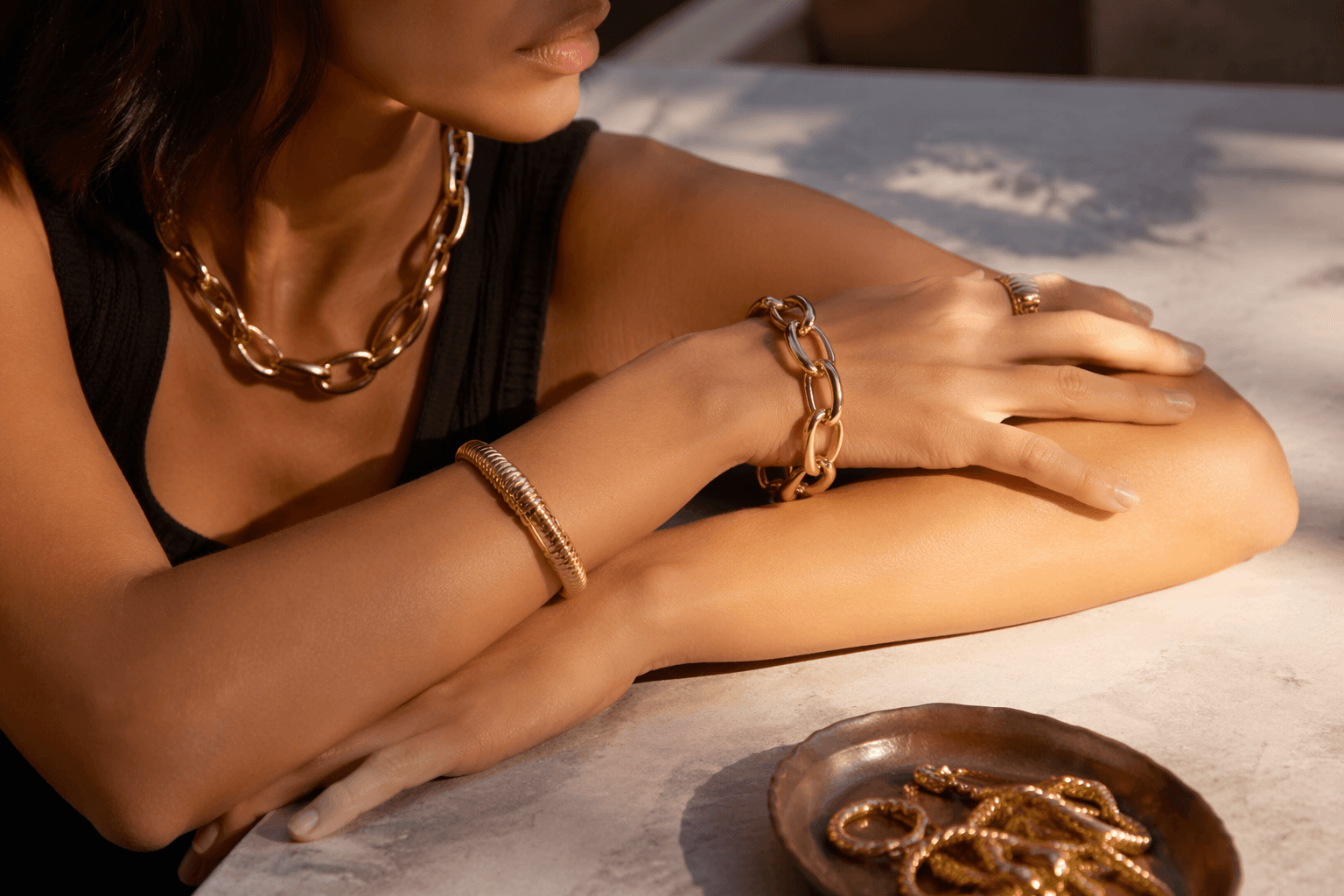
The most compelling yellow-gold stories right now are not delicate. They are the kinds of pieces that read immediately on the body: thick curb chains, mixed-link necklaces, oversized hoops, and sculptural bangles with an ’80s tilt. National Jeweler’s trend coverage points to chunky gold as a sustained hit, and that matters because this is not just a color story. It is a shift toward jewelry that carries visual weight without needing oversized carat counts or elaborate stone settings.
That distinction is what gives the category its current lift. A bold yellow-gold chain can feel luxurious through proportion, polish, and construction alone. A clean bezel, a mirror-bright finish, or a carefully graduated link structure can create the same sense of authority that a more gem-heavy piece once delivered, only in a more everyday way. For a consumer drawn to gold in a high-price environment, that kind of clarity is exactly the point.
Why price pressure is changing how gold gets bought
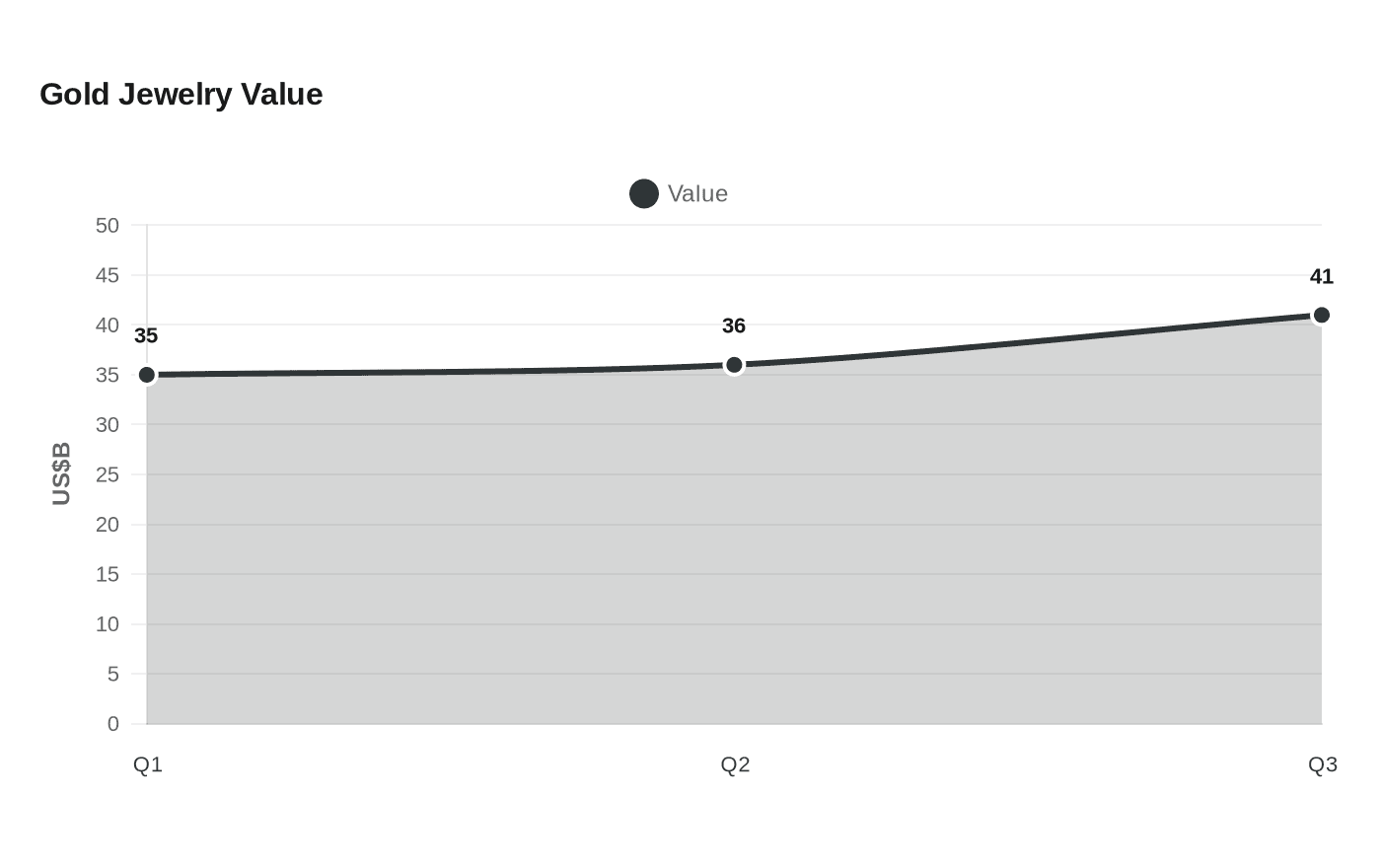
The broader market backdrop explains why smaller, more deliberate gold purchases are gaining traction. The World Gold Council says gold-jewelry demand in 2025 was pressured by record-high gold prices, which pushed global tonnage lower even as spending rose in value terms. In the first quarter, gold-jewelry spending increased 9% year over year to US$35 billion, despite a sharp decline in volume. By the second quarter, global gold-jewelry consumption fell to 341 tons, the lowest level since Q3 2020, yet value still climbed to US$36 billion, up 21% year over year.
That pattern continued through the rest of the year. In Q3, jewelry-consumption value reached US$41 billion, up 13% year over year, even as tonnage remained weak. For the full year, total gold demand exceeded 5,000 tons for the first time and reached US$555 billion in value, up 45% year over year. In other words, consumers did not stop buying gold. They recalibrated, spending more selectively and often choosing pieces that could justify their cost through wearability and presence.
Doom spending and self-reward are making gold feel rational
The consumer behavior behind that recalibration is as important as the macro numbers. National Jeweler’s consumer-trends reporting points to doom spending, a self-reward mindset that often appears when shoppers feel financial pressure, uncertainty, or exhaustion. Gold jewelry fits that psychology unusually well because it sits at the intersection of indulgence and utility. It is not consumed and forgotten; it is worn, kept, and often passed along.
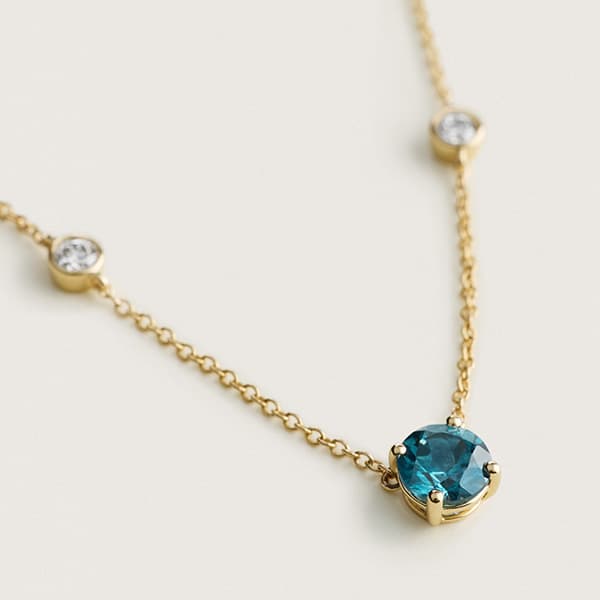
That is why the strongest gold stories now lean into objects with emotional charge: charm necklaces that collect meaning over time, heirloom-inspired rings with softly rounded profiles, and bracelets that look as though they could have come from a family box even when they are newly made. The purchase feels more defensible when it is framed as a piece with staying power, not as a fleeting accessory. In a market where price tags are higher across the board, emotional utility has become part of the value equation.
Gen Z is redefining luxury in smaller, sharper gestures
Luxury’s growth has not disappeared, but its meaning is changing. McKinsey & Company says the luxury industry grew at a 5% compound annual rate between 2019 and 2023, yet its Gen Z research shows that younger shoppers have a sharper radar for inauthentic marketing and are reshaping jewelry and resale. That skepticism matters because it favors pieces that feel honest in material and design. A heavy-looking chain that is beautifully made; a compact gold pendant that says more than its size suggests; a ring that looks inherited rather than over-branded. These are the objects that align with the generation’s eye.
Gen Z’s relationship to luxury also helps explain why the “smaller but meaningful” gold purchase has such momentum. A modestly scaled gold earring or chain can still signal taste, but it does so with less conspicuous effort. The appeal is not only price-consciousness. It is a redefinition of luxury as something personal, legible, and durable rather than loudly coded. In that sense, the category is moving away from trophy buying and toward intimate accumulation.
Nostalgia is the styling code that makes gold feel current
Nostalgia gives all of this a fashion language. McKinsey has also highlighted the force of nostalgia among Gen Z, noting the strength of #nostalgia and #y2k online and the popularity of vintage-style shopping. National Jeweler’s 2026 trend coverage and Pinterest-linked signals point in the same direction: comfort, personal expression, escapism, and vintage or Art Deco references are shaping what feels desirable. That is why yellow gold, especially in chunkier forms, reads as more than a metal choice. It becomes a mood.
The strongest pieces in this lane have an echo of the 1980s without tipping into costume. Think bold curb links with a smooth, almost liquid surface; hoop earrings with enough thickness to register from across the room; charm necklaces that feel collected rather than branded; and mixed-metal pairings that make yellow gold feel less formal and more lived-in. The nostalgia here is not about copying a decade exactly. It is about borrowing its confidence and translating it into jewelry that works with a white shirt, a tank, or a tailored jacket.
Why China’s market pressures matter beyond China
The World Gold Council’s China-focused research adds another layer to the story. Chinese gold-jewelry retailers faced fierce competition in 2025, along with price competition and product homogenization, while self-wear and gold remained key purchase drivers. That combination is telling because it shows how tightly the category is being pulled between volume pressure and consumer desire. When products start to look interchangeable, design differentiation becomes more important, not less.
For gold jewelry, that means the winners are likely to be pieces with a recognizable point of view. Heirloom-inspired settings, chunky links, and bold yellow-gold forms stand out precisely because they are easy to identify and easy to wear. In a crowded market, a piece with a strong silhouette and a warm, unmistakable finish has more staying power than something generic and overdesigned.
The new gold purchase is about presence, not excess
The clearest takeaway from this market is that gold is not losing prestige. It is changing shape. Buyers are still drawn to the metal’s permanence and emotional resonance, but they are expressing that desire through pieces that feel personal, wearable, and visually confident. Chunky yellow-gold jewelry, especially when it carries a hint of nostalgia, now speaks fluently to a consumer who wants luxury to feel grounded in real life.
That is why charm necklaces, heirloom-style links, and everyday gold pieces with sculptural heft are the category’s most persuasive forms. They turn a high-price environment into a design opportunity, and they make gold feel less like a category under pressure than one that has learned how to speak more clearly.
This article was produced by Prism’s automated news system from verified source data, official records, and press releases, then run through automated quality and moderation checks before publishing. The system is built and supervised by the people who set the standards it runs under. Read our full AI policy.
Know something we missed? Have a correction or additional information?
Submit a Tip