Cultus Artem’s celestial gold necklace elevates salt-and-pepper diamonds
An oasis in the Las Vegas desert, Cultus Artem’s River of Heaven turns 26 salt-and-pepper diamonds into couture’s most persuasive case for imperfect beauty.
An oasis in the Las Vegas desert
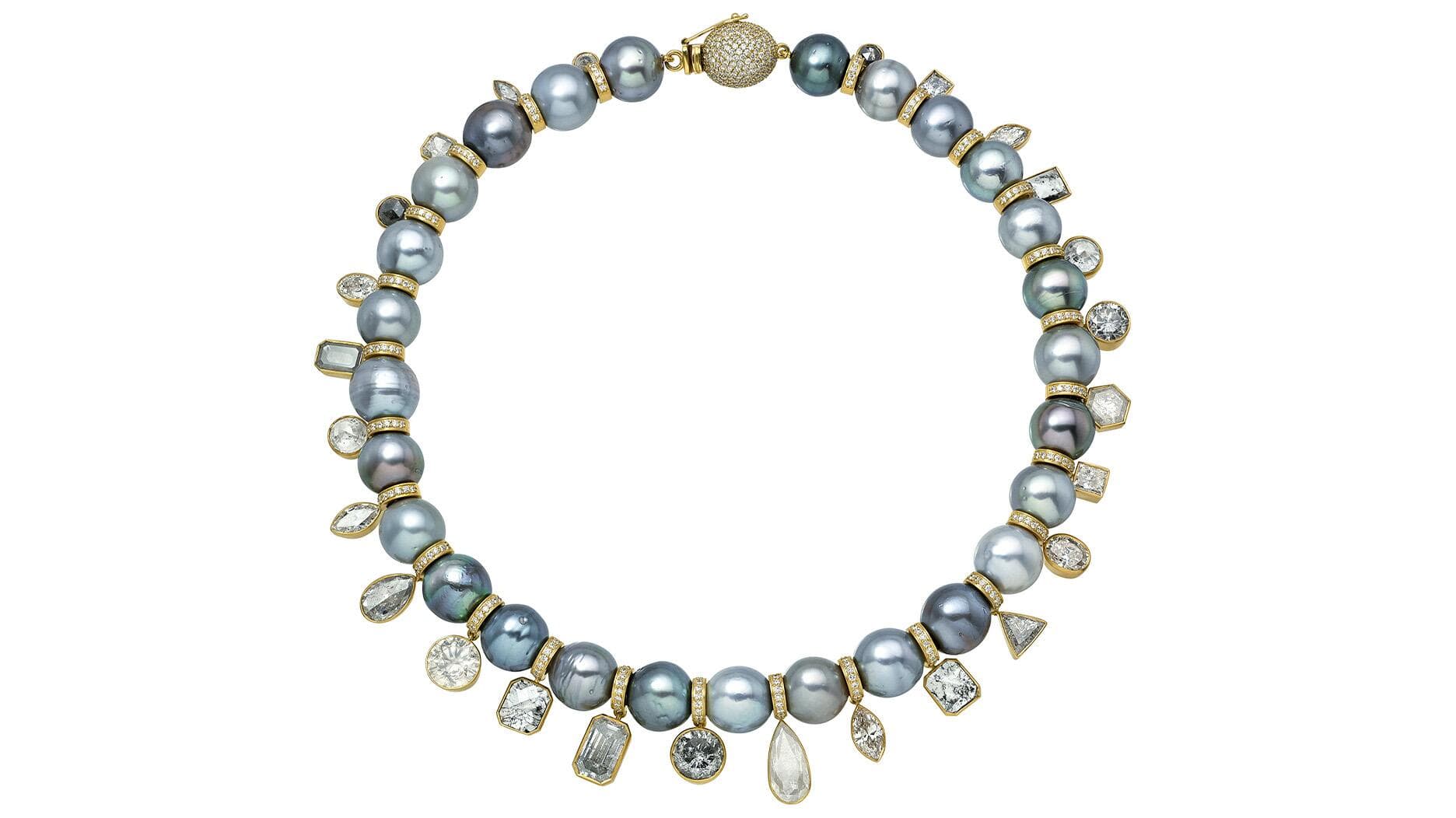
An oasis in the Las Vegas desert, Cultus Artem’s River of Heaven necklace turns 26 salt-and-pepper diamonds into a celestial line of light, each stone spaced between Tahitian pearls in 18-karat yellow gold. The effect is unmistakably couture, but the larger lesson is more useful: high jewelry is leaning hard into contrast, and the most intriguing luxury pieces now celebrate irregularity as design language rather than flaw.
The necklace’s unusual cadence matters. Instead of a single centered stone or a rigidly symmetrical rivière, the composition lets the diamonds and pearls breathe against one another, creating movement that feels closer to a night sky than a formal collar. That is the kind of visual vocabulary worth watching now, because it explains why warm gold, moody diamonds, and pearls are appearing together more often in serious jewelry design.
Why the stone story matters now
Salt-and-pepper diamonds have moved from niche curiosity to a polished marker of taste, especially when they are set with intention. Their visible inclusions, the flecks and clouds that once would have been treated as disqualifying, now give a piece texture and depth. In River of Heaven, that less-than-perfect clarity becomes the point: the necklace frames the stones as individual characters, not interchangeable accents.
The choice of 18-karat yellow gold deepens that reading. Yellow gold gives the composition warmth and structure, and it is especially effective beside stones with gray, black, and smoky inclusions because it prevents the look from turning cold. For readers tracking the direction of fine jewelry, this combination is one of the clearest signals to watch: yellow gold is no longer just a classic metal choice, it is the stage on which more expressive stones are being cast.
Tahitian pearls add another layer of tension and polish. Their dark, satiny surfaces keep the piece from becoming too literal or too precious, and they help the necklace feel contemporary rather than decorative. In practical terms, this mix of materials is one of the more realistic ideas to trickle down from couture, because it translates easily into earrings, pendants, and smaller necklaces that borrow the same contrast without the same scale.
A celestial narrative with real design discipline
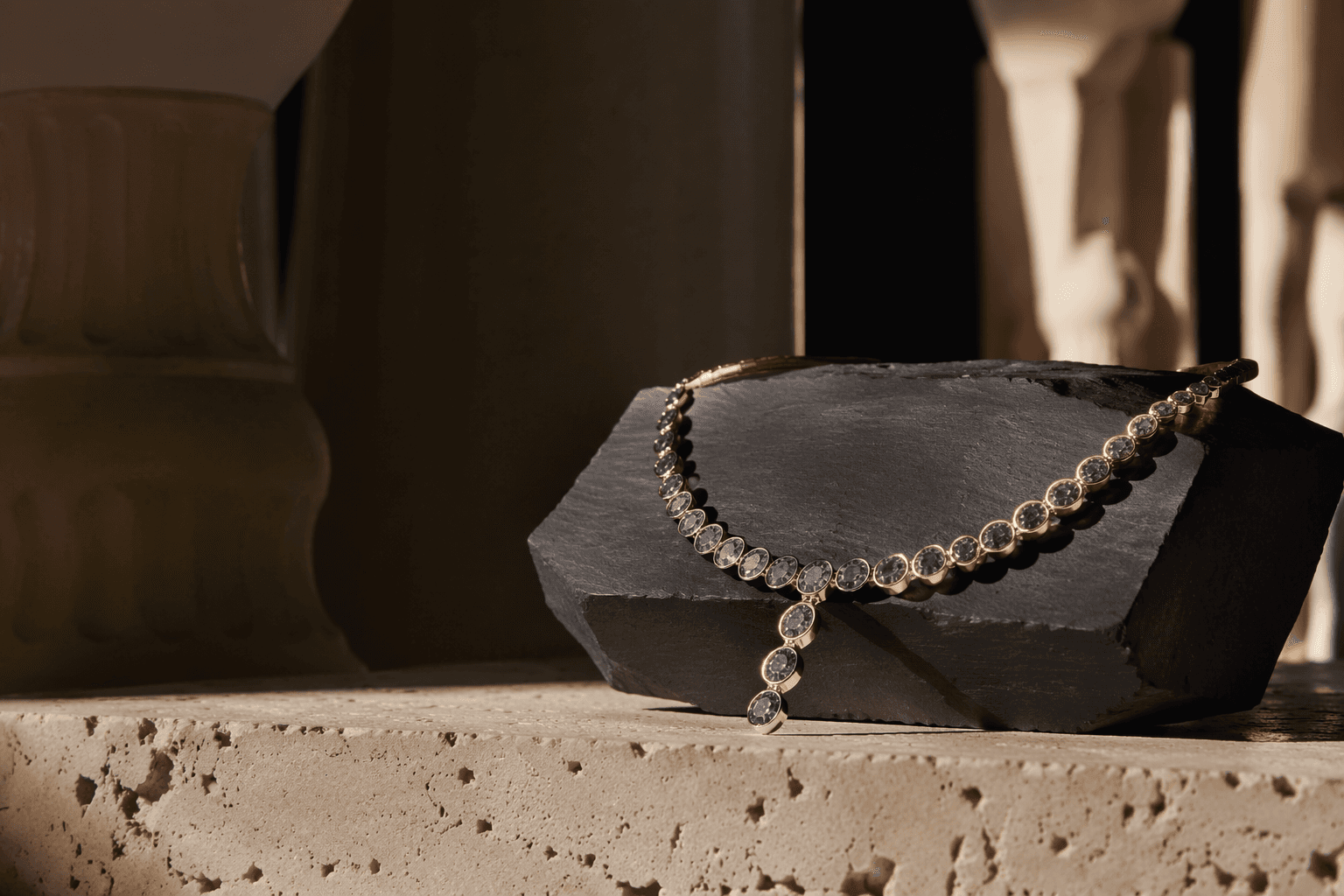
Cultus Artem describes River of Heaven as a celestial tribute to the Cowherd and Weaver Girl legend, with the diamonds and pearls meant to evoke the Milky Way. That storytelling is more than atmosphere. It gives the placement of every element a reason to exist, which is exactly what separates serious high jewelry from ornamental excess.
The piece also belongs to Cultus Artem’s fine-jewelry line formed “Through Paradox,” an apt name for a collection built on tension: raw and refined, imperfect and precious, ancient myth and modern construction. The 26-diamond setting is the most memorable number in the design, not because it is showy, but because it creates a rhythm that feels deliberate and slightly unexpected. Couture jewelry works best when it offers a visual argument, and here the argument is that luxury can be driven by spacing, pacing, and negative space just as much as by carat weight.
That is an important clue for mainstream buyers. The average customer is unlikely to encounter a necklace with 26 diamonds, Tahitian pearls, and made-to-order positioning, but the design ideas themselves are already digestible: asymmetrical balance, darker diamonds paired with warm gold, and pearls used as punctuation rather than as a separate category of jewelry entirely. Those choices can show up at accessible price points without losing the editorial sharpness of the original.
The house behind the piece
Cultus Artem was established in 2015 by founder and creative director Holly Tupper, and the brand is headquartered in San Antonio, Texas. Tupper says the jewelry line draws on materials she has collected over three decades, a detail that helps explain why the work feels assembled with the eye of a collector rather than engineered for mass repetition. The brand’s fine jewelry is presented as limited edition and one-of-a-kind, which places River of Heaven firmly in the realm of artistic luxury rather than seasonal product.

The house’s name reinforces that identity. Derived from the Latin cultus, meaning the practice of adornment, and artem, the root word for art, it signals a studio concerned with jewelry as both ritual and image-making. That sensibility is visible in the necklace’s construction, where the gold does not merely hold the stones but orchestrates them, allowing each pearl and diamond to register as part of a larger composition.
What makes it a useful trend read
For gold-jewelry readers, River of Heaven is less a shopping target than a blueprint. It reveals three directions worth following:
- 18-karat yellow gold is still the strongest metal for warming up unconventional stones and giving them a richer, more luxurious frame.
- Salt-and-pepper diamonds are being treated as a design asset, especially when cut and placed to emphasize texture instead of perfection.
- Tahitian pearls are moving beyond traditional pearl jewelry into more sculptural, high-contrast settings that feel modern and editorial.
The necklace’s price on application status confirms its ultra-luxury, made-to-order posture, but that does not make it irrelevant to a broader audience. Quite the opposite: the best couture pieces often preview the shapes, contrasts, and material pairings that later filter into more wearable jewelry. River of Heaven suggests that the next wave of statement gold design will not rely on brightness alone. It will depend on shadow, irregularity, and the kind of quiet drama that makes a necklace look less like adornment and more like a small piece of sky.
This article was produced by Prism’s automated news system from verified source data, official records, and press releases, then run through automated quality and moderation checks before publishing. The system is built and supervised by the people who set the standards it runs under. Read our full AI policy.
Did this article answer your question?