Delhi Woman Loses Gold Ornaments, Cash in Mehendi Key Deception Theft
A Sultanpuri woman lost gold necklaces, rings, anklets and ₹3.2 lakh after a neighbor borrowed her house key under a mehendi pretext, then let accomplices in.
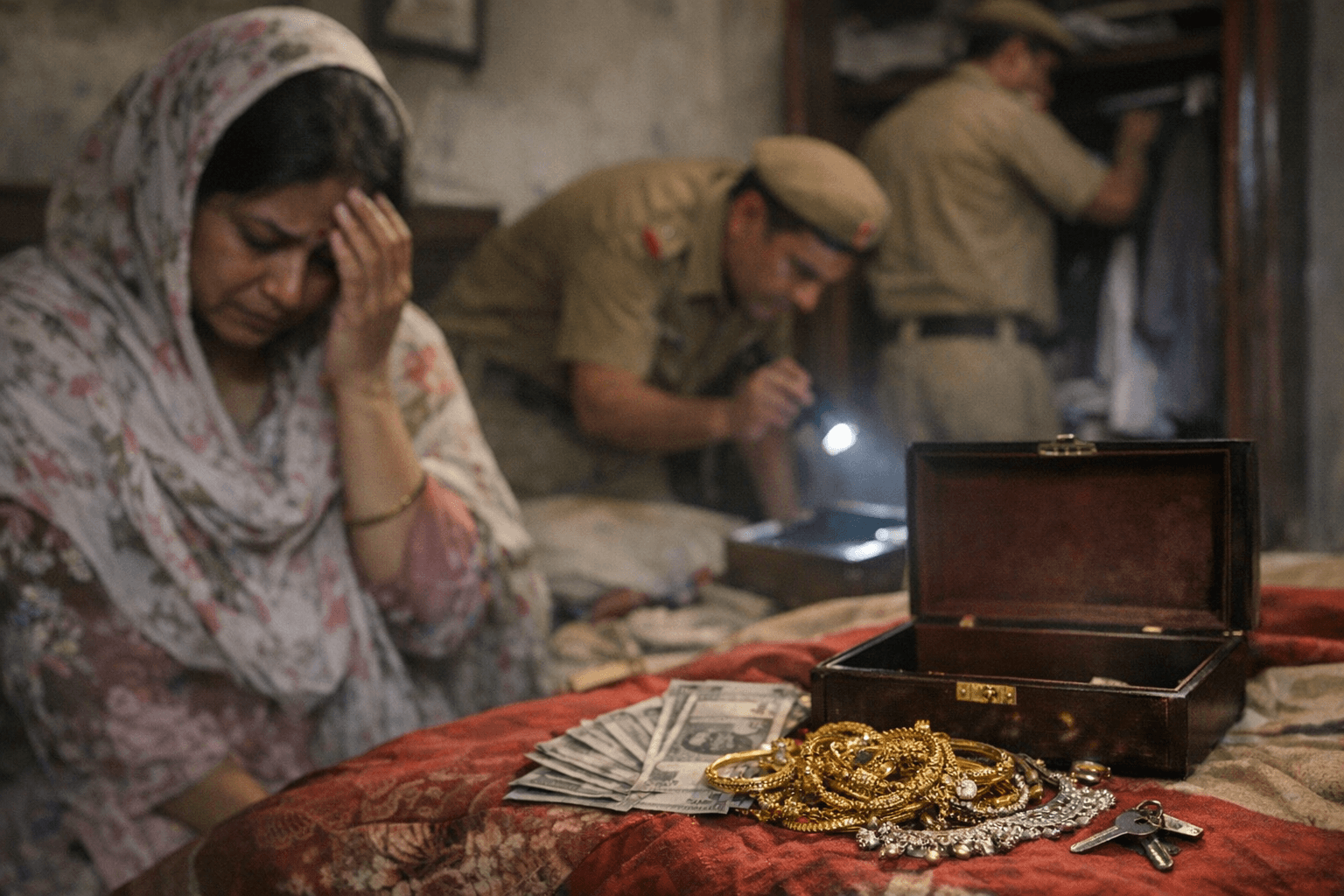
It took a borrowed key and a gesture of cultural intimacy to strip a Sultanpuri family of their household gold. A resident of outer Delhi returned home on April 4, 2025, to find necklace sets, rings, a chain, earrings, anklets, and ₹3.2 lakh in cash missing from a locked house. The entry point was not forced. A woman who had earlier asked to borrow the house key under the pretext of applying mehendi, a hand-painting ritual so routine in Indian households that refusing it would have seemed strange, had used that access to let accomplices in.
Delhi Police traced the suspects through CCTV footage and made two arrests within three days. Rajinder and his aunt were taken into custody by April 7, with investigators recovering ₹1.92 lakh in cash and several of the stolen gold pieces. The case was registered under Section 305 of the Bharatiya Nyaya Sanhita, the 2023 successor to the Indian Penal Code now governing criminal proceedings in the capital.
What made the theft possible was not a broken window or a compromised lock. It was the social geometry of Indian domestic life, where gold occupies a specific and deeply loaded position. Necklace sets, anklets, rings: the kind of ornaments worn at weddings and pujas, gifted at births and festivals, received as inheritance. These pieces are rarely in bank lockers between occasions because they are not purely financial instruments. They are personal. They sit in the family almirah because that is how gold lives in an Indian home, and that proximity is exactly the vulnerability.
The Sultanpuri theft is not a one-off. In May 2025, sisters Karishma, 40, and Shipra, 34, were arrested by Delhi Police for stealing gold jewellery from a friend's home in Basai Darapur, west Delhi. The complaint was filed at Moti Nagar Police Station on May 18; all stolen articles were recovered in that case. Both incidents follow the same modus operandi: social access, household trust, and gold as the specific target.
National Crime Records Bureau data for 2023 illustrates why recovery cannot be assumed. Delhi reported property losses exceeding ₹680 crore that year, placing it among the top three regions nationally for the third consecutive year. The city's theft recovery rate stood at just 14.5%, against a national average of 29.9%, a gap of 15.4 percentage points. Nationally, property worth ₹6,917 crore was stolen in 2023; only ₹2,065 crore was returned.
Those numbers carry a direct implication for anyone keeping gold at home. Photograph every piece you own, front, clasp, hallmark stamp, and store those images in cloud backup rather than solely on a phone. Retain purchase receipts and maintain a written inventory with weights and karat grades; both insurers and police require this documentation to process claims. Ornaments worn only at weddings do not need to be home between seasons: a bank locker, costing between ₹500 and ₹3,000 annually depending on size, is a rational alternative. Standard home insurance policies frequently cap gold coverage far below actual value unless a jewellery-specific rider is added, a detail worth verifying before the next occasion calls those pieces out of the almirah.
The mehendi key was one version of this risk. Any spare key, any casual loan of access, any social pretext that quietly opens a window into the home is the same risk by a different name. The lock on the door settled nothing; the key had already left the house.
Know something we missed? Have a correction or additional information?
Submit a Tip