Didi Rose Jewelry turns Nigerian heritage into modern gold heirlooms
Benedicta Awere-Malik turns Nigerian family memories, coral, and hand-formed gold into pieces that feel personal enough to inherit, not just wear.
A heritage story you can actually wear
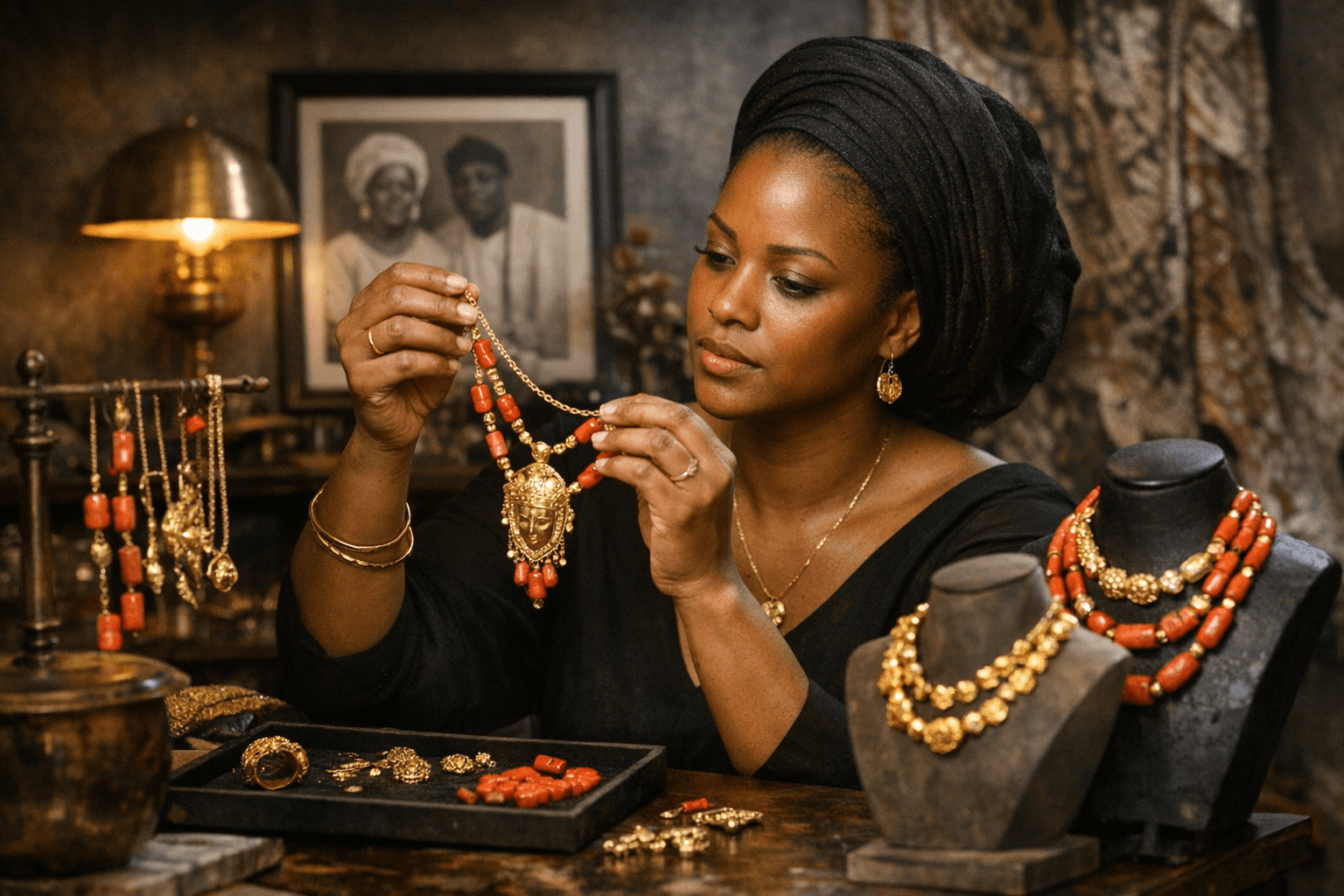
Benedicta Awere-Malik has built Didi Rose Jewelry on a simple but persuasive idea: heritage only feels meaningful when you can see it in the work. Her story begins in Nigeria, where making things by hand was part of daily life long before jewelry entered the picture, from braiding hair at 7 to sewing at 11, baking at 9, and making beads from wire as a child. That early fluency in manual craft matters, because it explains why Didi Rose feels less like a brand chasing “heirloom” language and more like one rooted in lived memory.
What gives the line its force is the way Awere-Malik turns family influence into actual form. She describes the spark for the business as a revamp of a coral necklace, an object already loaded with cultural memory, after which friends began asking her to make pieces for them. She decided in 2009 to keep going and never stop making jewelry, and that commitment shows in the brand’s mix of personal storytelling and exacting handwork.
Why the materials matter
Didi Rose Jewelry leans on gold and coral, two materials that carry obvious visual warmth and deep cultural resonance. Gold brings structure and permanence, while coral adds color and a sense of lineage that feels especially personal in the context of Nigerian family jewelry traditions. Her grandmothers’ gold and coral are part of the brand’s visual vocabulary, which gives the pieces a lived-in authenticity that generic “heritage” branding rarely earns.
The brand also says it works with natural gemstones and precious metals, a material statement that reads cleanly because it is specific. There is no fog of buzzwords here, no vague promise that something is “inspired by nature” or “mindfully made.” Instead, the language points to actual materials, which is exactly what readers should look for when deciding whether a piece deserves a place in a serious jewelry wardrobe.
That specificity matters in a gold market crowded with decorative storytelling. When a brand names its metals, stones, and family references this clearly, the narrative stops being decoration and starts becoming part of the object itself.
The piece that makes the story visible
The clearest entry point into Didi Rose is the Gold Knife Edge Hoop Earrings, the brand’s hero style. They are hand-formed, triangle-shaped hoop earrings with a front-facing edge, a profile that feels sharper and more architectural than a basic round hoop. That shape is the kind of detail that changes how gold reads on the ear: more sculptural, more deliberate, and much less generic.
The earrings come in 11 mm and 25 mm sizes, which gives the design two very different personalities. The 11 mm version works like a huggie, close to the lobe and restrained enough for daily wear, while the 25 mm size gives the same idea more presence. At $475, they sit in the middle of the brand’s broader $100 to $6,000+ price range, making them a useful benchmark for how Didi Rose prices craftsmanship that still feels accessible compared with the upper tier of bespoke gold work.
The made-to-order timeline, 2 to 3 days, also says something important about the business. It suggests a small-batch rhythm rather than mass inventory, which fits the brand’s hand-built identity and keeps the earrings from feeling like yet another interchangeable hoop in the market. These are the kind of pieces that can be worn now, gifted with intention, and kept because the form is distinctive enough to outlast a trend cycle.
From handmade origins to modern heirloom appeal
Awere-Malik’s self-taught path deepens the appeal. She learned fabrication, soldering, and stone-setting herself, and that hands-on technical foundation gives the brand its credibility. Jewelry made by someone who understands the discipline of metalwork tends to show it in the details, especially in pieces like the knife-edge hoop, where the geometry has to feel crisp rather than merely stylized.
A third-party spotlight adds another layer, describing her as both a silversmith and goldsmith and placing her roots in Southern Nigeria. That same profile says the gold and coral worn by her grandmothers still inspire her work, which helps explain why the line feels intergenerational without becoming nostalgic. The pieces are not trying to recreate the past in amber; they translate family memory into forms that still look current.
The brand’s home base in Buford, Georgia, adds an interesting contrast to all that ancestral imagery. Didi Rose is operating from an American suburb while drawing its aesthetic authority from Nigerian material culture, and that tension is part of what makes the jewelry feel contemporary rather than costume-like. It is heritage reframed through present-day construction, not heritage flattened into theme.
Why this feels more compelling than generic heirloom branding
A lot of jewelry brands use “heirloom” as shorthand for expensive, sentimental, or vaguely old-world. Didi Rose is more persuasive because the details are tangible: coral, gold, handmade fabrication, a family memory attached to the first necklace, and a founder who actually learned the techniques herself. That combination gives the pieces narrative weight without relying on cliché.
It also gives the buyer something concrete to evaluate. A $475 pair of hand-formed gold hoops in 11 mm or 25 mm is not just a logo purchase or a vague promise of legacy. It is a clearly described object with a shape, a material story, a production rhythm, and a cultural origin that can be traced through the maker’s own life.
That is what modern heirloom jewelry should do. It should feel distinctive in the hand, specific in the ear, and rooted enough in real memory that the story survives long after the box is opened. Didi Rose Jewelry succeeds because it understands that inheritance is most convincing when the craft is visible.
This article was produced by Prism’s automated news system from verified source data, official records, and press releases, then run through automated quality and moderation checks before publishing. The system is built and supervised by the people who set the standards it runs under. Read our full AI policy.
Did this article answer your question?