Gold cuffs lead 2026 jewelry shift toward sculptural luxury
Gold cuffs are becoming the clearest 2026 jewelry signal, shifting the look from quiet minimalism to sculptural, visible pieces with sharper social meaning.
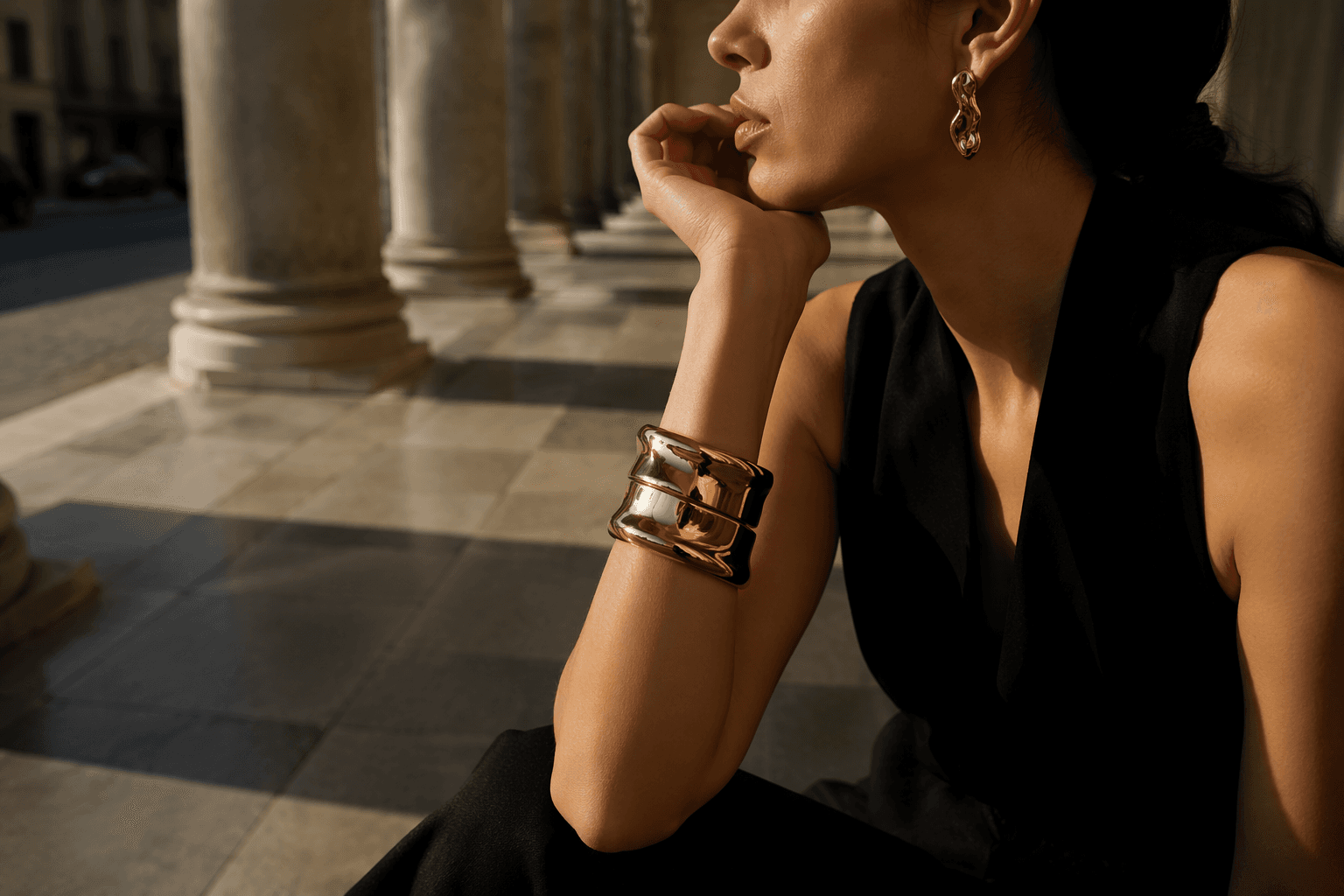
Gold cuffs are taking over the wrist as jewelry’s most legible status signal, and they do it without the whisper of quiet luxury. The new look favors sculptural shapes, bigger proportions, and styling that feels deliberate enough to read from across the room. It is a shift from “barely there” polish to visible taste, and it is already reshaping what people choose, wear, and buy.
The cuff becomes the focal point
The strongest sign of the change is the sculptural cuff, worn solo and with intention. Fashion editorials have repeatedly framed 2026 jewelry as “sculptural, statement-making and personal,” a phrase that captures the appeal of a piece that does not hide inside an outfit but defines it. That is why cuffs are landing so powerfully in gold: they turn the wrist into a canvas, and they make even a simple shirt or black dress look finished.
The devotion to cuffs also has a lineage. Yahoo Shopping traced the current affection for the shape back to Elsa Peretti for Tiffany & Co., reminding readers that this is not a novelty trend but a revived design language with a serious pedigree. Peretti’s influence matters because it gives the cuff a cultural memory, not just a fashion moment, and that history helps explain why the shape feels collectible rather than disposable.
What changed from quiet luxury
Quiet luxury prized restraint, slim lines, and jewelry that blended in. The 2026 gold story moves in the opposite direction: more volume, more shine, more personality. Yahoo Shopping’s trend roundups pointed to sculptural gold and silver pieces, mixed metals, layered necklaces, and chunky cuffs, all of which suggest that styling now matters as much as the object itself.
That shift is important because it changes how gold behaves in an outfit. A cuff worn alone is not background, it is the point. Bigger proportions and expressive stacking communicate confidence and taste without relying on logos or obvious branding. The message is less about being understated and more about knowing exactly what you want to show.
Why the trend feels personal, not just maximal
The current appetite for larger gold pieces is not only visual, it is social. Jewelry is increasingly being used to signal identity, memory, and discernment, which is why the strongest pieces feel chosen rather than merely purchased. A sculptural cuff says something different from a dainty chain: it signals presence, editorship, and a willingness to let one object carry the look.
That distinction is why the trend is proving more wearable than a full maximalist pile-up. The cuff gives buyers a clear entry point into bolder jewelry without forcing them into a head-to-toe statement. It is one strong gesture, not a costume, and that makes it easy to pair with the cleaner clothes many people still own.
Gold prices are shaping the design conversation
The move toward statement gold is happening in a market where the metal itself has become more expensive. WWD reported in November 2025 that gold prices were at new highs and expected to rise further in 2026, pushing independent fine jewelers to get more creative in both design and operations. Higher gold costs do not kill the trend; they force the category to think harder about form, weight, and value.
That pressure helps explain why sculptural pieces are resonating now. When metal is expensive, a design has to justify itself, and a cuff with a strong silhouette can feel more compelling than a thin object that disappears on the body. The resilience of demand is also clear in Richemont’s sales, which rose despite rising gold prices. Luxury jewelry remains resilient even when the raw material becomes more costly, a sign that buyers are still willing to pay for pieces that feel substantial.
The sourcing question is no longer optional
The ethical side of gold is inseparable from the trend story. WWD reported that only 4 percent of the world’s gold supply is traceable from mine to polished product, a figure that should make any vague sustainability claim sound thin. When a brand says “responsible” or “conscious” without explaining chain of custody, recycled content, or sourcing standards, the language is marketing, not proof.
Pandora has offered a more concrete benchmark. The company said it reached its goal of using 100 percent recycled gold and silver in jewelry earlier than planned, with its target date set for the second half of 2024. That matters because recycled metal is measurable, and measurable is the standard luxury needs if it wants ethical claims to hold up under scrutiny. In a market where provenance increasingly influences value, recycled gold is not a side note, it is part of the product story.
What 2026 gold jewelry really communicates
The clearest reading of the season is that gold jewelry is no longer trying to disappear into the outfit. The new cuffs, layered chains, and larger proportions communicate certainty, taste, and a more visible relationship to dressing. They also signal a shift away from the old idea that restraint is the only sophisticated choice.
That is why the most successful gold pieces in 2026 look as if they were meant to be seen from the start. They are sculptural rather than delicate, personal rather than generic, and specific enough to feel worth holding onto. In a market where gold is dearer, sourcing is under scrutiny, and style has swung back toward expression, the strongest jewelry is the kind that speaks plainly on the body.
This article was produced by Prism’s automated news system from verified source data, official records, and press releases, then run through automated quality and moderation checks before publishing. The system is built and supervised by the people who set the standards it runs under. Read our full AI policy.
Did this article answer your question?