Kate’s Daniella Draper initial necklace adds family meaning to UEL visit
Kate’s three-initial gold necklace turned a simple chain into a family keepsake, giving the personalization trend royal backing at UEL.
A gold chain made personal
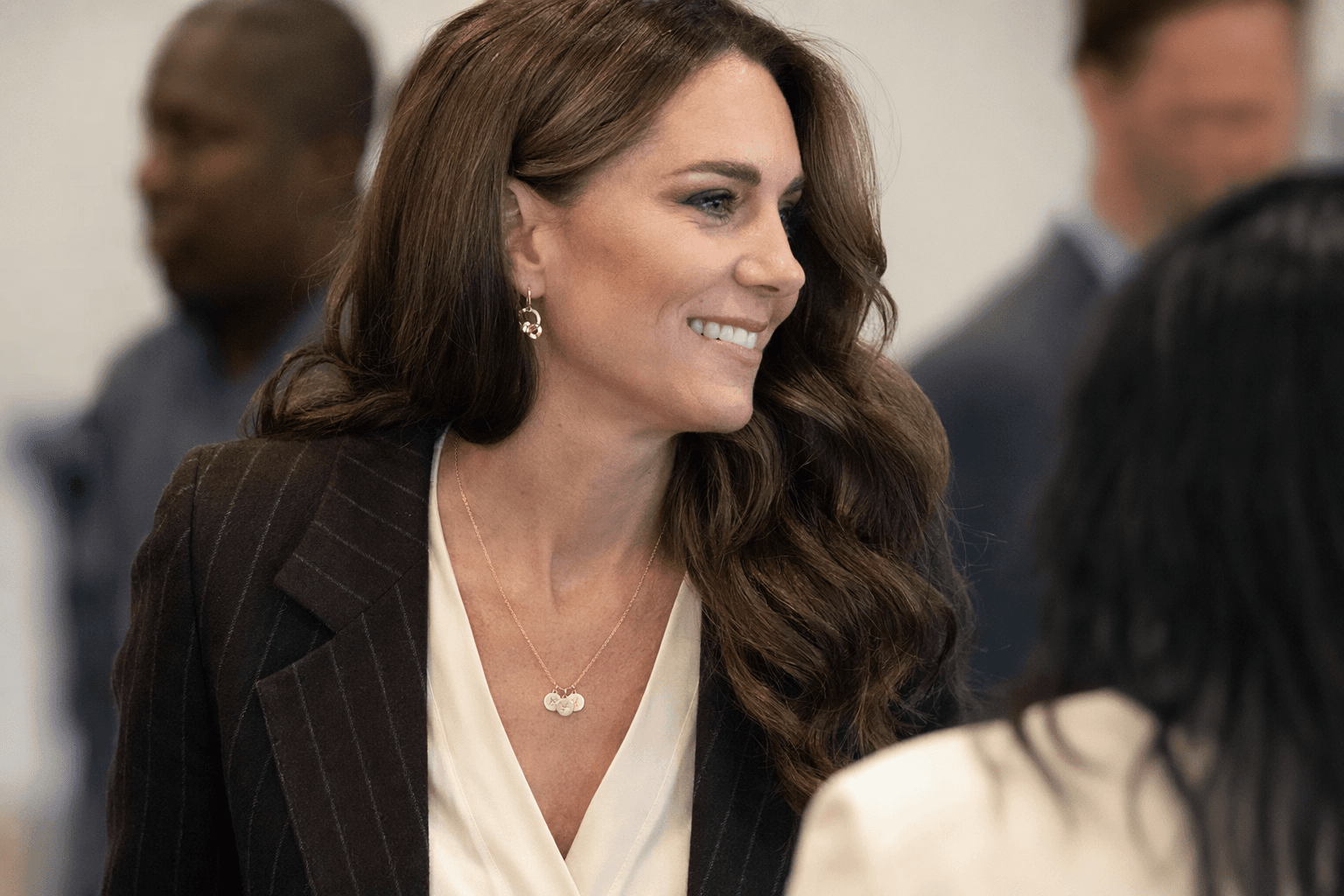
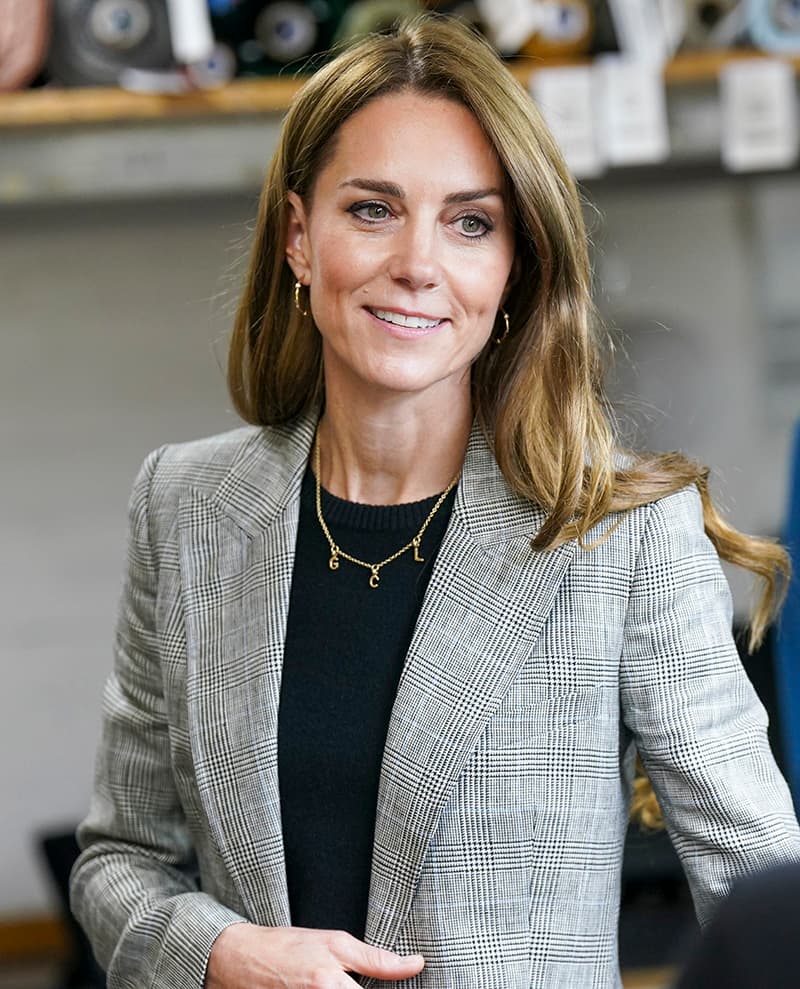
Kate’s Daniella Draper necklace does what the best personalized jewelry always does: it turns a clean, simple gold chain into something emotionally legible. The three initial charms, G, C and L, read as family shorthand first and ornament second, which is exactly why the piece lands so strongly. It is delicate enough for daily wear, but specific enough to feel like a private archive at the collarbone.
That is also why initial jewelry continues to resonate so powerfully in family gifting. A name, a letter or a trio of initials adds narrative to gold without sacrificing elegance, and in Kate’s case the message is unmistakable. The necklace does not shout; it quietly signals devotion, memory and continuity, which is precisely the kind of sentiment buyers look for when they want a gift to mean more than its metal weight.
Why this particular necklace works
The necklace Kate wore is Daniella Draper’s Gold Fixed Alphabet Necklace, made in recycled solid 9ct yellow gold. That construction matters. Nine-carat gold offers the familiar warmth of yellow gold while keeping the piece relatively approachable compared with heavier karat or stone-set alternatives, and recycled metal gives the design a more modern, responsible pedigree without changing its visual language.
The proportions also explain its wearability. The chain is 1.7mm wide, with length options of 15, 17 or 20 inches, so it can sit close to the throat as a modern short necklace or drop lower for layering. At a starting price of £220 before customizations, it sits in the realm of considered fine jewelry rather than occasion-only luxury, which helps explain why it reads as a plausible everyday signature rather than a one-off royal flourish.
Coverage of Kate’s version put the necklace at about $495 before customizations, a price point that feels credible for a personalized gold piece from a recognizable British designer. It is not the sort of heirloom that disappears into a safe. It is the kind of jewelry that is meant to be lived in, seen repeatedly and slowly absorbed into a wearer’s visual identity.
Royal validation for a deeply personal trend
Kate wore the same alphabet necklace in 2021 and again in 2025, which tells you this is not a costume choice or a passing styling trick. It is part of a larger pattern in her jewelry wardrobe, one that often relies on symbols tied to family life rather than display for display’s sake. The initials are understood to represent Prince George, Princess Charlotte and Prince Louis, and that reading gives the necklace an intimacy that a plain gold chain could never carry on its own.
That is the editorial reason the piece matters now. Personalized gold has long been popular, but when a globally recognized figure wears it in public, the category gains fresh authority. A simple initial necklace stops being merely personal and becomes culturally legible: it is how modern women, especially mothers, signal identity, affection and memory in a form that still looks polished.
The timing only sharpens that point. As Mother’s Day and family gifting come into focus, the appeal of names and initials becomes easier to understand. They are compact, immediate and emotionally fluent. A gold initial is not just decorative; it is a small piece of biography worn in public.
The UEL visit gave the jewelry real context
The setting on May 6, 2026, made the necklace feel especially apt. Kate visited the University of East London’s Stratford Health Campus to launch Foundations for Life: A Guide to Social and Emotional Development, a new resource from The Royal Foundation Centre for Early Childhood for people working with babies, young children and their families. She met families, researchers and students during the visit, and the event linked her jewelry choice to the subject she was there to champion: early bonds, family life and the architecture of childhood.
The guide is grounded in scientific research and practical insight, and Kate wrote in the foreword that early relationships, experiences and environments “lay the foundations for future health and happiness.” That is a powerful line on its own, but it becomes even more resonant beside a necklace built from the initials of her own children. The jewelry and the message are not identical, yet they speak the same language of attachment and origin.
UEL’s Institute for the Science of Early Years and Youth added a more technical dimension to the day. The institute uses wearable sensors and brain-recording techniques to study how early relationships and stress affect children and caregivers, which gives the launch a rare combination of public symbolism and scientific substance. This was not just a ceremonial appearance. It was a visit rooted in research, observation and policy-minded messaging.
Why the message travels beyond one appearance
The Royal Foundation said education and further-education leaders committed to embedding the new guide into teaching, training and professional practice, which suggests the launch is intended to move well beyond a single headline. That matters because the conversation around early childhood often falters when it stays abstract. Here, the language is actionable, and the audience is clearly defined: the adults who shape a child’s earliest years.
The Foundation’s accompanying research, The First Five Years: A Parent Perspective, found that parents want clear, authoritative information and trusted practitioners. That finding explains why Kate’s necklace choice feels so effective as a cultural signal. It reflects the same appetite for clarity. The initials are easy to read, the gold is easy to wear, and the meaning is easy to understand.
For all its sentiment, the piece is also a lesson in restraint. The necklace does not rely on diamonds, colored stones or elaborate settings to make an impact. Its power comes from proportion, repetition and recognition, which is why it has stayed relevant across multiple public appearances. In the language of jewelry, that is a quiet triumph: a personalized gold necklace that carries family meaning, public purpose and enough elegance to endure.
This article was produced by Prism’s automated news system from verified source data, official records, and press releases, then run through automated quality and moderation checks before publishing. The system is built and supervised by the people who set the standards it runs under. Read our full AI policy.
Did this article answer your question?