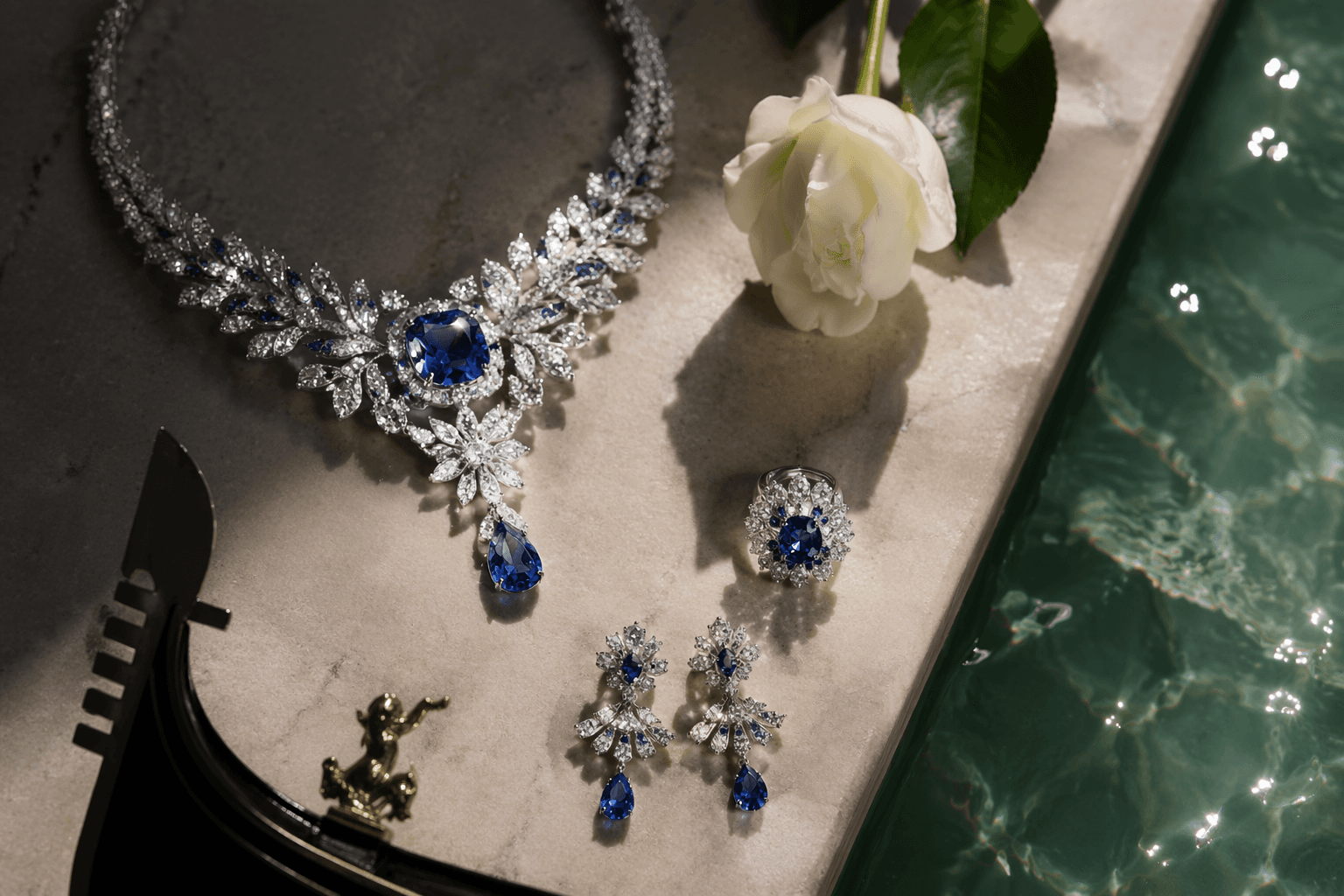
Kiki McDonough wins Queen Camilla’s Royal Warrant with colorful jewelry
Kiki McDonough’s royal warrant confirms a simple idea: lightweight gold and vivid stones make fine jewelry feel made for real life.
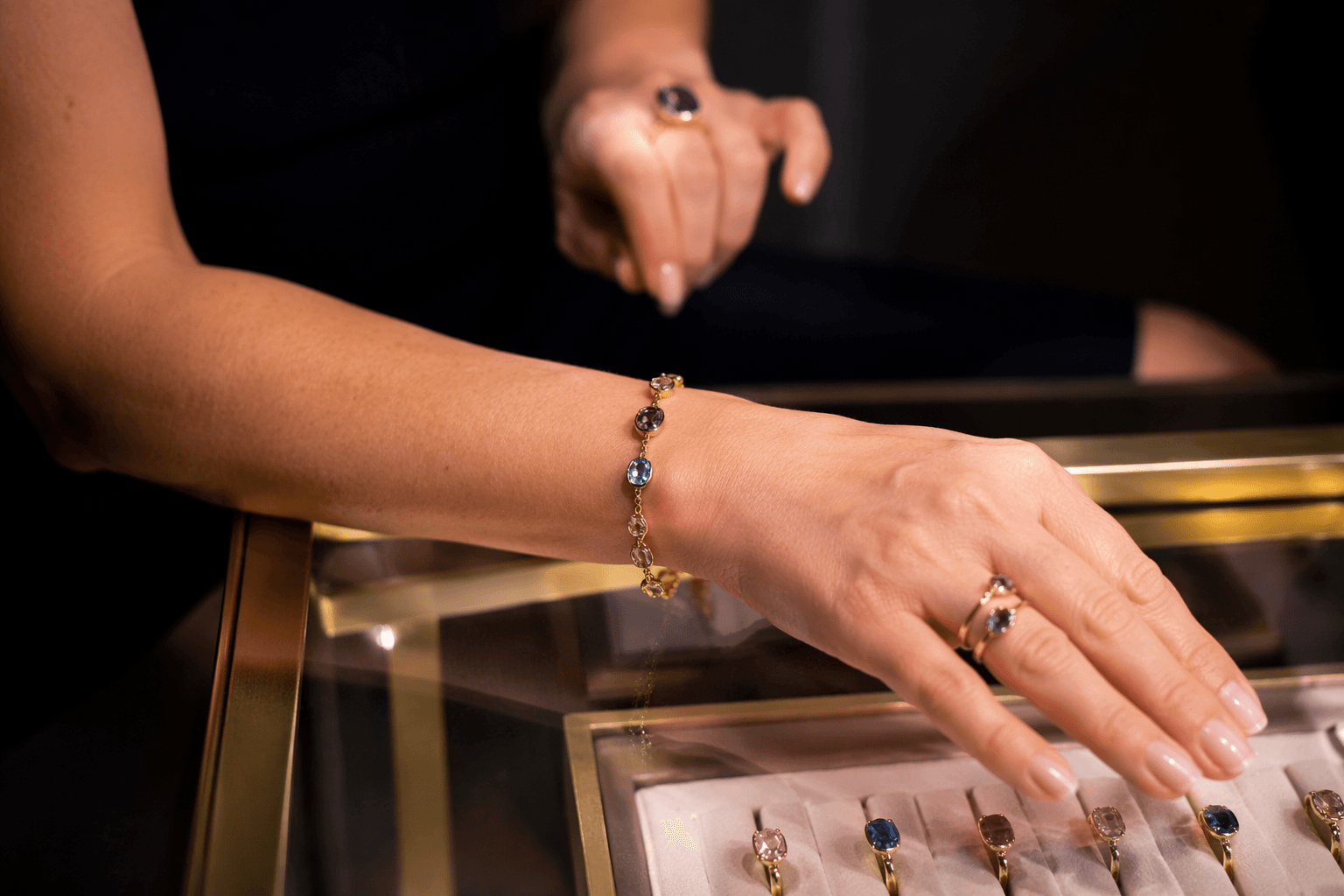
Kiki McDonough’s Royal Warrant from Queen Camilla does more than decorate a résumé. It confirms a formula that has kept the London jeweller relevant for decades: slim gold, saturated color, and proportions that make fine jewelry feel like part of the day, not a production.
The royal seal, and why it matters
A Royal Warrant remains one of British luxury’s clearest signs of trust, and Camilla’s award in April 2026 places McDonough firmly inside that circle. The recognition feels especially apt because her jewelry has already lived on the women who shape modern royal style, including Princess Diana, Queen Camilla and the Princess of Wales.
That royal reach has always been part of the brand’s appeal, but the real story is not prestige for prestige’s sake. McDonough has built a house around jewelry that reads polished without feeling precious, a distinction that matters when more formal fine jewelry can sit too heavy for everyday life.
Why the formula works on the body
McDonough founded Kiki McDonough Ltd in London in 1985, and the brand’s signature has stayed remarkably consistent: lightweight gold settings with vivid gemstones. The Royal Warrant Holders Association says she helped pioneer colorful gemstones beyond the traditional big three of rubies, emeralds and sapphires, and that shift still shapes how the brand looks and wears today.
The appeal is structural as much as visual. When gold stays light and the stone supplies the drama, the jewelry feels easier to live in. That balance is exactly why a ring or pair of earrings can feel special without being reserved for a black-tie calendar; the color does the speaking, while the metal quietly supports it.
McDonough’s official language of “timeless and wearable designs” is not just brand copy, because the pieces genuinely rely on that kind of restraint. A ballet-inspired collection, with easy earrings and rings set in vivid stones, is a good example of how the house keeps its shapes approachable while still delivering enough color to register immediately.
The detail that turns one piece into many
One of McDonough’s smartest ideas was the detachable drops collection, pioneered in 2004. That single concept says almost everything about the brand’s commercial intelligence: a piece should earn more than one outing, and it should adapt to the rhythm of a real wardrobe.
Detachable earrings solve a common problem in fine jewelry. They allow for a cleaner daytime profile, then a more decorative finish later, without forcing the wearer to commit to a heavier or more formal look from the start. In a market that rewards repeat wear, that kind of flexibility is not a bonus feature, it is the product.
- Detachable drops create two looks from one jewel, which is exactly the kind of utility that keeps a piece in rotation.
- Lightweight gold helps color feel brighter and more modern, rather than buried under metal.
- Vivid gemstones give a polished look without the stiffness that often comes with more ceremonial fine jewelry.
Those are the signals retailers should watch for now. Comfortable proportions, easy movement, and color-forward gold pieces are selling because they feel special in the hand and practical on the body.
From Sloane Square to museum status
Kiki McDonough Ltd is based in Sloane Square, Chelsea, and Companies House lists KIKI MCDONOUGH LIMITED as active at 12 Symons Street, London, SW3 2TJ, with incorporation on 9 May 1985. The address may be discreet, but the brand’s influence is anything but. That combination of neighborhood polish and long-running continuity is part of what gives McDonough her particular authority in British jewelry.
The museum record deepens that story. The Victoria and Albert Museum acquired McDonough’s first design, a pair of rock crystal heart earrings with a gold bow, which signals that her work sits comfortably at the intersection of commerce and design history. A talk featuring McDonough at the museum on 30 October 2025 further underlines that she is not only a successful seller of jewels, but a figure whose work belongs in the broader story of British adornment.
The modern luxury buyer wants ease with character
The durability of McDonough’s appeal comes down to a simple but demanding brief: make jewelry that feels desirable without demanding occasion. Her color is rich, but not remote; her gold is fine, but not rigid; her silhouettes are distinct, but not difficult. That is exactly the kind of balance that keeps a piece moving from drawer to daily wear.
The Royal Warrant only sharpens that lesson. In a market crowded with high-impact jewelry that can feel theatrical after the first outing, McDonough’s strength is that she understands how to make a jewel stay in circulation. The best luxury now is not simply beautiful, it is wearable enough to become part of a life, and that is where her colorful gold pieces continue to win.
This article was produced by Prism’s automated news system from verified source data, official records, and press releases, then run through automated quality and moderation checks before publishing. The system is built and supervised by the people who set the standards it runs under. Read our full AI policy.
Know something we missed? Have a correction or additional information?
Submit a Tip