Lab-grown diamonds reshape engagement rings as natural stones go bigger
Lab-grown stones are changing what shoppers spend on the center stone, while natural diamonds are answering with bigger carats and a stronger heirloom pitch.
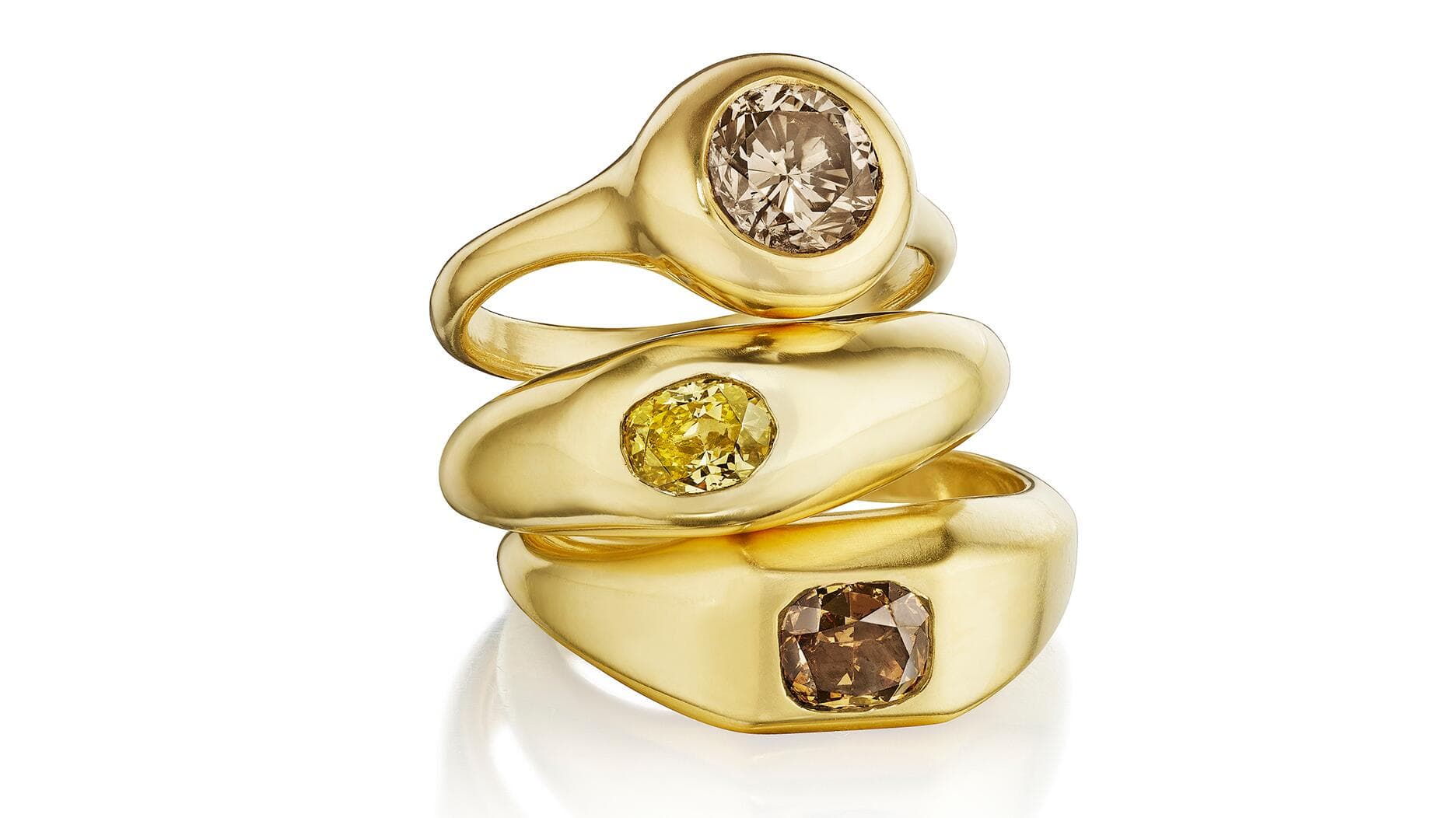
Lab-grown diamonds have changed the engagement ring’s price architecture, but the more revealing shift is happening in gold. The Knot’s 2025 Real Weddings Study found that 52% of surveyed couples said their 2024 engagement ring featured a lab-grown diamond, and the average engagement-ring spend fell to $5,200 from $6,000 in 2021. That leaves more room for design decisions to matter, because when the stone costs less, the setting, the metal and the overall silhouette become part of the value story.
The new math of the ring
A round, unbranded 1-carat lab-grown diamond averaged about $845 in early 2025, while a comparable natural stone cost roughly $3,895. That gap explains why lab-grown has moved so quickly from a niche to a mainstream choice, and why Tenoris said lab-grown diamonds accounted for 14% of the U.S. jewelry market in 2024. Tenoris also reported that finished lab-grown jewelry unit sales rose 43% that year, with revenue up 31%, even as growth slowed from 2023.
For gold-jewelry readers, that price spread changes the psychology of the purchase. A buyer who once had to decide whether to stretch for a slightly larger mined diamond can now choose a more dramatic center stone and still leave room in the budget for a heavier gold band, a more sculpted profile or a more elaborate head. In practice, the ring can read as more substantial without becoming more expensive, which is one reason lab-grown has proved so persuasive to first-time buyers.
When the setting becomes the statement
This is where gold craftsmanship re-enters the conversation. A prong setting allows light to flood the stone and gives a larger center a floating, airy look; a bezel wraps the edge in metal and can make a smaller stone feel intentional, secure and modern. As lab-grown stones get bigger, many shoppers are not simply chasing carat weight, they are buying into the illusion of scale, and gold is the frame that makes that illusion believable.
That shift has consequences for how jewelers sell. If the center stone is no longer the only place to put the budget, the mounting has to justify itself through proportion, weight and finish. A finely made gold ring can look richer than its diamond would suggest, especially when the buyer has elected to economize on the center and spend on the architecture around it.
Natural diamonds are answering with size
Natural diamonds have not disappeared from the conversation; they are being repositioned around rarity and emotional permanence. De Beers Group’s 2025 Diamond Report said U.S. women spent an average of $4,063 on a natural diamond in 2025, up 25% from $3,242 in 2023. The average size of a natural diamond purchased also rose, to 1.86 carats from 1.65 carats, which suggests the shoppers still choosing mined stones are often choosing bigger ones.
That is an important clue for gold jewelry. The natural-diamond buyer is not necessarily shrinking the ring; in many cases, she is consolidating the budget into a larger, more commanding center stone and letting the gold setting support the story rather than compete with it. Natural stones continue to resonate through rarity, timelessness and inherent value, and those qualities become easier to market when the ring itself feels like an object built to last.

What shoppers are really buying
The category split is no longer just about price. Lab-grown diamonds have become the language of affordability and size, while natural diamonds increasingly stand for symbolism, status and the sense that a ring will one day move through a family as an heirloom. That is why the gold setting matters so much now: it is the visible proof that a shopper did not merely save money, but made a deliberate design choice.
For jewelers positioning natural-diamond gold rings, the message has to be more refined than nostalgia. Paul Zimnisky’s early 2025 pricing snapshot, in which a 1-carat lab-grown stone averaged about $845 against roughly $3,895 for a similar natural diamond, shows how hard the comparison has become. To hold the premium, a natural-diamond ring has to feel not only beautiful, but singular, with gold work that underscores craftsmanship, permanence and the sense that the purchase is meant to outlive trends.
That is the real market lesson in the lab-grown surge. Shoppers are not merely choosing cheaper stones, they are redefining where luxury lives inside the ring. For some, it is in size and visual impact; for others, it is in the weight of the gold, the precision of the setting and the enduring allure of a mined diamond that still carries the charge of rarity.
This article was produced by Prism’s automated news system from verified source data, official records, and press releases, then run through automated quality and moderation checks before publishing. The system is built and supervised by the people who set the standards it runs under. Read our full AI policy.
Did this article answer your question?