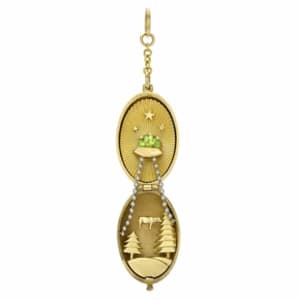
Malo debuts first jewelry capsule, extending knitwear into gold-plated brass
Malo turned rib-knit and woven cashmere codes into 11 gold-plated brass pieces, hand-finished in Arezzo and priced from €520 to €950.

Ribbed chains, knot details, and woven textures drove Malo’s first jewelry capsule, a compact 11-piece line that translated the Florence brand’s knitwear language into 24-karat gold-plated brass. Hand-finished by artisans in Arezzo, Italy, the collection leaned hard into texture rather than stone setting, with names such as Arezzo Chain, Notte Toscana, Nodo Fiorentino, and Aurea di Siena signaling a Tuscany-rooted point of view.
Michelle Kessler-Sanders, Malo’s chief executive officer, framed jewelry as a natural next step for the brand because it extends knitwear into another form. That idea was visible in the objects themselves. The Arezzo Chain bracelet paired a larger ribbed chain with a finer chain intertwined to mimic woven knitwear, while Notte Toscana used a chain motif inspired by knit texture. Nodo Fiorentino centered a knot detail, and other pieces carried black lacquer accents and MALO engraving, pushing the collection toward a fashion-language jewel rather than a generic gold-tone capsule.

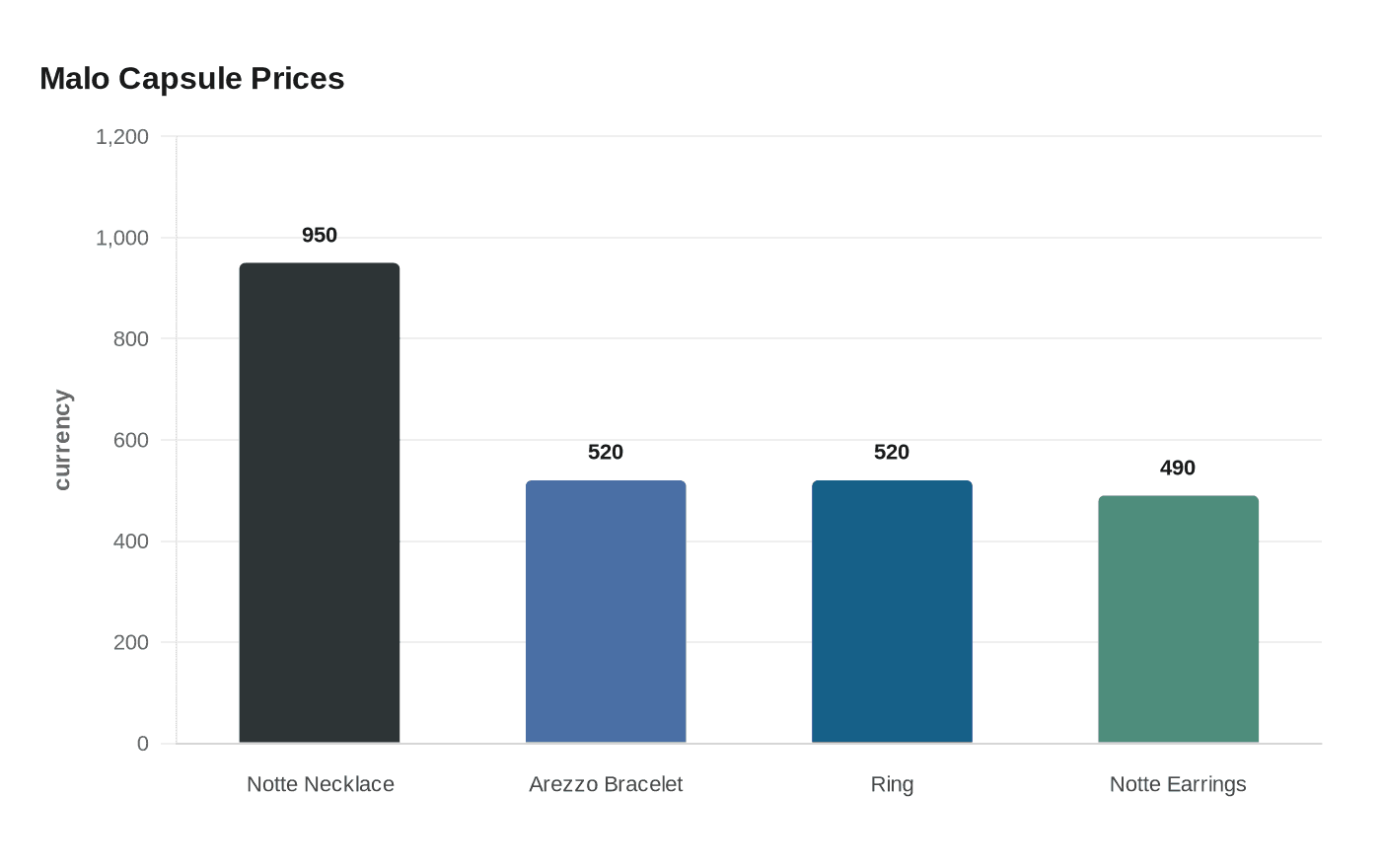
The pricing and assortment place Malo in an interesting middle ground. The live jewelry edit on the brand’s site currently shows 10 products, even though the capsule launched as 11 pieces, suggesting a tighter commerce assortment than the full concept. Listed prices include €950 for the Notte Toscana necklace, €520 for the Arezzo Chain bracelet, €520 for a ring, and $490 for Notte Toscana earrings in the U.S. market. Those figures are not rarefied by fine-jewelry standards, but they are high enough to demand more than a logo and a plating finish.
What gives the capsule its strongest case is the coherence of its design system. Malo, founded in Florence in 1972, has built its identity around Made-in-Italy cashmere and handcrafted production, so jewelry built around rib-knit effects and woven-texture motifs reads as an extension of the house rather than a one-off licensing exercise. Still, the collection also shows how fashion-first jewelry capsules are increasingly trying to convert brand codes into wearable metal forms. In Malo’s case, the result feels more like a genuine design translation than branding spillover, because the craft story, the Tuscany references, and the surface treatment all point in the same direction.
This article was produced by Prism’s automated news system from verified source data, official records, and press releases, then run through automated quality and moderation checks before publishing. The system is built and supervised by the people who set the standards it runs under. Read our full AI policy.
Did this article answer your question?