Marie Lichtenberg turns damaged lockets into wearable Smash pieces
Marie Lichtenberg’s Smash turns a damaged locket into five flattened gold pieces, proving that a mark of impact can read as intimacy, not ruin.
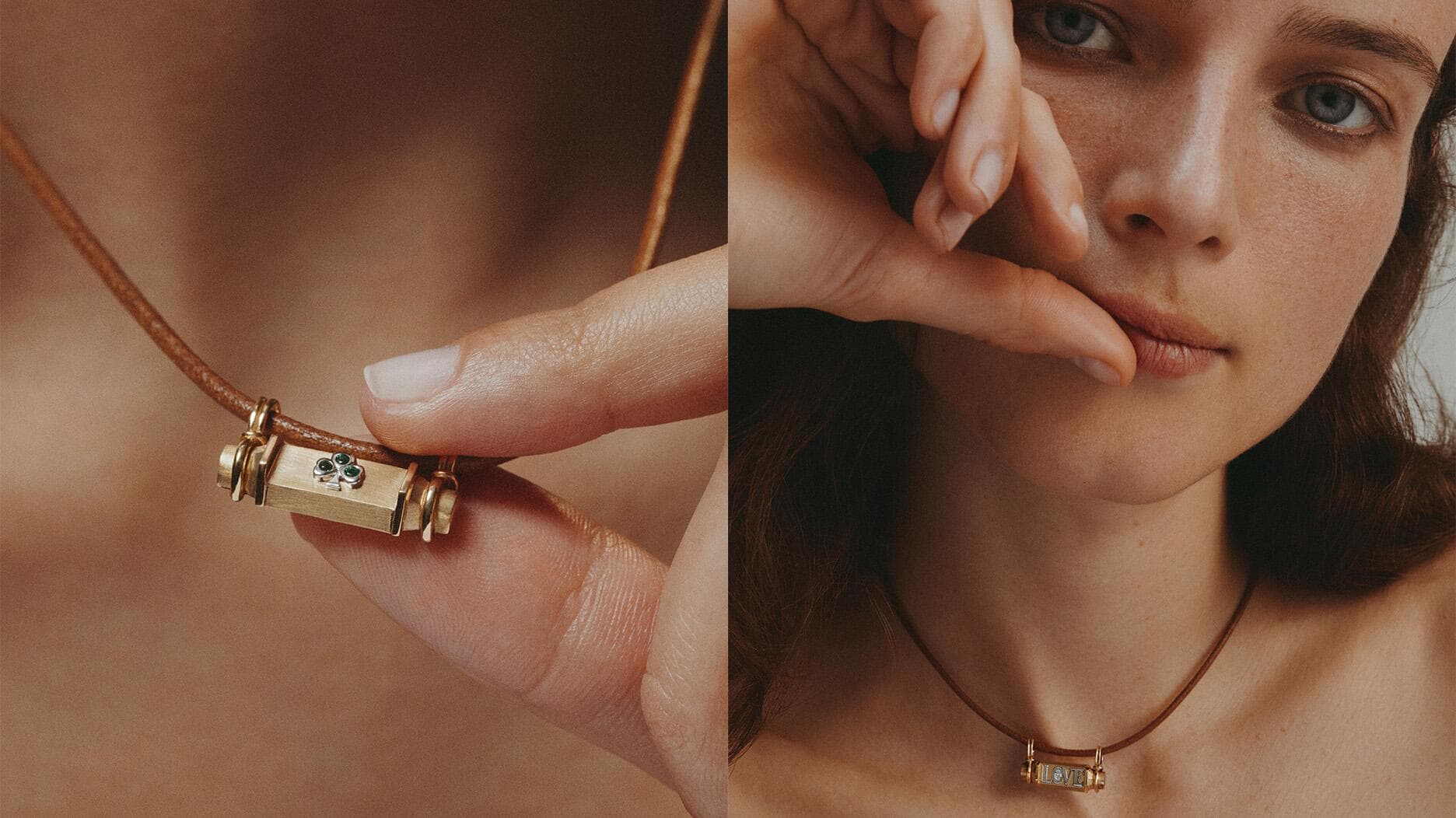
A dented locket is not the usual starting point for a luxury jewel, but Marie Lichtenberg has built a career on turning sentiment into design language. With Smash, she takes the house icon and presses it into a flatter, harder-edged form, as if the jewel had survived impact and returned with its character sharpened rather than erased.
A locket that keeps its scar
Smash is presented as five deliberately flattened pieces, a compact capsule that keeps Lichtenberg’s yellow-and-white-gold vocabulary while shifting the silhouette into something more immediate and more personal. The brand imagines the lockets as if they were “pressed, compressed, almost crushed under the weight of the times,” and that tension is exactly what gives the collection its force. Instead of disguising damage, Smash makes it the point: a jewel can look tested and still read as precious.
That idea matters because gold is often sold as untouchable, polished, and immune to wear. Lichtenberg argues for a different kind of value, one rooted in survival, memory, and the visible trace of experience. The result is a collection that feels less like a novelty and more like an evolution of the locket itself, a form already charged with private meaning and now made to carry a rougher, more modern mood.
Why Marie Lichtenberg’s story gives the collection weight
Lichtenberg did not arrive in jewelry from the traditional bench route. She entered jewelry design in 2019 after a career as a fashion editor for ELLE France and ELLE International, and that background shows in the way she thinks about symbolism, styling, and editorial impact. Her pieces are not just accessories; they are narrative objects, built to be read as much as worn.
The origin story of the locket is central to the brand. Marie Lichtenberg says her lockets draw on her creole heritage and were inspired by the clasp on a traditional gold forçat chain given to her as a teen by her mother. That detail gives the work a familial anchor that goes beyond branding language: the collection begins with a gift, then grows into a signature, then returns as an object that can be remade without losing its emotional core.
National Jeweler described her entry into the scene as arriving with a unique signature, a locket based on an antique family heirloom. That is the crucial context for Smash. This is not a designer borrowing a trendy distressed finish from elsewhere. It is a house rewriting its own emblem, and because the emblem already carries personal history, the smashed surface feels poignant rather than gimmicky.
What Smash changes, and what it preserves
The strongest thing about Smash is that it does not abandon the language that made the brand recognizable. The pieces still belong to Lichtenberg’s world of lockets in yellow gold and white gold, and the official product descriptions say they retain the protective spirit of the original while adding a “raw, insolent tension.” That phrasing captures the balancing act here: the jewel remains talismanic, but it has more attitude, less polish, and a sharper relationship to the body.
The Love Smash Locket, priced at $7,040, is the clearest expression of that idea. It measures 2.5 cm, is made in 18K yellow gold and white gold, and includes a 0.09-carat white diamond, HSI1. It is sold on a 44 cm Micro Lasso Cord in natural leather, which softens the preciousness just enough to keep the piece from feeling overly formal.

That cord choice is not incidental. A gold locket on leather changes the jewel’s rhythm against the skin, making it feel more lived-in and less ceremonial than a chain alone might. The flat-backed profile also helps the piece sit closer to the body, which reinforces the sense that Smash is designed for daily wear, not for a velvet-box existence.
The appeal of imperfect gold
There is a reason damaged-looking jewelry can feel more desirable now. In a market crowded with polished surfaces and predictable luxury cues, a jewel that suggests impact, abrasion, or compression reads as emotionally legible. Smash taps that appetite with unusual precision: it makes gold feel more personal by allowing the object to carry a trace of strain.
That is especially persuasive in a locket, a category already associated with secrets, memory, and protection. When the surface appears flattened or marked, the symbolism deepens. The jewel no longer only conceals what it contains; it suggests it has already endured something on the outside, and that history becomes part of its beauty.
Lichtenberg’s broader lockets collection shows how deliberate this system is. The house offers Classic, Baby, and Micro sizes, and describes the line as precious handmade lockets and locket necklaces for women and men. Smash therefore reads as a variation within an established architecture, not a standalone detour. It belongs to a family of forms that has already been sized, repeated, and refined into a recognizable code.
A collectible piece built for the present
The market context helps explain why Smash lands now. National Jeweler noted that the brand has been carried by Broken English, Twist, and Net-a-Porter, names that signal both taste-making credibility and a broad luxury audience. That distribution history matters because it suggests collectors already understand Lichtenberg’s lockets as pieces with a point of view, not just decorative gold objects.
Smash pushes that logic further by making emotional abrasion part of the design brief. The Love Smash Locket is available only on pre-order, with a three-week production lead time, which adds a small but meaningful sense of exclusivity and making-time to the object. In a category where provenance and handwork are part of the price, that delay feels appropriate rather than inconvenient.
In the end, Smash is compelling because it refuses to separate beauty from damage. Lichtenberg has taken the signature locket that defined her label and made it look as if it had been pressed by life itself, then polished by craft into something collectible. The result is gold jewelry with a pulse: still protective, now a little bruised, and all the more intimate for it.
This article was produced by Prism’s automated news system from verified source data, official records, and press releases, then run through automated quality and moderation checks before publishing. The system is built and supervised by the people who set the standards it runs under. Read our full AI policy.
Did this article answer your question?