Mellerio revives 1951 patent with gem-set gold nail jewelry
Mellerio’s 1951 nail patent returns in gem-set 18-karat gold, recast in white and yellow metal for a couture audience.

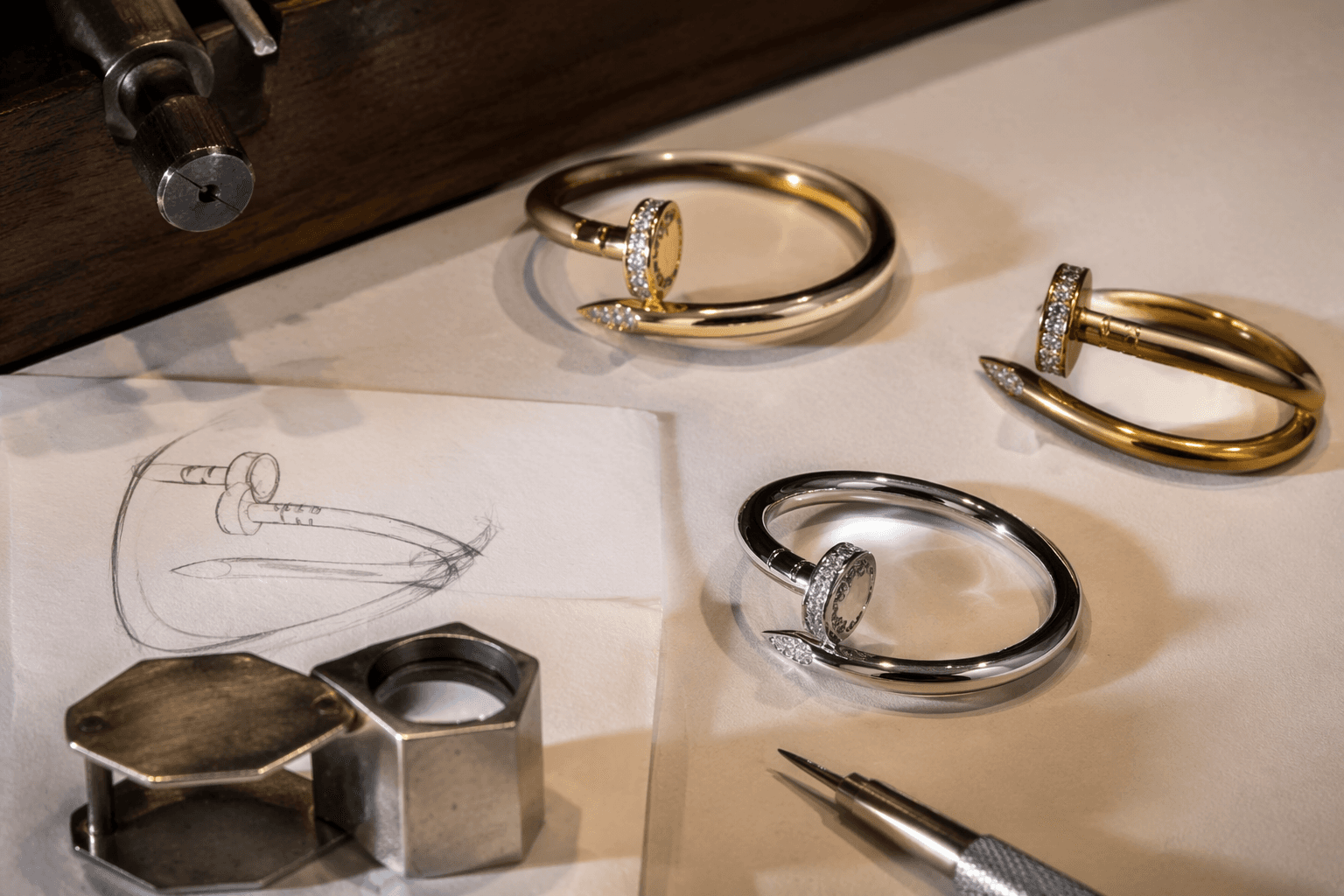
Mellerio has finally translated a 1951 patent into commercial jewelry, unveiling three series of gem-set 18-karat gold nail ornaments during its Paris Couture Week high-jewelry programming. The shape is as unusual as it sounds: a nail-form jewel built to sit close to the contour of the hand, more object lesson than standard adornment, but now made for wear in 2026.
The house’s own history records the original patent as a decorative nail ornament in palladium and diamonds, with perforations and a frame that follows the nail’s curve. WWD’s reporting adds that the 2026 versions switch the metal to gold, using white or yellow gold depending on the gem pairing, and notes that the nails also surfaced in advertising in a French magazine in 1959. That gap, stretching from patent to publicity to production, is what makes the revival feel less like a gimmick than a long-buried idea finally finding its audience.
Mellerio has the lineage to support that kind of patience. The house says it was founded in 1613 and describes itself as the last independent jewelry house in France, a 14-generation family business whose identity rests as much on continuity as on novelty. Its historical self-image is also tied to large-scale craftsmanship: to mark its 400th anniversary, Mellerio created a high-jewelry piece honoring Queen Marie de Médicis, and says it took 10 years to source the rubies and 4,500 hours of work to complete.
That is the real context for the nail ornaments. Mellerio is not simply dusting off an archive sketch for a season of press attention; it is testing whether a mid-century patent can be made desirable as gold jewelry without losing the eccentricity that made it worth patenting in the first place. In white or yellow 18-karat gold, and with stones changing the metal choice from one pairing to the next, the design lands as a small but pointed argument for archival form with present-tense wearability.
This article was produced by Prism’s automated news system from verified source data, official records, and press releases, then run through automated quality and moderation checks before publishing. The system is built and supervised by the people who set the standards it runs under. Read our full AI policy.
Did this article answer your question?

&w=1920&q=75)