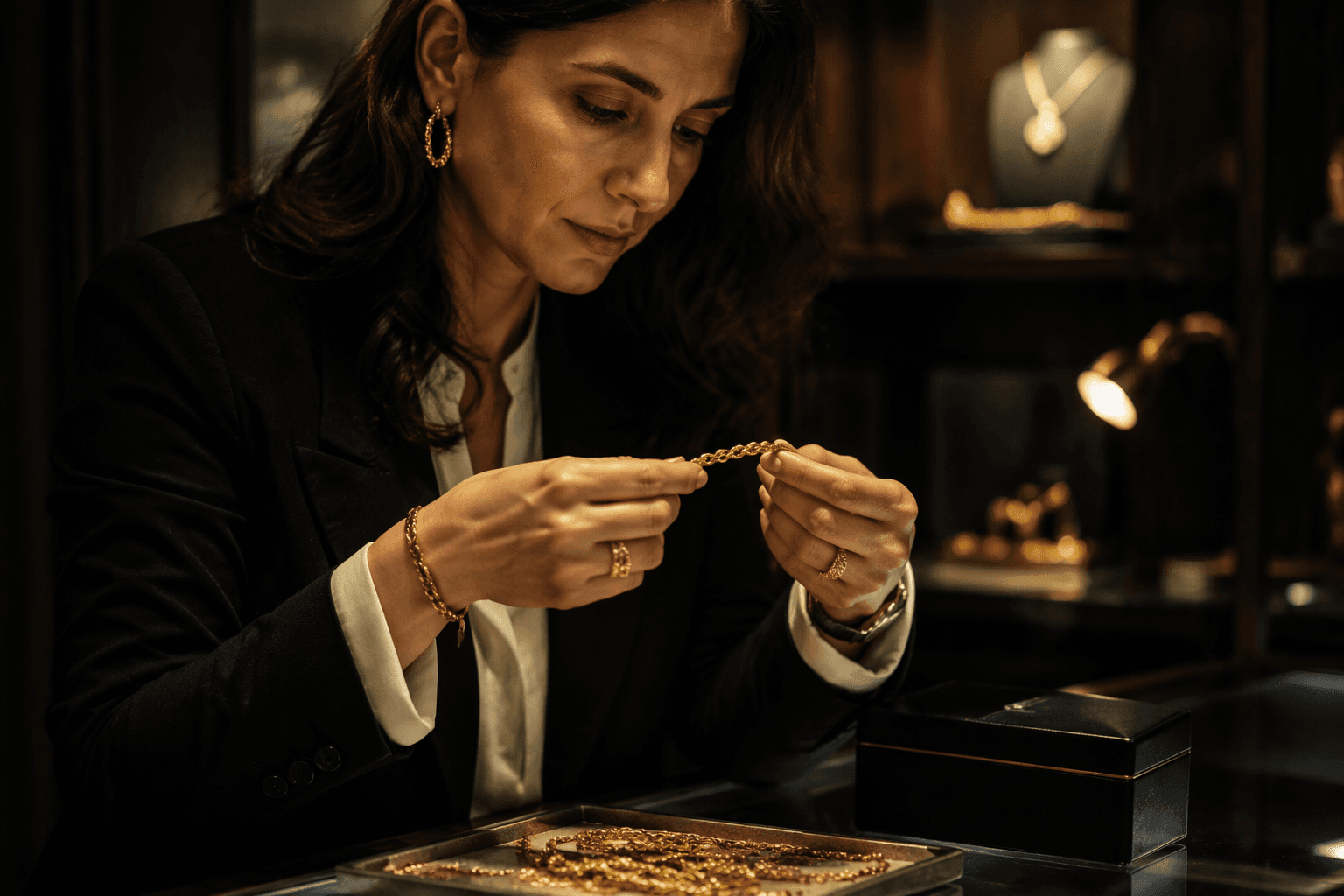
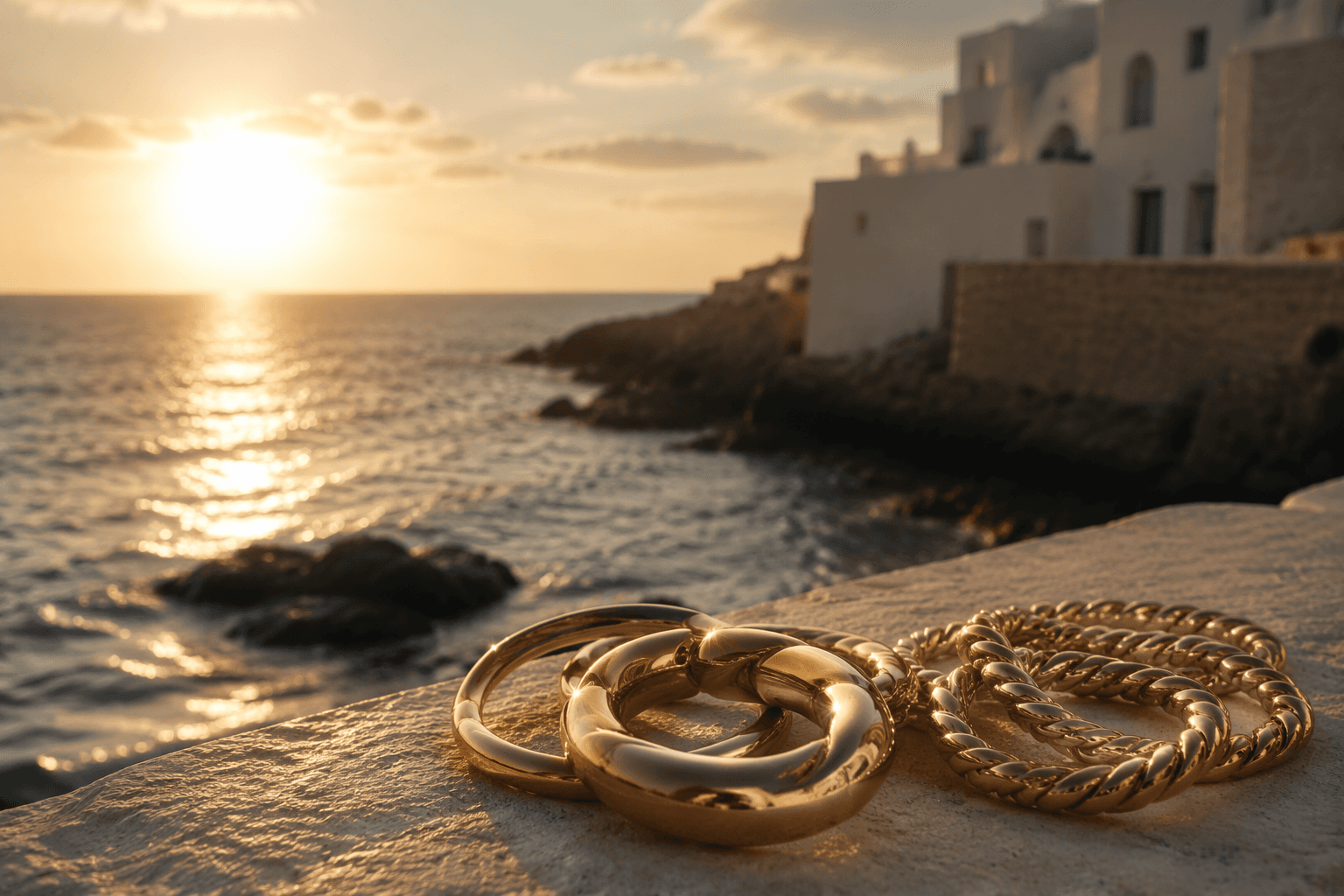
MFAH to debut first U.S. survey of Bernhard Schobinger gold jewelry
MFAH will open the first U.S. survey of Bernhard Schobinger, where an 18k gold Grass Ring and mixed-material bangles recast gold as rough, charged, and alive.
The Museum of Fine Arts, Houston is bringing Bernhard Schobinger’s rough, anti-polish gold into the first U.S. survey of his career, and that alone makes the show feel timely in a market still dominated by mirror-finish chains and pristine cuffs. Going Underground: The Jewels of Bernhard Schobinger will span 53 works from 1968 to the present when it opens Sept. 3, 2026 in the Nancy and Rich Kinder Building and runs through Jan. 3, 2027.
Schobinger’s challenge to conventional luxury is not subtle. The exhibition includes an 18k gold Grass Ring and a bangle set with gold, iron, cinnabar, pearl, diamond, and malachite, objects that treat gold less as a seal of purity than as one material in a charged composition. That mixed-language approach is part of the point: the work turns up the tension between precious metal and found matter, between polish and abrasion, and between ornament and something closer to sculpture.
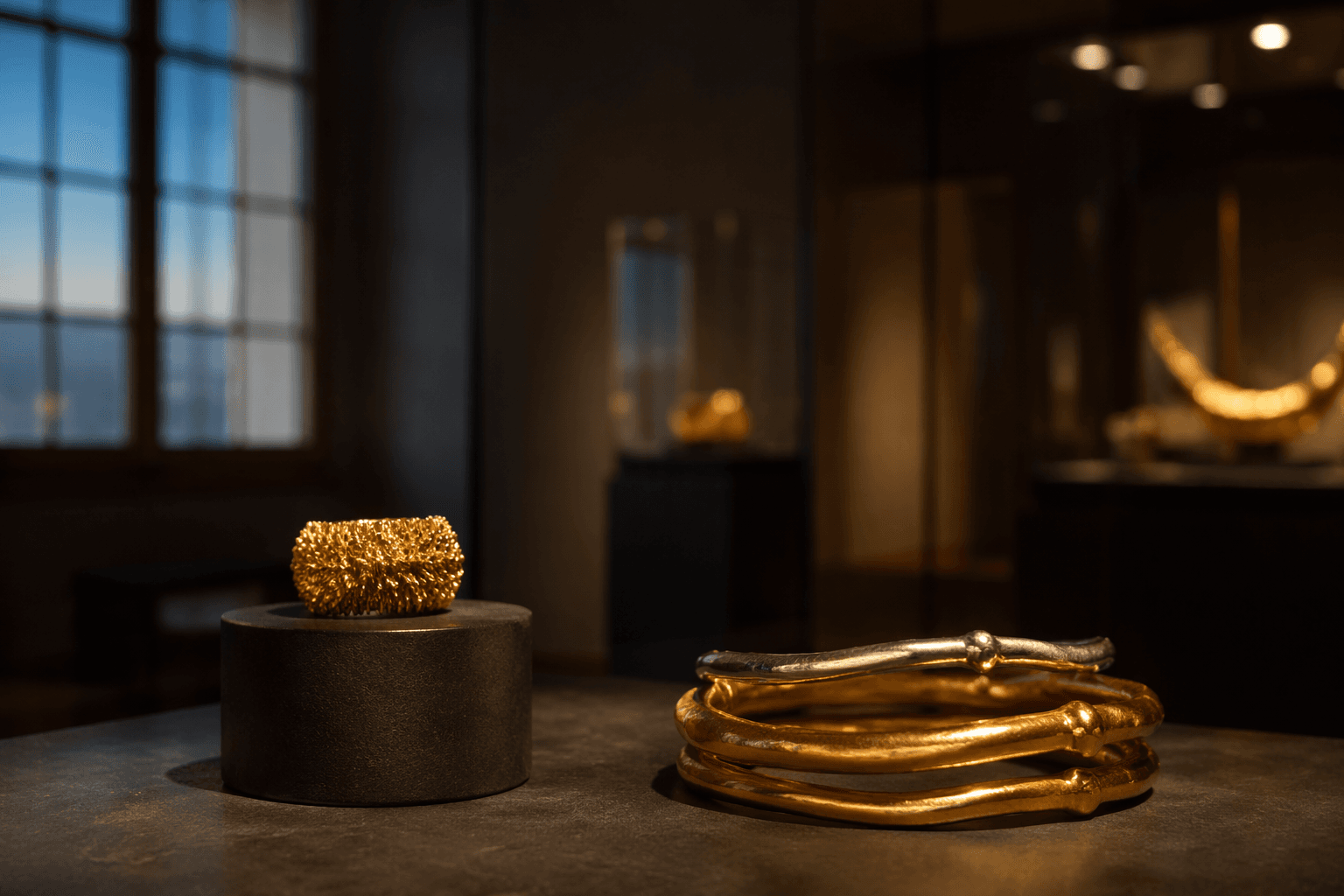
Those ideas are already showing up in the way serious jewelry shoppers and stylists are thinking about gold. Schobinger’s rings, bracelets, and necklaces make a case for pieces with texture, asymmetry, and visible material contrasts, the kind of design that reads as collected rather than coordinated. The Grass Ring, with its direct nod to the ordinary world, and the bangle’s collision of iron, cinnabar, pearl, diamond, and malachite, both argue for gold that is made stranger by what surrounds it. In a season when so much fine jewelry is built to look seamless, his work favors friction.
The exhibition also draws necklaces, bracelets, and rings from private collections and the MFAH holdings, and places Schobinger’s work in dialogue with the long shadow of World War II, punk music, and wider political and cultural forces. Born Jan. 18, 1946, in Zurich, Schobinger studied at the Zurich School of Applied Arts, apprenticed with the goldsmith E. Kundig & Co. in Zurich, and has worked independently since 1968 from his studio in Richterswil, Switzerland. MFAH identifies Elizabeth Essner, the Windgate Foundation Associate Curator of Craft, and Meagan Howard, a curatorial assistant in decorative arts, craft, and design, with the presentation; a 112-page book due in September includes contributions from Essner, Claudia Schmuckli, Schobinger, and Cindi Strauss. In Houston, Schobinger’s jewelry will read less like accessory than argument.
This article was produced by Prism’s automated news system from verified source data, official records, and press releases, then run through automated quality and moderation checks before publishing. The system is built and supervised by the people who set the standards it runs under. Read our full AI policy.
Did this article answer your question?