Piaget ends Extraleganza trilogy with 65-piece Colors collection
Piaget closes Extraleganza with 65 jeweled pieces that turn ultra-thin watch logic into a vivid high-jewelry signature.
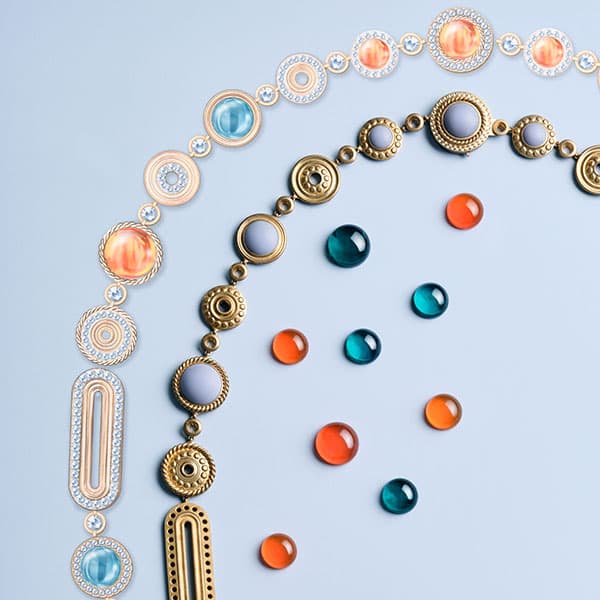
Piaget closes its Extraleganza trilogy with 65 high-jewelry pieces that treat color like architecture, not decoration. The finale looks back to the house’s ultra-thin 9P watchmaking logic, where a slim movement opened room for hardstones and gems, and translates that thinking into gold, form, and chromatic tension.
A trilogy that ends in the house style
Colors of Extraleganza is the last chapter in a three-year arc that began with Essence of Extraleganza in 2024, released for Piaget’s 150th anniversary, and continued with Shapes of Extraleganza in 2025. Piaget frames the trilogy as a return to the creative energy and cultural vibrancy of the 1960s and 1970s, the decades when the maison’s visual language became unmistakable. That is not nostalgia for its own sake. It is a deliberate reminder that Piaget’s high jewelry has always been built on a dialogue between discipline and exuberance, a balance the brand traces back to its founding in 1874 in La Côte-aux-Fées, Switzerland.
The brand’s own language is telling here. Through Extraleganza, Piaget says it is reaffirming high jewelry as “a living, expressive, and resolutely contemporary discipline,” while also anchoring the story in the Jura winters when Georges-Édouard Piaget first devoted himself to watch movements. That founding detail matters because it explains why Piaget’s jewelry never reads as ornament alone. The maison has always seen goldsmithing, gem-setting, and watchmaking as parts of the same creative continuum.
The watchmaking cues collectors will recognize
The most important technical reference is the ultra-thin 9P movement, introduced in 1957. Piaget’s point is not simply that the caliber was famous for being slim. Its thinness freed up room on the dial, and the maison began treating the dial as a field for hardstone and gem composition across a wide spectrum of color. That is the crucial bridge between watch and jewelry: a piece is not just set with stones, it is composed like a miniature landscape.
Piaget sharpened that link again at Watches and Wonders 2024, when it revisited high-jewelry watch signatures first introduced in 1969, including cuff watches and the Swinging Sautoir, while also citing the Aura watch launched in 1989. Those forms still matter because they show how Piaget thinks about scale and motion. A cuff can read like sculpture; a sautoir can function as both jewel and timepiece. For collectors, that cross-category continuity is what gives Piaget recognizability. The stones may change, but the house code remains visible in the structure.
How Colors of Extraleganza handles gold, color, and form
Piaget’s artistic director Stéphanie Sivrière places the emphasis on chromatic power rather than on individual stones alone. In JCK’s coverage, she describes the collection as a study in how gems resonate when combined, noting pairings such as black opals with green highlights beside ultramarine sapphires, and a sapphire and mother-of-pearl duo that intensifies pink hues. That is where the collection feels most Piaget: not in gem excess, but in controlled contrast. Color is not a surface effect here. It is the organizing principle.
The Blue Illusions necklace makes that idea tangible. It took nearly 900 hours to craft and centers on an 8.52-carat cushion-cut Madagascan sapphire, a 3.30-carat Paraíba tourmaline, and a one-of-a-kind 13.98-carat black opal. Custom-cut sapphires and baguette tourmalines frame the pendant in a geometric arrangement designed to scatter light across the neckline. The result is not a generic high-jewelry collar. It is a composition of blue, green, and black that feels engineered as much as it feels decorative.
Flamboyant Links is the more overtly horological statement. The piece revives the sautoir watch Piaget first showed in 1969 as part of its 21st Century Collection, and uses rose-gold links ringed with tiger’s eye, the first time since the 1970s that the maison has paired gold links with an ornamental stone. The sautoir carries a 4.13-carat Mandarin garnet and converts into a choker or a wristwatch, while a companion ring centers on a 6.42-carat cushion-cut Mandarin garnet and the earrings hold a matched pair of 3.04-carat garnets. This is Piaget at its most convincing: convertible, tactile, and deeply aware that form can be as expressive as gemstone rarity.
Elsewhere in the collection, Piaget leans into more sculptural and pop-inflected ideas, including Gold Swirl creations and the Gems Pop set, which draws on the Memphis art movement of the 1980s. That breadth keeps Colors of Extraleganza from settling into one signature silhouette. Instead, the 65 pieces read as a chromatic vocabulary, moving from geometric to fluid, from ornamental to almost graphic.
Why this matters for collectors
The strongest luxury collections do more than display beautiful stones. They give you a house handwriting you can identify at a glance, and Piaget does that through gold structure, color composition, and the willingness to let watchmaking shape jewelry forms. In a market crowded with gem-heavy statements, that matters. It means the value is not only in carats, but in coherence.
Piaget’s Extraleganza finale therefore lands as more than a closing chapter. It is a reminder that the maison’s most compelling high jewelry is built from the same impulse that defined its watches: to make precision feel alive, and to make gold, color, and movement speak the same language.
This article was produced by Prism’s automated news system from verified source data, official records, and press releases, then run through automated quality and moderation checks before publishing. The system is built and supervised by the people who set the standards it runs under. Read our full AI policy.
Did this article answer your question?