Polished yellow gold leads Vegas trends, with slimmer, versatile designs
Polished yellow gold is framing Vegas’s biggest diamond looks, from rigid collars and slim bands to charms and corded pieces that keep prices in reach.
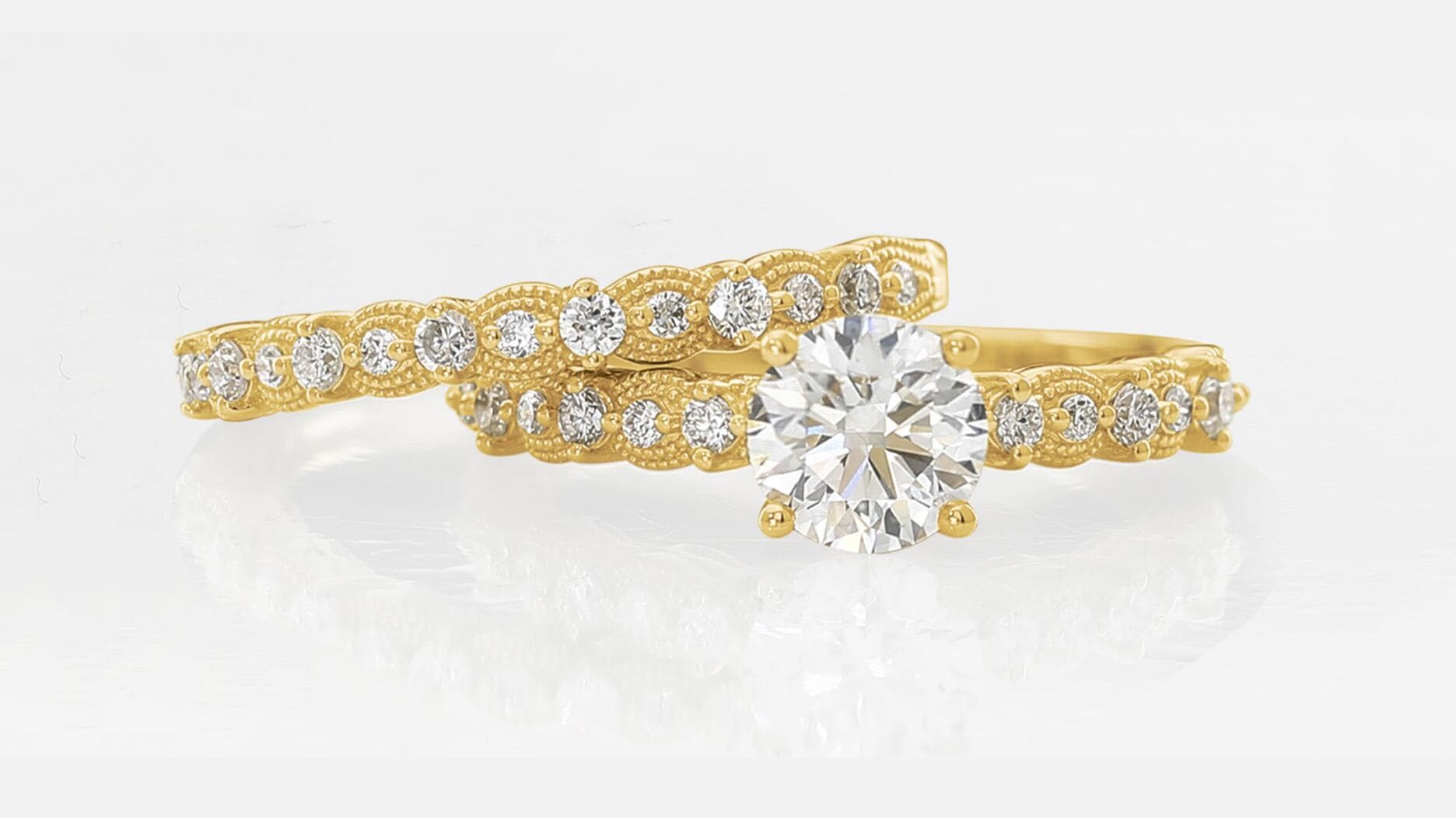
Polished yellow gold is the material that makes this Vegas season feel newly sharp. At JCK, Luxury, and Couture, the strongest diamond looks were not heavy-handed showpieces but leaner constructions in which gold did the visual work: rigid collars, substantial bands, charm-led pieces, and high-polish settings that let a single stone carry more presence. The result was less about ornament for ornament’s sake and more about structure, proportion, and how far a jewel can stretch when gold prices keep pressure on every decision.
Yellow gold is the framework
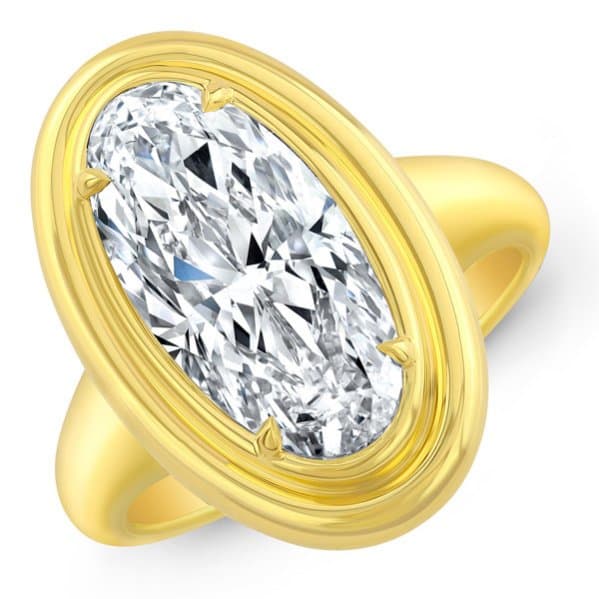
The most useful way to read this season is to think of yellow gold as the backbone, not the border. JCK’s Vegas trend report repeatedly returned to minimalist settings with large solitaire-style diamonds paired with high-polish, mostly yellow gold, plus bold torques and rigid collar necklaces that held a single pendant at the throat. Substantial gold bands with bezel-set diamonds also stood out, proving that the cleanest silhouettes were often the ones that felt freshest.
That same report made clear that natural diamonds were being shown on earrings, hanging from rigid gold collars, and mixed with fancy shapes, which gave the season a more sculptural, less traditional profile. The effect was to make diamonds look contemporary through restraint: fewer visible mechanics, less decorative clutter, and more emphasis on how the metal frames the stone. In a market full of visual noise, the simplest gold structures read as the most modern.
Slimmer proportions are changing the feel of luxury
The strongest pieces were not necessarily the largest. They were the ones that used slimmer profiles to sharpen the silhouette, whether that meant a collar that sat close to the neck or a band that felt substantial without becoming bulky. JCK’s trend coverage also pointed to open rings and other pared-back shapes, showing that designers are leaning into geometry and negative space as much as carat weight.
This shift matters because it changes how yellow gold wears. A narrow, polished surface reflects light differently from a heavily textured one, so even a small amount of gold can feel deliberate and expensive when the finish is clean and the proportions are disciplined. That is why the trend is not simply "less gold"; it is gold used more efficiently, with a clearer line from metal to stone to body.
Charms, cords, and smaller formats are the cost-conscious layer
Gold’s price pressure is part of why charms became such a visible story in Vegas. JCK noted that with gold near the $4,500 mark, many brands shifted toward smaller, or "mini," versions of signature collections, often in charm form. Instead of building every piece on a full gold necklace, designers offered simple add-ons and even alternatives like leather cords or gemstone-bead necklaces to bring the cost down without abandoning the look.
That choice tells you a lot about the season’s commercial logic. The pieces still feel jewelry-forward and polished, but they are easier to merchandise into a high-cost market because they offer a lower entry point. A charm on a cord is not a compromise if the design language is strong enough; in Vegas, it read as a smarter way to preserve desirability while controlling retail escalation.
Retailers wanted freshness, but they were not shopping blind
The show floor was shaped by retailers who wanted proven sellers and a little surprise. JCK said buyers were looking for client favorites and progressive designers, while also seeking pieces that could bring something new into stores. Orin Mazzoni Jr., owner of Orin Jewelers in Northville, Michigan, said he was looking for expandable bracelets, cross necklaces, and colored gemstone designs, then added, "We want to bring back something new, and these are our favorite brands and progressive designers."
That kind of buying brief helps explain why yellow gold showed up in such versatile forms. It was not being used only for classic chains or wedding jewelry. It was being deployed in bracelets that flex, necklaces that can be layered or worn alone, and mixed-metal or gem-accented pieces that feel current without becoming overly specific to one season. Retailers wanted items with staying power, but they also wanted enough novelty to justify the floor space.

Gold’s price volatility is shaping the design conversation
The broader market backdrop has been impossible to ignore. JCK reported in March that gold had fluctuated wildly during the first three months of 2026 before beginning to stabilize, and by June 10 gold was trading at about $4,104.90 per troy ounce, still 22.34% higher than a year earlier. That kind of pricing environment makes material choice part of the story, not just part of the manufacturing budget.
It also explains why JCK’s show coverage kept returning to gold prices, tariffs, artificial intelligence, and Pinterest-influenced brides. When buyers are thinking about how much a ring weighs, how a design photographs, and whether a piece can move across occasions, gold has to do more than look pretty. It has to earn its place through versatility, wearability, and a sense of design intelligence.
What to expect to see everywhere
The clearest takeaways from Vegas are easy to read on the body. Look for these forms to keep spreading through gold jewelry assortments:
- Rigid yellow-gold collars with a single pendant or diamond focal point.
- High-polish, minimalist settings that use one stone and very little visual interruption.
- Substantial gold bands, often bezel-set, that make the metal feel like the main event.
- Charm-led pieces, especially smaller versions of larger collections, that can be layered or customized.
- Leather cords and gemstone-bead strands as lower-cost alternatives to full gold necklaces.
- Mixed-shape diamonds and more sculptural silhouettes that keep yellow gold from feeling predictable.
The larger lesson from Vegas is that yellow gold is no longer just a warm backdrop for diamonds. It is the design language that makes diamonds feel current, the pricing lever that forces better editing, and the styling tool that lets a piece move from statement to everyday wear. In 2026, the best gold jewelry looks polished, precise, and flexible enough to survive both the market and the closet.
This article was produced by Prism’s automated news system from verified source data, official records, and press releases, then run through automated quality and moderation checks before publishing. The system is built and supervised by the people who set the standards it runs under. Read our full AI policy.
Did this article answer your question?