Princess Kate wears affordable gold initial bracelet in Italy
Princess Kate’s Italy bracelet cost under £10, yet her children’s initials in gold cubes made it feel as personal as any heirloom.

A bracelet that cost under £10 sat next to a Cartier piece on Catherine, Princess of Wales, in Italy, and the contrast was the point. Her gold stack in Reggio Emilia showed how a sentimental, highly personal charm bracelet can sharpen, rather than cheapen, a more polished royal jewelry look.
The piece was identified as an Atelier Molayem bracelet from the brand’s ABC collection, made in 9kt yellow gold with cube initials charms engraved for Prince George, Princess Charlotte and Prince Louis. HELLO! reported that the bracelet itself costs under £10, while each initial charm is priced at £78, a reminder that the emotional weight of a jewel does not always rise with its ticket price.
Atelier Molayem said it was “deeply honored” that HRH Catherine, Princess of Wales, wore the bracelet, and described the design as paired with original Liberty fabric. That mix of playful cord, yellow gold and family initials is exactly what makes the look feel current. It borrows the intimacy of friendship bracelets and the clarity of monogramming, then dresses both ideas in a language familiar to fine jewelry: yellow gold, clean cube forms and a simple, readable silhouette.
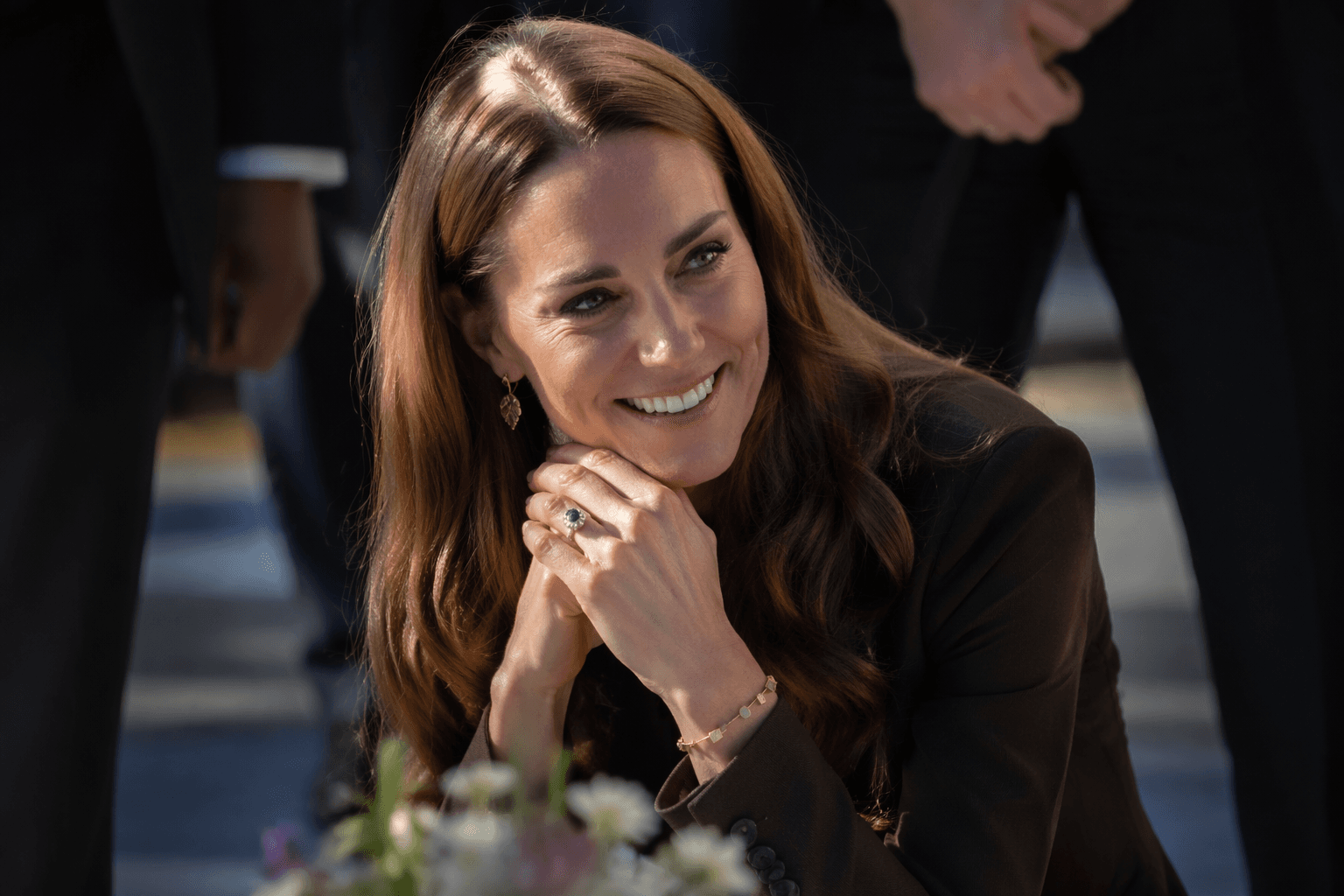
Kate wore the bracelet during her two-day solo visit to Reggio Emilia, Italy, on May 13 and 14, 2026, her first official overseas trip since cancer treatment and her first solo foreign visit since 2022. The trip was part of The Royal Foundation Centre for Early Childhood’s work around the Reggio Emilia approach, which puts relationships, environment and community at the center of a child’s development. In a setting focused on early-years education, the children’s initials on her wrist felt more than decorative. They read as family shorthand.
The Princess was warmly received by schoolchildren and staff, introduced herself in Italian as “Caterina,” and used the visit to underscore her early-years mission. Local reporting said crowds waited up to five hours to see her in northern Italy. Against that backdrop, the bracelet’s appeal was clear: it offered a way to wear gold with feeling, to make a royal stack less formal, and to turn an investment-piece moment into something that looked lived-in, personal and quietly modern.
This article was produced by Prism’s automated news system from verified source data, official records, and press releases, then run through automated quality and moderation checks before publishing. The system is built and supervised by the people who set the standards it runs under. Read our full AI policy.
Did this article answer your question?