Sabalenka turns Wimbledon white dress code into a jewelry showcase
Sabalenka made Wimbledon white feel like a jewelry runway, proving necklaces, earrings and anklets can read as performance gear, not a dress-code breach.
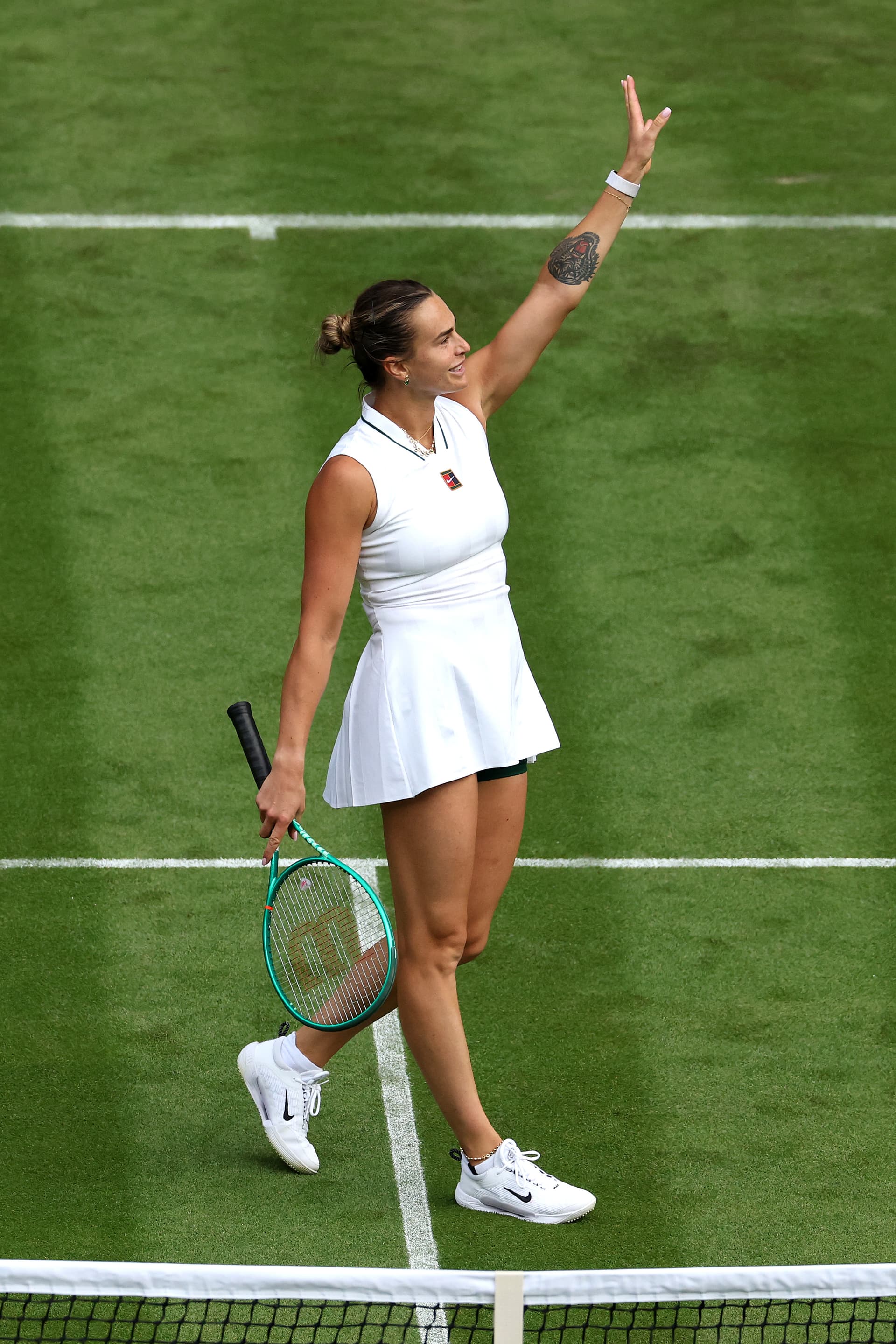
Aryna Sabalenka turned Wimbledon’s white-on-white formality into a showcase for emeralds, wearing the stone at her neck, in her ears and on her ankle. The All England Lawn Tennis and Croquet Club requires players to enter the court surround in attire that is almost entirely white, a rule first codified in 1963 and tightened in 1995. Jewelry is not banned outright, and that small loophole gives court-side adornment its charge.
Why the white dress code makes jewelry louder
Wimbledon’s dress code is built to suppress distraction, which is exactly why jewelry now feels so pointed there. When the outfit is nearly monochrome, a necklace becomes visible from the stands, earrings read instantly when hair is pulled back, and an anklet can flash as a private detail in motion. In that setting, accessories are not afterthoughts. They are one of the few ways a player can introduce color, polish and personality without breaking the rules.
That tension is the story behind Sabalenka’s look. Against white kit, emeralds do not whisper. They register as a deliberate choice, a hard jewel note that makes the body feel styled rather than simply dressed. The result is less red-carpet fantasy than performance-era fashion, where every surface has to work in movement, heat and camera light.
Sabalenka’s jewelry reads like a collaboration, not a flourish
Material Good, the New York jewelry house behind Sabalenka’s pieces, says she is its first-ever Jewelry Ambassador. The brand ties the partnership to “fearless self-expression” and craftsmanship, and says Sabalenka debuted custom creations at the Australian Open in Melbourne before continuing the collaboration through the 2026 season. That sequence matters because it frames the jewelry as a sustained visual identity, not a one-off styling trick.
Women’s Tennis Blog placed the Wimbledon set in that same narrative arc: after a Roland Garros look built around 23 carats of diamonds and 200 carats of crimson garnets, Sabalenka moved to a green emerald suite for grass. The chromatic shift is elegant in its own way. Clay demanded heat and depth; Wimbledon asked for freshness, and the emerald answered with cool, saturated green that echoes the court itself.
The necklace, earrings and anklet each do a different kind of work
A necklace sits closest to the face and collarbone, which is why it often becomes the anchor of a jewelry look. Sabalenka’s custom necklace carries the center of the story because it stays visible even when the body is in motion, and because it can be read over a simple white top in a single glance. Earrings do a different job: they catch light around the face and keep the jewelry visible even when the neckline is quiet.
The anklet is the slyest move of all. It is the piece most people only notice in a step, a serve or a turn, which makes it feel intimate and confident rather than decorative for decoration’s sake. In a sport where equipment and apparel are tightly regulated, the anklet reads like a punctuation mark, a small violation of expectation that still sits comfortably inside the rules.
The price signals tell you this is high jewelry, not costume sparkle
One estimate placed Sabalenka’s full Wimbledon set at more than $100,000, while another valued the necklace alone at around £125,000. Those figures put the look firmly in the territory of bespoke high jewelry, where gemstone quality, design labor and custom setting matter as much as the visual effect. At that level, the pieces are not being worn as accessories in the casual sense. They are being used as declarations.
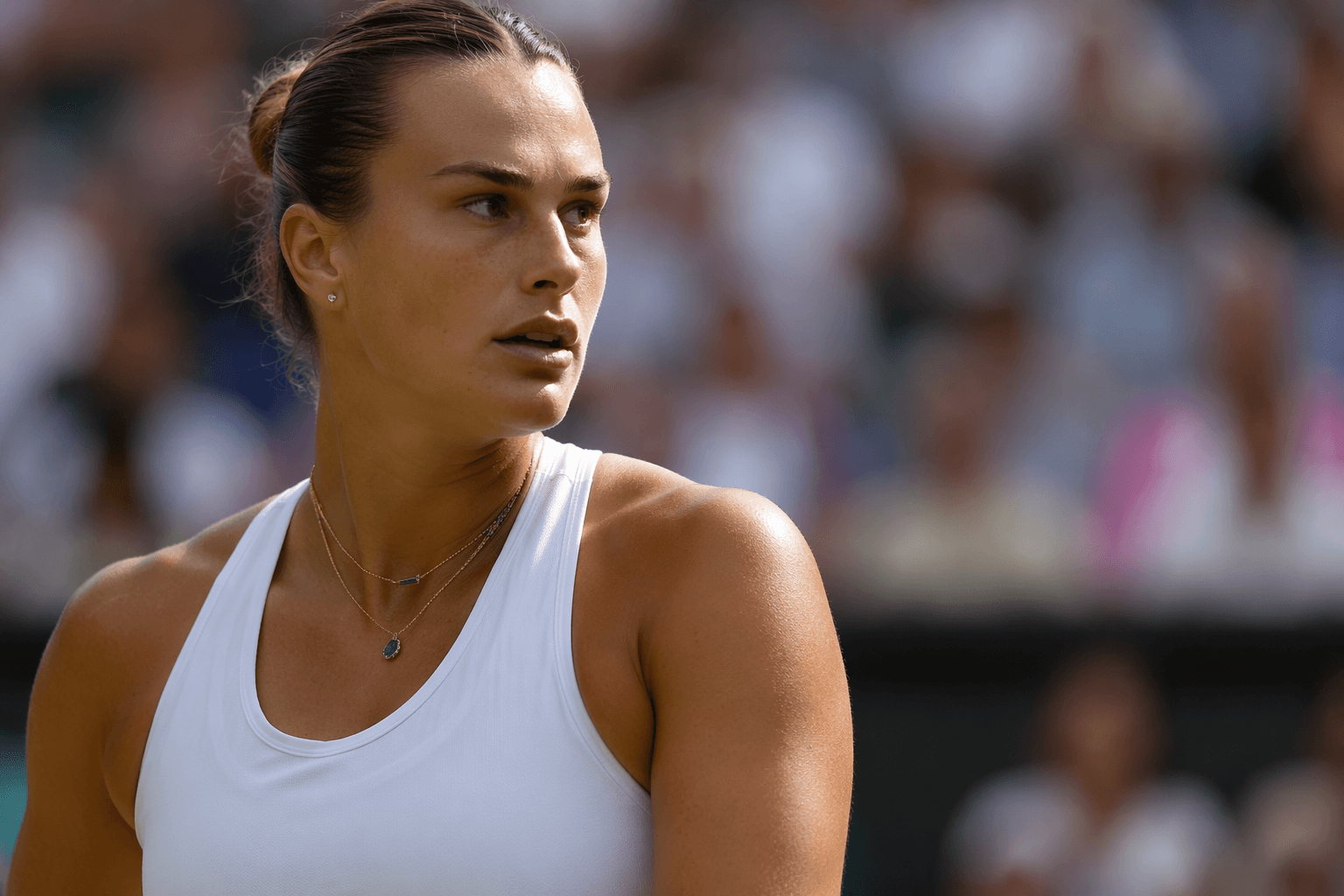
That is also why the story has resonance beyond tennis. The most compelling court-side jewelry does not hide under the uniform. It takes the strictness of the dress code and uses it as a frame, especially when the stones are strong enough to read from the stands and the broadcast camera.
What to copy now
- Let one stone lead. Sabalenka’s emeralds work because the color is singular and immediate, which makes the look easy to read against white.
- Keep the necklace close to the body. A shorter necklace or a fitted collar piece stays visible through movement and feels cleaner than something that disappears into fabric.
- Make earrings visible on purpose. When hair is slicked back or tucked away, a pair of stones or polished drops becomes part of the face, not just the outfit.
- Treat the anklet as a styling cue, not a novelty. It works best with bare ankles, tennis skirts, cropped trousers or slim summer tailoring.
- Use jewelry to sharpen summer whites. A strict white dress, shirt or suit becomes more exact when one piece of jewelry provides the color and the focal point.
Wimbledon’s fashion conversation is bigger than one player
Sabalenka is not alone in turning the tournament into a style stage. Naomi Osaka’s kimono-inspired look and Coco Gauff’s Miu Miu collaboration have broadened the fashion conversation around Wimbledon 2026, making it clear that players are using clothing and accessories to shape how they are seen. The point is not spectacle for its own sake. It is authorship.
On grass, that authorship now includes jewelry with presence, intention and scale. Sabalenka’s emeralds may have been the flashiest example, but the larger message is subtler: Wimbledon still demands white, yet the most memorable looks are finding ways to make the rules feel like a frame rather than a limit.
This article was produced by Prism’s automated news system from verified source data, official records, and press releases, then run through automated quality and moderation checks before publishing. The system is built and supervised by the people who set the standards it runs under. Read our full AI policy.
Did this article answer your question?
&w=1920&q=75)