Silver jewelry surges as gold prices push shoppers toward shine
Silver is back in the style conversation as gold prices climb, with cool-toned pieces now framed as lasting staples rather than second-best shine.

Silver is no longer behaving like a fallback metal. As gold prices pushed shoppers to rethink what they wear every day, silver moved from supporting act to statement material, helped by cooler styling, a cleaner modern mood, and a growing willingness to treat it as a forever piece rather than an entry-level buy.
Why silver suddenly feels right
The strongest silver jewelry right now reads as a style decision, not a compromise. That shift is visible across the spectrum, from accessible pieces at M&S to more editorial collections at Carolina De Barros, Bottega Veneta, Completed Works, Hermès, Phoebe Philo and Sophie Buhai, where silver hardware and pale metal surfaces give even simple silhouettes a sharper edge. The appeal is practical as much as visual: silver delivers shine without the same price pressure that has made many gold purchases feel more deliberate.
That mood matters because it changes the way shoppers approach metal altogether. Instead of asking whether silver can stand in for gold, buyers are increasingly seeing it as its own language, one that suits cooler wardrobes, pared-back tailoring and sculptural jewelry that looks more architectural than precious in the old sense of the word. In that framing, silver does not imitate gold. It offers a different kind of polish.
Gold’s weight is showing up in the numbers
The gold market has been sending a clear signal for more than a year. The World Gold Council said full-year 2024 gold jewellery demand fell 11% as sharp price gains squeezed volumes, and it described Q2 2024 as the weakest second quarter for gold jewelry demand since 2009. By Q1 2026, jewelry demand volumes were still under pressure as prices held at record levels.
That strain has not erased appetite for gold altogether, but it has changed where the demand shows up. The World Gold Council said total gold demand reached a record 4,974 tonnes in 2024, yet jewelry buyers remained sensitive to price, and in the US in 2025 gold demand more than doubled largely because of physically backed ETFs, while jewelry, technology and bar-and-coin demand softened. The split is revealing: financial demand can surge while adornment demand cools, because a necklace still has to feel worth wearing, not just worth owning.
Silver is becoming a serious category, not a placeholder
The Silver Institute has been tracking this change from the trade side, saying silver has become an increasingly important category for many jewelers over the past several years, both for sales and for margin. Its Silver Survey 2025 put global silver demand in 2024 at about 1.21 billion ounces, with jewelry and silverware recovering and industrial demand reaching a record 680.5 million ounces.
That broader demand base helps explain why silver now feels culturally louder. Bloomberg noted in October 2025 that silver had its best quarterly performance in 15 years and reached a new all-time high, while precious metals were among the strongest commodity performers of 2025, with silver and gold both benefiting from macro uncertainty. For jewelry, the effect is subtle but powerful: silver no longer reads as the poor relation to gold when the market itself is treating it as one of the metals defining the moment.
How gold jewelry brands can answer the shift
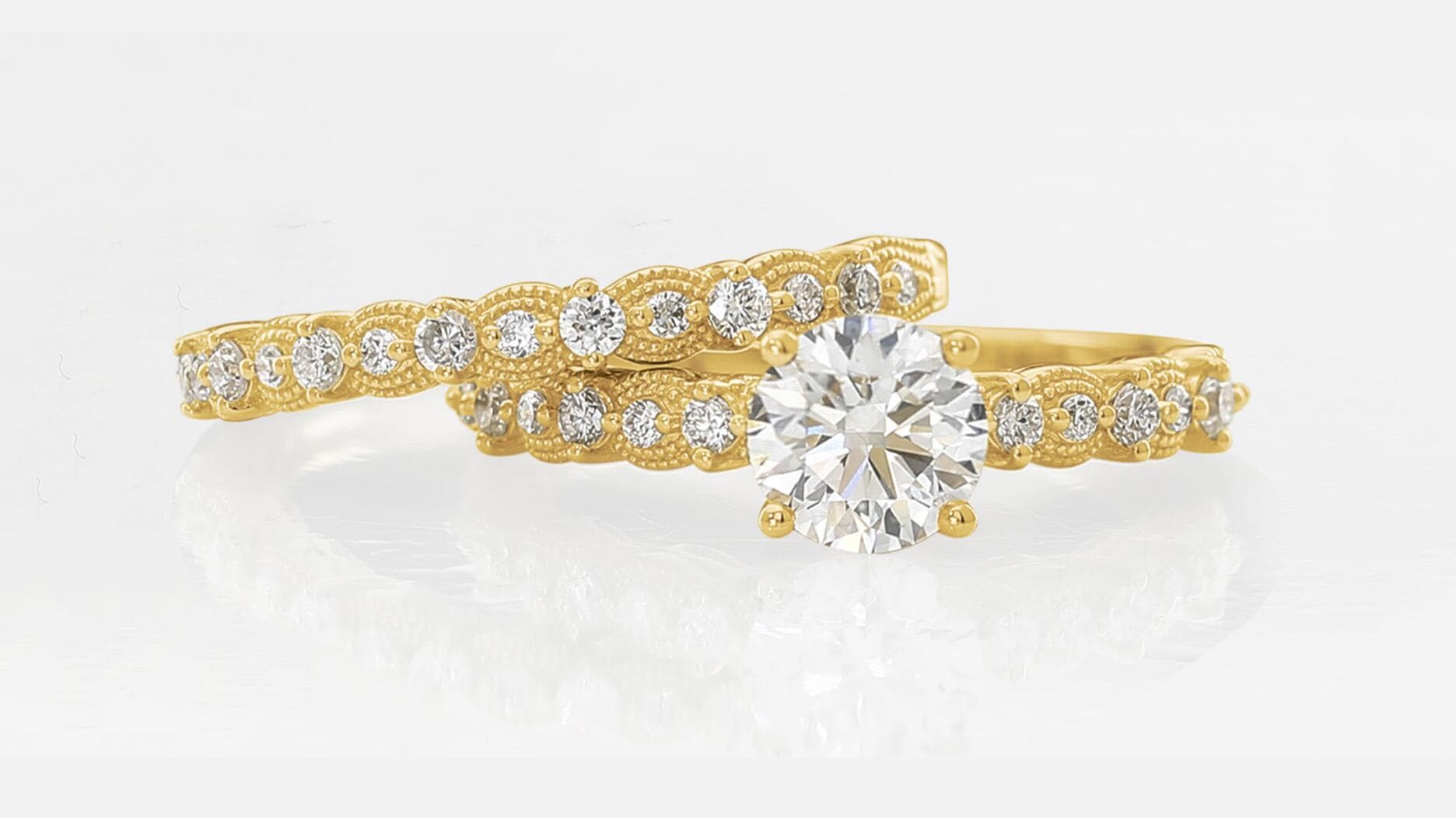
For gold-focused brands, the lesson is not to abandon yellow gold. It is to make it feel easier, softer and more compositional against the silver momentum. Mixed metals are the most obvious bridge, especially when a white-metal link, clasp or structural detail interrupts a warm gold surface and makes the whole piece feel less singular. White gold does some of the same work, giving shoppers the sheen they want without the psychological heft of a yellow-gold purchase at a record price.
Softer yellow-gold styling also has a role here. Instead of highly saturated, heavy-looking designs, the strongest response to silver’s rise may come from lighter proportions, fluid chains and pieces that wear as part of a stack rather than as a standalone declaration. The point is not to make gold disappear. It is to make it feel wearable enough that a buyer does not have to choose between beauty and restraint.
The pieces that explain the mood
The brands that are advancing silver right now are not all speaking the same design language, but they do share a refusal to make the metal look secondary. M&S brings the idea into everyday reach, while Carolina De Barros, Completed Works, Sophie Buhai and Phoebe Philo push silver toward sculptural, fashion-forward territory. Bottega Veneta and Hermès use the metal as part of a broader luxury grammar, where hardware and form matter as much as gemstone weight.
That spread is instructive for gold houses and gold buyers alike. Silver is winning attention because it has been styled as cool, modern and permanent, not temporary or trend-driven. Gold still carries its own authority, but the smartest jewelry wardrobes now understand that authority can look sharper when it shares the frame with silver, white gold or a quieter, less domineering yellow finish.
The result is a cleaner split in the market. Gold remains the metal of heritage and weight, while silver is claiming the role of the fluent, fashion-forward staple. Right now, that is exactly the language many shoppers want on the skin.
This article was produced by Prism’s automated news system from verified source data, official records, and press releases, then run through automated quality and moderation checks before publishing. The system is built and supervised by the people who set the standards it runs under. Read our full AI policy.
Did this article answer your question?