Tim McClelland’s Wildflower rings showcase handcrafted 18k gold settings
Tim McClelland is leaning on sculpted 18k gold and bloomed finishes to make natural diamonds look worth the ask. His Wildflower rings turn the setting into the sales pitch.
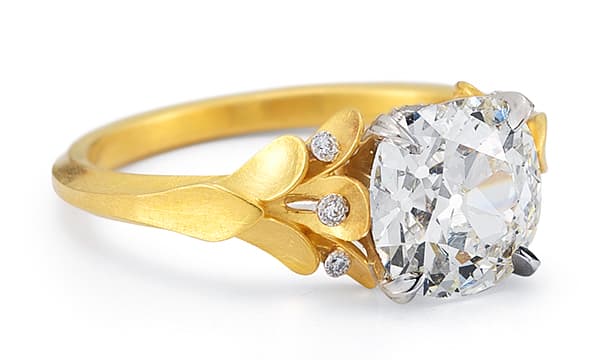
At TW McClelland in Great Barrington, Massachusetts, the setting is the argument. Tim McClelland’s Wildflower rings are built around 18-karat Fairmined gold mountings, then finished in bloomed gold, high-luster gold or platinum, so the eye lands first on the metalwork and only then on the diamond.
That is the point. McClelland has said most engagement rings are formulaic, with the mounting treated as secondary to the stone, but his Wildflower Collection was developed over more than 30 years to reverse that hierarchy. In his view, natural diamonds sell best when the jewel itself is beautiful enough that the stone does not need a hard sell. The pitch is not carat weight alone. It is craft, proportion and a setting that looks hand-formed rather than engineered to disappear.
The pricing tells the same story. JCK placed entry Wildflower rings around $4,000 and more elaborate pieces near $10,000, but current product pages show the line reaching much higher, with some styles starting at $15,300 or $16,500 depending on the design and the smallest acceptable diamond. That spread is useful for jewelers watching how the category is changing: McClelland is not trying to win a race to the lowest ticket. He is asking customers to pay for goldwork that gives the diamond emotional lift and visual credibility.
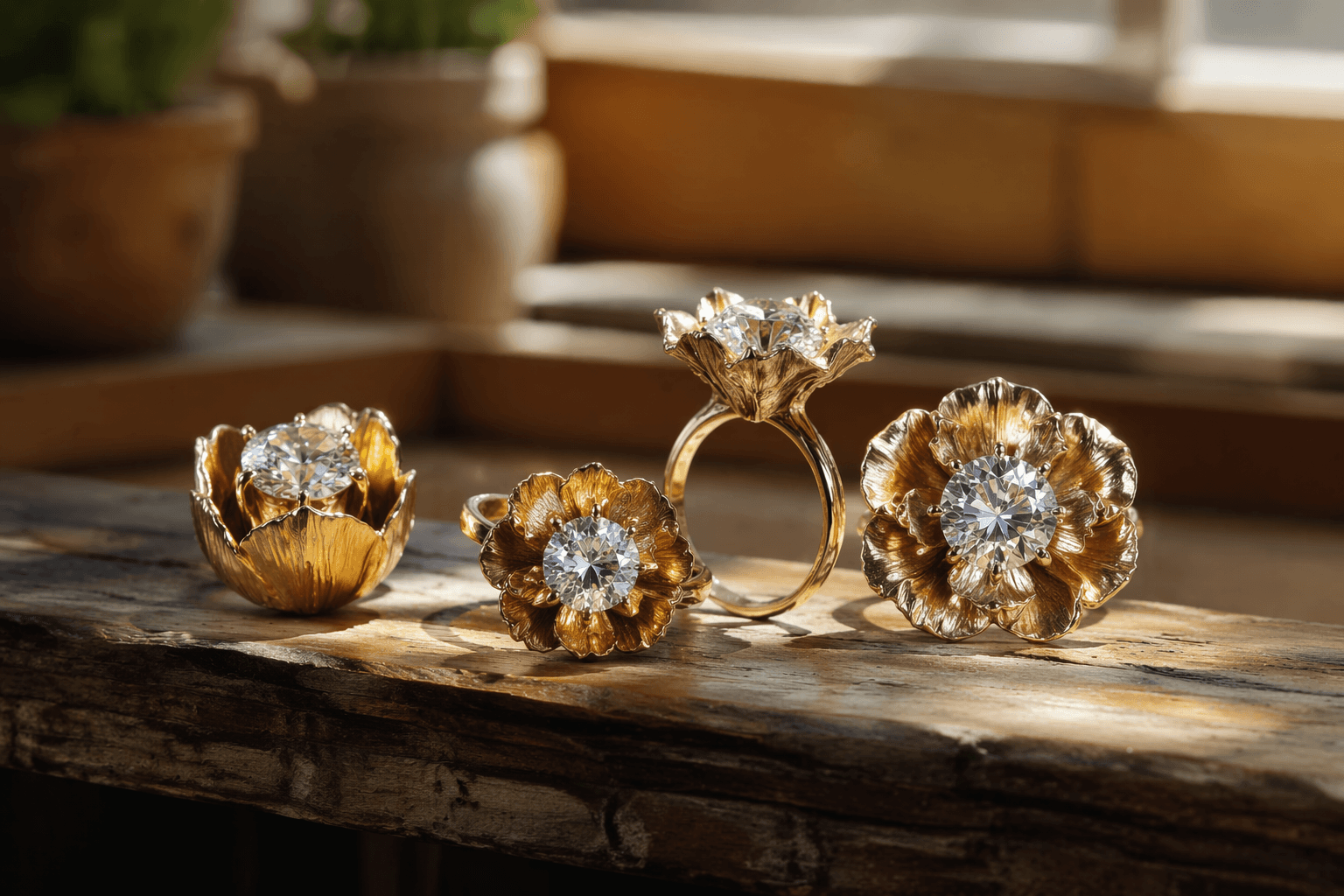
The gold itself is part of the persuasion. Blooming is an old finishing method, used since at least the 17th century, that strips alloys from the surface of finished gold so the color of pure gold comes forward while the underlying alloy retains strength. In a bridal case, that matters. Bloomed gold reads warmer and softer than a high-polish mounting, which makes the ring feel made, not stamped out. High-luster gold offers a brighter, more reflective alternative, while platinum gives the collection a cooler frame. The design choice is not decorative trivia; it changes how the diamond is perceived.
McClelland’s retail lesson is straightforward for any jeweler selling natural stones in a market crowded by comparisons: make the mounting memorable, make the materials legible and make the workmanship visible. TW McClelland says the jewelry is handmade in the Berkshires and built to last many lifetimes, and the atelier at 597 South Main Street in Great Barrington, open Thursday through Saturday from 11 a.m. to 5 p.m., turns that promise into a place. In an engagement-ring case, the gold is not supporting cast. It is the persuasion.
This article was produced by Prism’s automated news system from verified source data, official records, and press releases, then run through automated quality and moderation checks before publishing. The system is built and supervised by the people who set the standards it runs under. Read our full AI policy.
Know something we missed? Have a correction or additional information?
Submit a Tip