Trapeze-cut diamonds return to Las Vegas in sculptural gold designs
Trapeze-cut diamonds are back in Las Vegas, where yellow gold and strong geometry are giving the Deco shape a sharp new edge.
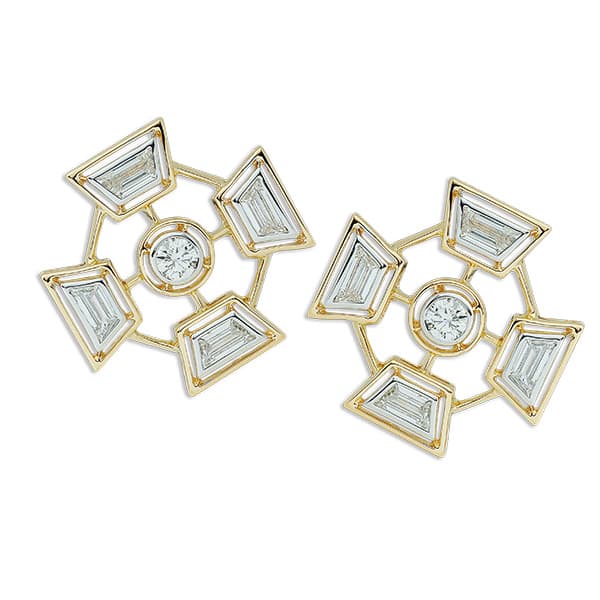
The trapeze cut is returning with uncommon confidence, and Las Vegas gave it the kind of stage that can turn a niche shape into a conversation. In JCK’s coverage from The Venetian Expo, the rare outline surfaced in 18k yellow-gold earrings and a matching necklace, where its angular silhouette read less like nostalgia and more like design discipline. Surrounded by rigid gold collars, natural diamonds, and other fancy shapes, the trapeze looked exactly like the kind of cut that can move from insider curiosity to directional jewelry.
Why Las Vegas matters right now
JCK frames its Las Vegas show as the jewelry trade’s most important global gathering, which makes any shape that gains traction there worth watching closely. This year’s floor offered a clear snapshot of where fine jewelry is heading: natural diamonds were everywhere, gold collars had a firmer architectural stance, and fancy shapes were no longer supporting actors but part of the main visual language. In that setting, the trapeze cut felt timely because it answered several currents at once: geometry, sculptural metalwork, and a renewed appetite for pieces that look designed rather than merely decorated.
The appeal is not only aesthetic. When a cut emerges in a place where retailers, designers, and buyers are actively scanning for the next visual signal, it tends to indicate more than a passing whim. The trapeze’s return in yellow gold suggests a market that is ready for shapes with personality, especially ones that can be translated into earrings and necklaces without losing their crispness.
A Deco shape with modern authority
The trapeze cut is not new, and that is part of its strength. Jewelry and gemology sources trace trapezoid and trapeze diamonds to Art Deco jewelry of the 1920s and 1930s, when geometric thinking ruled and stones were often arranged in deliberate, architectural groupings. In that era, trapeze shapes sat comfortably beside emerald cuts, half-moons, and triangles, all of them prized for line, structure, and the way they built rhythm into a jewel.
That historical context gives the cut instant credibility. It is a shape that already speaks the language of symmetry and modernism, which is why it feels so natural in gold designs today. One jewelry education source suggests the name may derive from the flying trapeze, a fitting association for a stone that seems to hang in motion even when it is set in stillness. The term may be playful, but the effect is serious: a trapeze diamond has enough edge to feel current without needing embellishment to justify itself.
How it differs from more familiar cuts
For readers used to round brilliants, ovals, emerald cuts, or pears, the trapeze can feel more specialized at first glance. A round diamond is all bloom and light return; an oval elongates the finger and softens the hand; an emerald cut gives you a hall-of-mirrors calm. The trapeze, by contrast, is a shape of tension and direction. Its angled sides create a sense of movement that can frame a center stone, sharpen a cluster, or stand alone as a graphic accent.
The cut also has range. Traditionally, trapeze diamonds were step-cut, which means they show broad, clean facets and a more composed, glassy reflection pattern. In recent years, brilliant-cut trapeze versions have also appeared, offering more sparkle and a livelier flash. That flexibility matters because it allows the same silhouette to read either restrained or high-impact, depending on the setting and the stone’s faceting style.
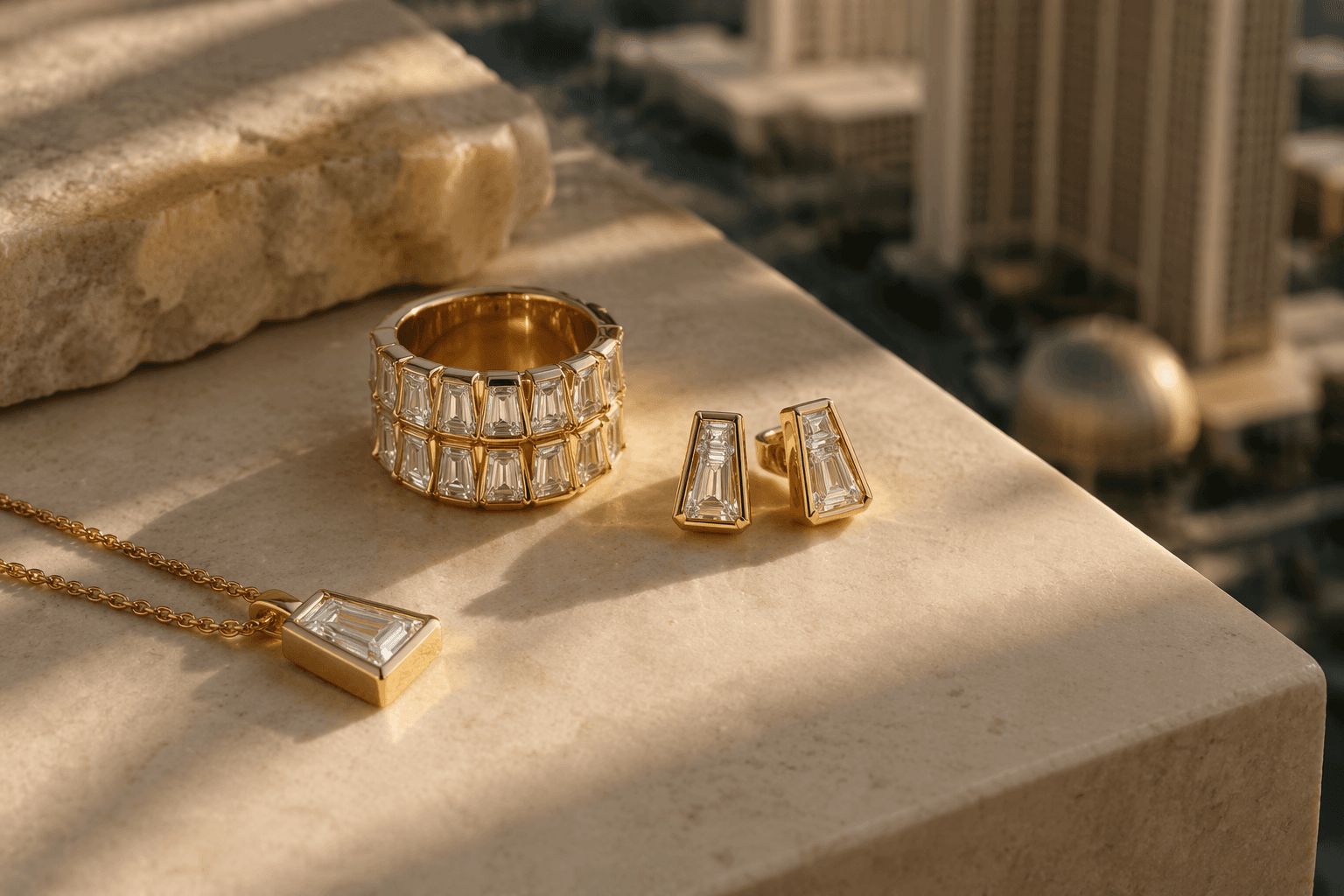
Mingle’s ring shows how the shape wants to be used
Among the pieces JCK highlighted, Mingle’s Trapeze Step ring made the strongest argument for the cut as a design hero. Set in 18k yellow gold and carrying 0.68 ct. t.w. diamonds, it was priced at $9,880, a figure that places it firmly in the realm of serious fine jewelry rather than trend-driven costume sparkle. The brand said it wanted trapeze diamonds to step into the spotlight as the hero of the design, describing them as bold, sculptural, and quietly powerful.
That description gets to the heart of the cut’s appeal. The trapeze is not about volume or flash for its own sake. It is about proportion, about how the angles of the stone interact with the warmth of yellow gold, and about the discipline of letting a shape do the talking. In that respect, it feels more collected than decorative, which is exactly why it works so well in a ring, and why its translation into earrings and a matching necklace makes sense. Those formats let the cut repeat like a motif, which is often how a niche shape becomes recognizable.
Who it flatters, and why the setting matters
The trapeze cut flatters a wearer who likes jewelry with a strong point of view. It suits someone drawn to Art Deco references, but not in a costume-y way. In earrings, the shape can sharpen the jawline and bring a sense of lift to the face; in a necklace, it creates a clean, directional focal point that sits well against a collarbone or beneath a tailored neckline. Because the outline is inherently angular, it pairs especially well with gold settings that are pared back and exact.
Setting is crucial here. A bezel setting would seal the stone in metal and give the trapeze a smoother, more modern edge, while prongs would leave the geometry more exposed and architectural. The difference matters because the trapeze gains much of its appeal from how clearly you can read the outline. Heavy metal can swallow that shape; a precise setting lets it stay legible.
Trend-forward investment or short-lived curiosity?
The trapeze cut does not feel like a gimmick, and that is the strongest case for its staying power. It has historical roots, a clear visual identity, and an obvious synergy with the broader move toward sculptural gold and fancy-shaped diamonds. Those are the ingredients of a trend that can migrate beyond a single trade show and into real jewelry wardrobes.
Still, it is not a universal shape. The trapeze rewards a refined eye, and its beauty depends on proportion, setting, and restraint. That means it is unlikely to become a mass-market staple overnight, but it also protects it from looking overexposed. For buyers who want a piece that feels informed, slightly unexpected, and very specific to this moment in gold jewelry, the trapeze cut looks less like a runway detour than a smart acquisition with lasting design value.
This article was produced by Prism’s automated news system from verified source data, official records, and press releases, then run through automated quality and moderation checks before publishing. The system is built and supervised by the people who set the standards it runs under. Read our full AI policy.
Did this article answer your question?