Van Cleef & Arpels' gold ballerina jewels trace a lasting ballet legacy
Van Cleef & Arpels turned ballet into a gold signature, from the 1941 ballerina clips to Balanchine’s Jewels and the choreographic work it still supports.
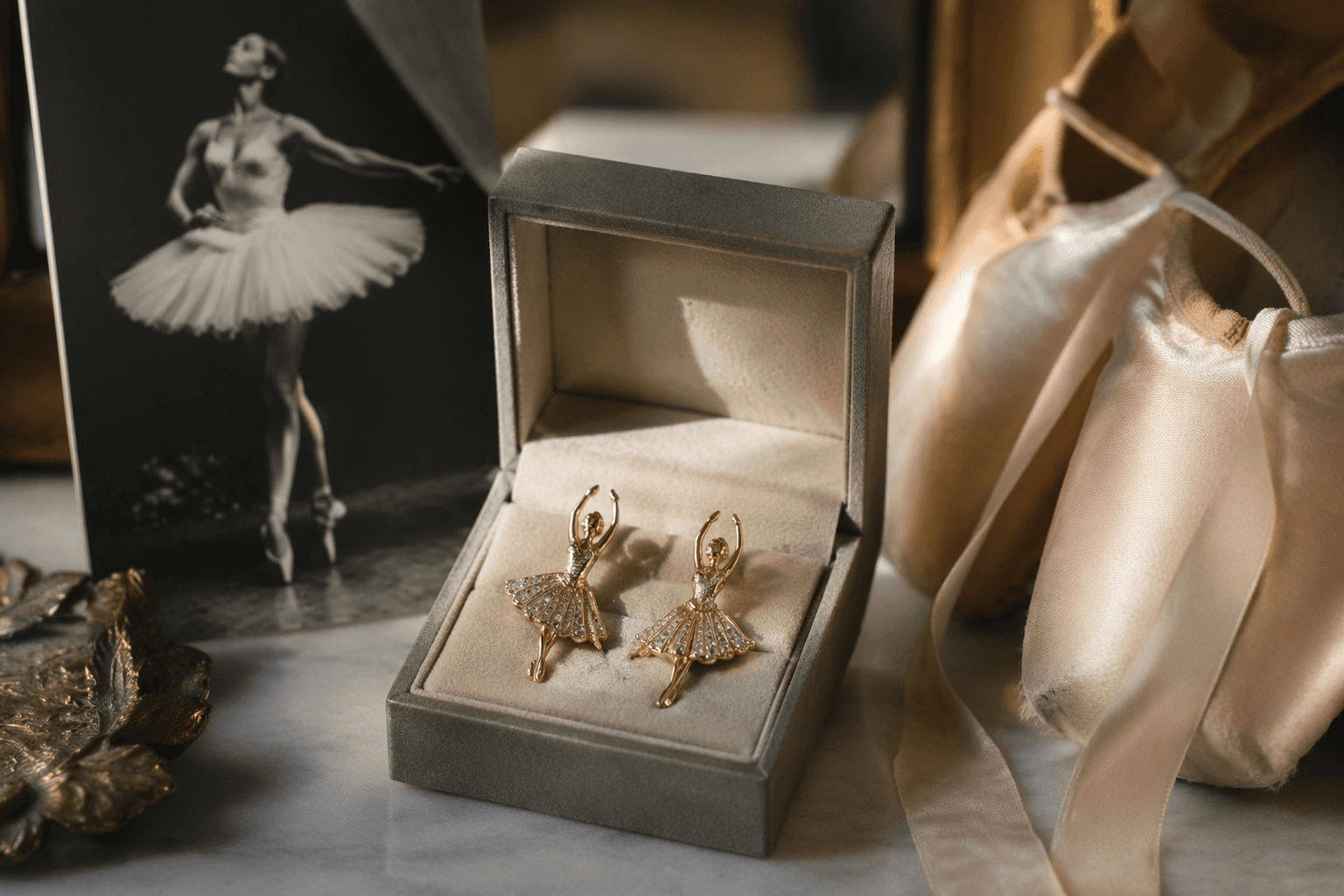
Van Cleef & Arpels’ gold ballerinas are not a charming side note. They are one of the clearest examples of how the house turned dance into a durable jewelry code, with goldwork, gemstone costume, and precise silhouettes doing as much storytelling as the ballet reference itself.
From a hopeful clip to a house signature
The story begins in 1941, when Van Cleef & Arpels says its first ballerina clips came into being. In the same period, the maison created the Little Winged Fairy clip, later called Spirit of Beauty, as a symbol of hope. That origin matters: the ballerina motif did not start as a nostalgic flourish, but as a compact expression of optimism that would become central to the house’s visual identity.
Secondary coverage identifies early examples such as the Spanish Dancer clip from 1941 and the Ballerina clip from 1943. Those early pieces show how quickly the motif expanded beyond a single pose into a broader language of performance. Even at this stage, the ballerina was less a literal dancer than a miniature figure built from costume, gesture, and light.
How the goldwork built the illusion
Goldwork came to the fore in the 1950s and 1960s ballerina designs, and that is where these jewels become especially revealing for anyone who cares about craftsmanship. The dancers wore precious “outfits” made of head ornaments, tutus of colored gemstones or diamonds, pointed shoes, and faces formed in rose-cut diamond or gold. The effect was never purely pictorial. It was structural, with metal and stones collaborating to suggest movement, balance, and stage presence.
That construction gives the ballerinas a very specific visual signature. A true mid-century example often reads in layers: the soft glow of a gold face, the crisp shape of pointed slippers, and the bright spread of a gem-set tutu. Rose-cut diamond adds a gentler sparkle than a modern brilliant cut, which helps the figures feel atmospheric rather than flashy. In gold jewelry terms, that balance of warmth, texture, and restraint is what separates a collectible ballerina from a generic dancer brooch.
- look for faces rendered in gold or rose-cut diamond
- study the tutu construction, especially whether it uses colored gemstones or diamonds
- note the pointed shoes and the miniature head ornament, which sharpen the figure’s stage identity
- pay attention to the overall line of the body, because the best examples still feel animated even when the piece is still
For readers trying to understand these pieces as objects, not just motifs, the details are the point:
Why period pieces carry extra weight
Van Cleef & Arpels stopped producing ballerina brooches by the end of the 1960s, then reintroduced the motif in the 2000s. That pause changes how the line should be read. The original mid-century pieces are not just old versions of something still being made; they belong to a defined chapter in the maison’s history, which makes them easier to place and, for collectors, easier to value as period objects.
The reintroduction in the 2000s also creates an important distinction between vintage originals and later revivals. A later ballerina may echo the same shape, but it does not carry the same historical weight as a piece from the 1940s or the 1960s. That is why provenance matters so much here: the motif’s chronology is unusually clear, and the strongest collector cues are tied to date, construction, and the specific vocabulary of the early designs.
The ballerina line also widened beyond ballet itself, eventually showcasing other dance styles from around the world. That broadening reinforces an important point about the motif: it was never only about tutus and pointe shoes. It was about the visual drama of movement, translated into precious materials. In that sense, the ballerina became a house shorthand for choreography itself, not just one dance form.
The Balanchine connection kept the idea alive
The relationship between Van Cleef & Arpels and dance deepened in 1961, when Claude Arpels met choreographer George Balanchine, co-founder of the New York City Ballet. Their shared interest in precious stones led to Jewels, the ballet Balanchine created in 1967. That collaboration matters because it shows the dance connection was not merely decorative branding. The house was feeding ideas back and forth with the ballet world, and those ideas were being translated into both stage language and jewelry language.
That exchange helps explain why the ballerina remains more than a sweet motif. It sits at the intersection of costume, choreography, and gemstone design. The same precision that shapes a good setting, the control of line, proportion, and balance, also underpins the best ballerina pieces. They are tiny performances of goldsmithing.
Today, Dance Reflections by Van Cleef & Arpels keeps that connection active as an initiative supporting dance institutions and choreographic heritage. That makes the ballet link feel present-tense rather than archival. The maison is still investing in the artistic world that gave the ballerina its meaning, which is why the motif continues to read as a living house code instead of a romantic memory.
Seen in this light, Van Cleef & Arpels’ gold ballerinas are not sugary nostalgia. They are finely calibrated objects in which gold, stones, and dance history meet, and that is exactly why the mid-century examples still command attention: they teach you how to read the house’s language, and how to tell a decorative echo from the original score.
This article was produced by Prism’s automated news system from verified source data, official records, and press releases, then run through automated quality and moderation checks before publishing. The system is built and supervised by the people who set the standards it runs under. Read our full AI policy.
Did this article answer your question?