Vegas forecast points to butterflies, charm jewelry and softer chains
Butterflies and softer chains are moving from mood board to merchandise, but the real winners look wearable, not just photogenic.
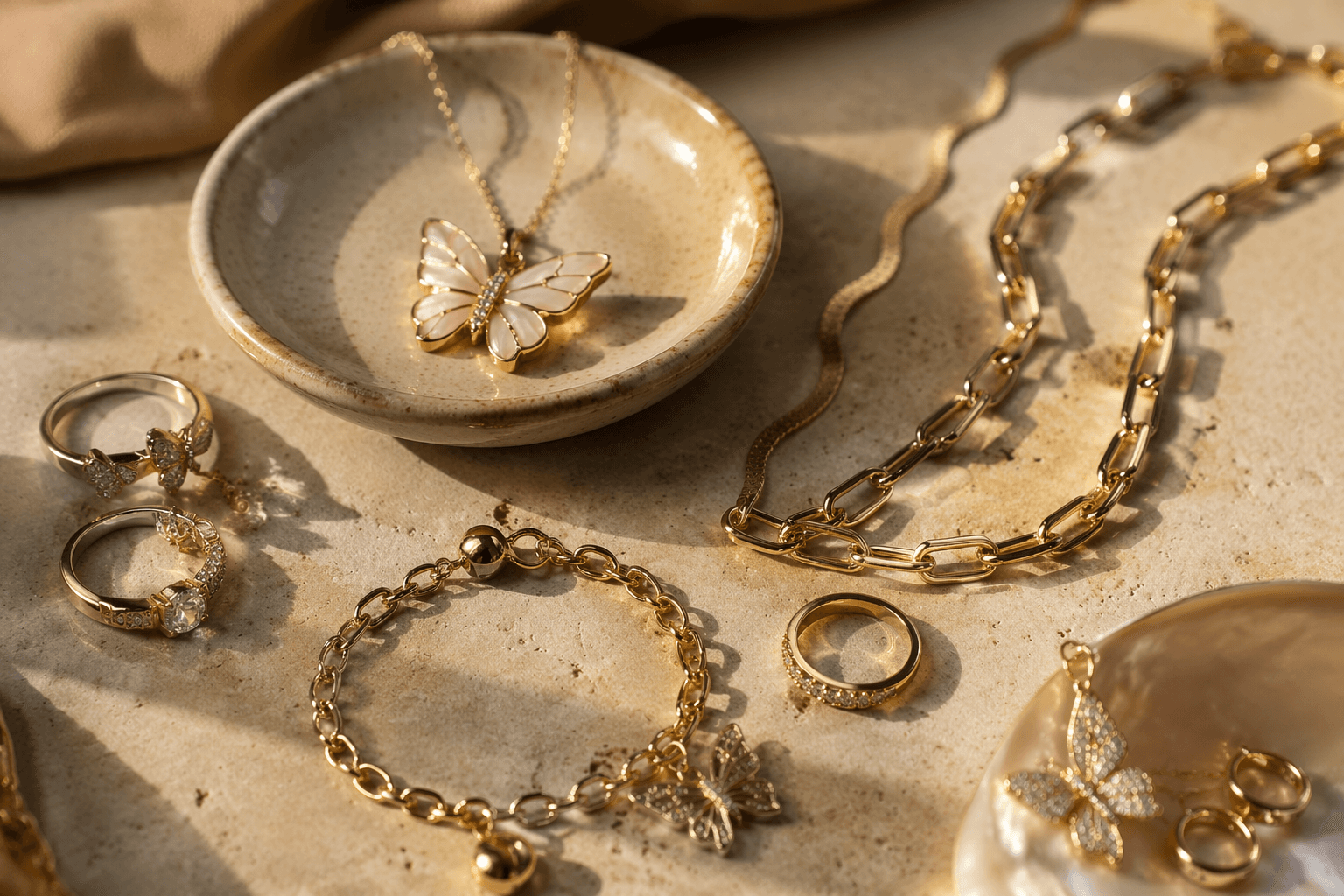
Butterflies, charm pieces and softer chains are the clearest signals coming off the Vegas floor
JCK Las Vegas is turning the conversation away from heavy, one-note gold and toward jewelry with more movement, more ease and a little more personality. The show runs Friday, May 29 through Monday, June 1, 2026, at The Venetian Expo in Las Vegas, where the trade gathers to buy, sell, network, learn and discover what will actually make it to retail cases.
The strongest message from the floor is not that gold is losing power. It is that gold is being styled to feel less rigid. Butterflies, charms and alternative chains are the motifs with the best chance of becoming commercial, while the most flamboyant looks will likely remain the province of social feeds and show-floor spectacle.
The commercial story is in wearability, not excess
The most convincing jewelry trend here is the alternative chain: ribbon, leather or silk cord used in place of a full precious-metal necklace. JCK’s trend forecasting points to these softer materials as a way to make fine jewelry feel more approachable without stripping away the luxury of the pendant, clasp or gemstone focus. That is the key commercial distinction. The chain is not pretending to be the star anymore; it is acting as a frame.
That matters because it opens the door to pieces that feel less formal and easier to wear every day. A diamond charm on silk cord does not ask the wearer to commit to the visual weight of a thick gold collar, but it still carries enough value to sit comfortably in the fine-jewelry category. For retailers, that combination is useful: it broadens the customer base without forcing the piece into costume territory.
Butterflies are the motif with the most legs, if they stay grounded in craftsmanship
Butterflies are everywhere in the Vegas forecast, but the version most likely to last is the one rooted in design, not gimmick. Jennifer Dawes’ Perching Butterfly Ring makes that case well. The ring is inspired by butterflies in her garden and is shown in 18k yellow gold with diamonds, which gives the motif both a nature narrative and the kind of material seriousness buyers expect from fine jewelry.
That balance is what separates a real motif from a social-media lure. A butterfly shape can be irresistible in a post, but it only becomes a retail winner if it is scaled well, comfortable on the hand and made in a material that still feels precious after the screenshot fades. Yellow gold and diamonds help here because they anchor the whimsy in something substantial. The result is playful, but not flimsy.
Charm jewelry fits the same logic. Small, personal pieces sell when they feel collected over time rather than purchased as a one-off stunt. The best charm stories are the ones that invite repetition, since repeat purchase behavior is where a trend becomes a category.
Marie Lichtenberg shows how personal jewelry can still read as luxury
Marie Lichtenberg’s work lands squarely in this more intimate, collectible lane. The designer describes her jewelry as “modern heirlooms,” inspired by a meaningful gold chain gifted by her mother. That is not just a sentimental backstory. It explains why the line reads as personal rather than decorative and why the pieces feel designed to be kept, not simply worn for a season.
Her chains also help explain the direction of the market. Marie Lichtenberg pieces are often strung on 18 karat recycled gold chains or pearl-strewn silk mauli strings, which puts the emphasis on texture, color and gesture rather than brute weight. Recycled gold is especially important here because it gives the piece a clearer sourcing story than vague sustainability language ever could. When a brand can point to recycled gold and a specific construction method, the claim feels more concrete and less like polish.
The silk mauli string detail matters too. It softens the formality of gold without reducing the sense of value, and it gives the jewelry a layered, travel-friendly feeling that traditional all-metal chains do not always have. That is the kind of hybrid luxury customers can wear often.
Yellow-gold chokers are not new, which is exactly why they may stick
If butterflies are the playful headline, yellow-gold chokers, collars and torques are the sturdier commercial bet. InStore’s Vegas trend coverage says these forms have been circling for the past two years, and by 2026 they have become a visible presence both on the red carpet and in design studios. That kind of continuity matters. A trend that repeats across seasons is more likely to survive the jump from editorial image to actual sales floor.
These pieces also fit the broader appetite for jewelry that sits close to the body and reads instantly. A torque or collar offers architectural clarity, but it still works best when it can be worn with a shirt, a dress or layered with slimmer chains. The biggest trap for this category is overbuilding. If the collar is too rigid, too heavy or too precious to move comfortably, it becomes a display object instead of a repeat-wear piece.
Retailers should pay attention to whether customers respond to narrower torques and more flexible collars, because those are the versions most likely to survive beyond the first look. The statement remains strong, but the wearability improves.
Gold prices are nudging designers toward lighter-feeling luxury
There is a bigger market reason this softer aesthetic makes sense. JCK has reported that analysts are watching energy prices and interest-rate expectations as factors that influence gold’s momentum, while the World Gold Council says record gold prices are shifting demand rather than crushing it. Jewelry demand has still risen in value terms even as some consumption moves into bars and coins.
That backdrop helps explain why designers are reaching for alternatives that preserve the idea of luxury without demanding as much metal. Ribbon, leather and silk cord lower the visual and material bulk while keeping the gemstone or charm at the center. Recycled gold chains and compact yellow-gold pieces do something similar. They keep the story in fine jewelry, but they make the purchase feel less punishing.
What retailers should watch on the floor
- Look for repeat orders, not just one-off applause. A butterfly motif only matters if it comes back in different sizes, price points and settings.
- Watch how often the chain is the selling point. Ribbon, leather and silk cord work when they support the jewel rather than cheapen it.
- Pay attention to comfort and layering. Yellow-gold chokers and torques need to sit well against the neck and work with existing wardrobes.
- Ask where the gold comes from and how it is framed. Recycled gold is a clearer and more credible sourcing signal than vague sustainability language.
- Track whether pieces invite collecting. Charm jewelry sells best when customers can add to it over time.
The real forecast from Vegas is not a rush toward louder gold. It is a move toward jewelry that still feels precious, but wears with more ease. Butterflies may draw the eye, and charms may win the photograph, but the pieces that last will be the ones customers can live with every day.
This article was produced by Prism’s automated news system from verified source data, official records, and press releases, then run through automated quality and moderation checks before publishing. The system is built and supervised by the people who set the standards it runs under. Read our full AI policy.
Did this article answer your question?