Why solid gold still signals luxury and lasting value
Shoppers are weighing heft against price, and solid gold is winning by offering clear karat content, durability, and resale logic that plated pieces cannot match.
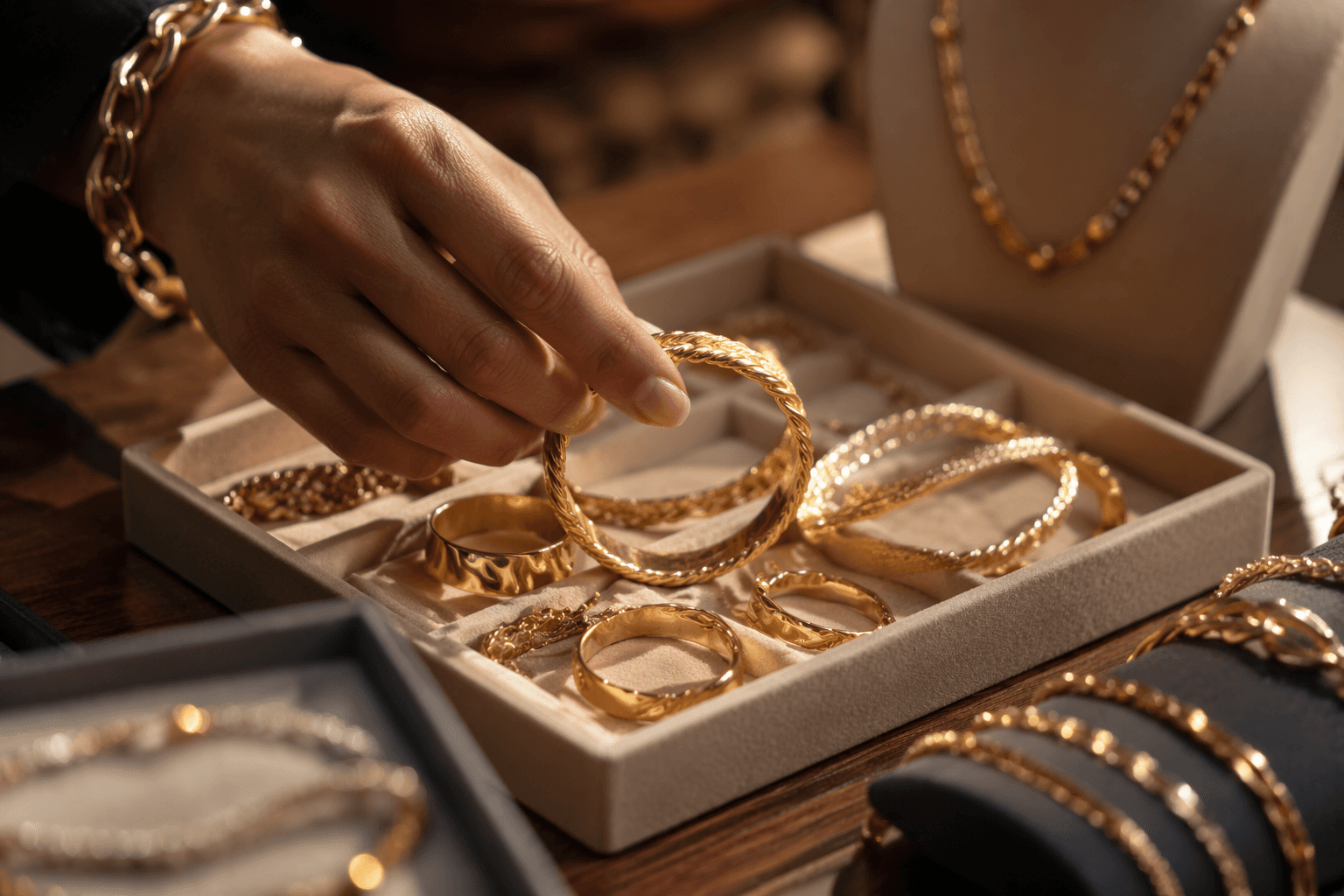
A chunky yellow-gold chain, a heavy cuff, or oversize earrings can read as luxury before anyone notices the clasp. Gold feels different when it has real weight, because the material itself signals permanence, confidence, and a purchase that is meant to last.
Heft is part of the appeal
The modern solid-gold pitch is not only about shine. Substantial gold jewelry telegraphs a certain authority because it sits differently on the body than plated look-alikes: it has density, a longer wearing life, and the kind of presence that makes a simple design feel deliberate. That is why bold chains, weighty cuffs, and sculptural earrings continue to anchor the category, especially in yellow gold, where the color and the mass work together.
This is also where emotional value and financial logic meet. A heavier piece can feel more defensible because it contains more precious metal, which gives buyers reassurance that they are not paying only for surface finish.
How to tell solid gold from gold-plated
The fastest way to separate solid gold from a look-alike is to read the karat mark, not just trust the color. The Federal Trade Commission’s Jewelry Guides focus on accurate information about precious metals, so in practice that means checking whether a piece is marked 14K, 18K, or another karat designation rather than assuming “gold” describes the whole story.
Karat tells you how much gold is actually in the alloy. Fourteen-karat gold contains 14 parts gold out of 24, or 58.3 percent, while higher karat numbers indicate a greater proportion of gold. That is the basic math behind why a 14K chain feels like a different buy than a plated chain with a gold-colored surface.
There is also a durability tradeoff. Twenty-four-karat gold is soft, which is why it is usually mixed with other metals to improve hardness and durability. That is one reason jewelry is commonly sold in 14K or similar alloys: the metal can withstand daily wear without bending, scratching, or deforming as easily as purer gold.
Why buyers keep choosing solid gold
The premium for solid gold is easiest to justify when the piece is meant to be worn often and lived in. Heavier construction tends to hold its shape better, and the weight itself creates the feeling of substance that plated jewelry cannot replicate for long. For many buyers, that combination of durability and visible richness is what makes the price feel less like a splurge and more like an asset.
There is also a resale logic at work. Solid gold carries the reassurance of precious-metal content, so even when style preferences change, the material keeps a baseline value that fashion metals and plated pieces usually do not.
The market backdrop is pushing in two directions
World Gold Council data for 2025 shows a record year for gold demand. Total demand, including over-the-counter activity, exceeded 5,000 tonnes for the first time, the gold price set 53 new all-time highs, and the total value of demand reached US$555 billion, up 45 percent year over year.
World Gold Council data for the third quarter of 2025 shows jewelry consumption fell 19 percent year over year to 371.3 tonnes. Yet spending on jewelry still rose to US$41 billion, up 13 percent, and the value of jewelry demand year to date reached a record US$112 billion. It is a market where fewer grams are being sold, but the grams that do sell command more money because gold itself is expensive.
Buyers are moving toward lighter-weight and lower-carat pieces, and they are increasingly willing to exchange old gold jewelry instead of buying new pieces outright.
Why bold pieces still appeal
That shift has not erased appetite for bold jewelry. It has sharpened the difference between price-sensitive buyers trimming weight and luxury buyers still reaching for substantial yellow-gold pieces. The strongest silhouettes in that upper tier are the ones that make their material obvious at a glance: thick chains, rigid cuffs, and earrings with enough volume to read as sculptural rather than delicate.
A substantial gold piece is easy to read in a room, on a wrist, or at the neckline.
The global picture is uneven
Gold-jewelry appetite is uneven across markets. In China, World Gold Council data shows gold-jewelry consumption fell to 84 tonnes in the third quarter of 2025, the weakest Q3 since 2007. At the same time, consumption in both China and India rose quarter over quarter because of seasonal demand, even though year-over-year demand remained weak.
Demand can soften in tonnage while remaining resilient in value, and consumers can trade down in weight without abandoning gold altogether.
What to look for when the premium matters
When you are deciding whether solid gold is worth it, the most important details are the ones that prove material substance.
- Check the karat stamp, especially 14K or higher.
- Look for construction that supports daily wear, such as substantial links, sturdy cuff walls, and secure earring backs.
- Favor pieces where the design and the metal feel inseparable, because thin plating over lightweight base metal will not age the same way.
- If you want maximum softness and color richness, 18K or higher may appeal, but 14K often offers a stronger balance of gold content and durability.
This article was produced by Prism’s automated news system from verified source data, official records, and press releases, then run through automated quality and moderation checks before publishing. The system is built and supervised by the people who set the standards it runs under. Read our full AI policy.
Did this article answer your question?

&w=1920&q=75)