Ancient Jewelry Returns as Shoppers Seek Symbolism and Uniqueness
Ancient jewelry is back because shoppers want symbolism, provenance, and pieces that feel singular. The modern trick is layering history with restraint: build a length ladder, mix textures, and let one motif lead.
The appeal is meaning, not just ornament
Ancient jewelry is returning because it offers something mass-market accessories rarely do: a story you can wear. Shoppers are responding to symbolic motifs, one-of-a-kind craftsmanship, and the feeling that a ring or pendant carries history rather than just shine. That makes the trend less about costume and more about identity, especially when pieces are chosen for what they mean, not only how they look.
The emotional pull is also commercial. McKinsey says fine jewelry and premium to ultra-luxury watches together generate more than $330 billion in annual sales, and that the category reflects deep human preoccupations with creativity, symbolism, and self-expression. In other words, jewelry keeps winning because it is both intimate and legible: a small object that can say a lot.
Why the ancient reference feels current
The new fascination with ancient forms lands because it has a clear precedent. The Metropolitan Museum of Art notes that the Hellenistic period produced a wide range of jewelry, including earrings, necklaces, pendants, pins, bracelets, armbands, thigh bands, finger rings, wreaths, diadems, and elaborate hair ornaments. That breadth matters now, because today’s layering culture is really a modern version of the same instinct: building a composition from multiple pieces that work together.
History also explains why Greek-inspired jewelry can look so rich without feeling overloaded. After Alexander the Great conquered the Persian empire in 331 B.C., vast quantities of gold entered circulation and the market for fashionable gold jewelry exploded. The Met says Hellenistic jewelry was often made in matched sets and decorated with pearls, emeralds, garnets, carnelians, banded agates, sardonyx, chalcedony, rock crystal, enamel inlays, and symbolic motifs such as Eros, Nike, and Zeus carrying Ganymede. That mix of gleam, color, and meaning is exactly what modern shoppers are rediscovering.
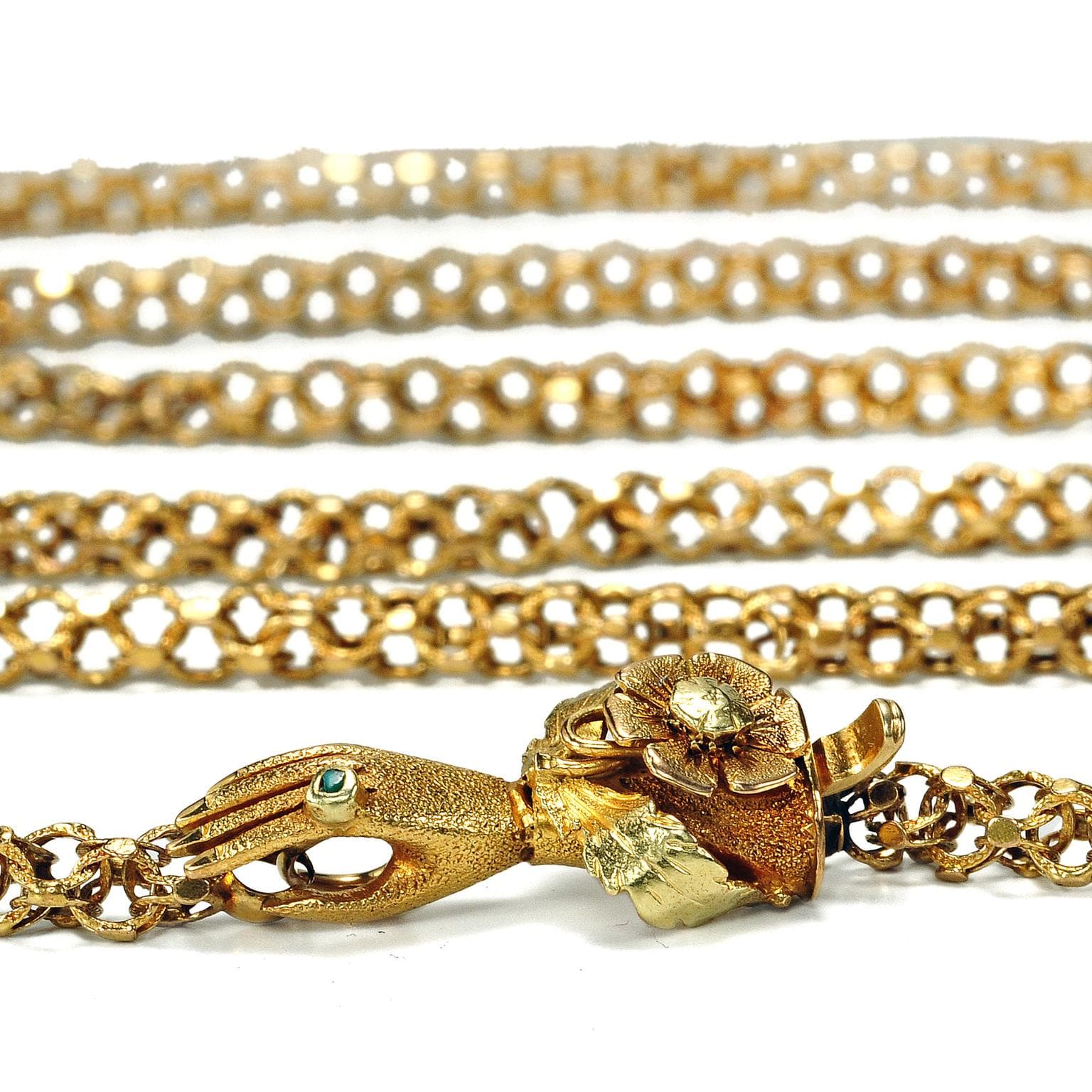
A surviving example in the Met’s collection makes the point vividly: a Greek jewelry set dated around 330 to 300 BCE includes a gold diadem, a pair of gold earrings, two necklaces, a gold snake ring, and rosettes from Madytos on the Hellespont. It is a ready-made lesson in how ancient adornment worked as a full visual language, not a single statement piece.
How the trend translates into modern layering
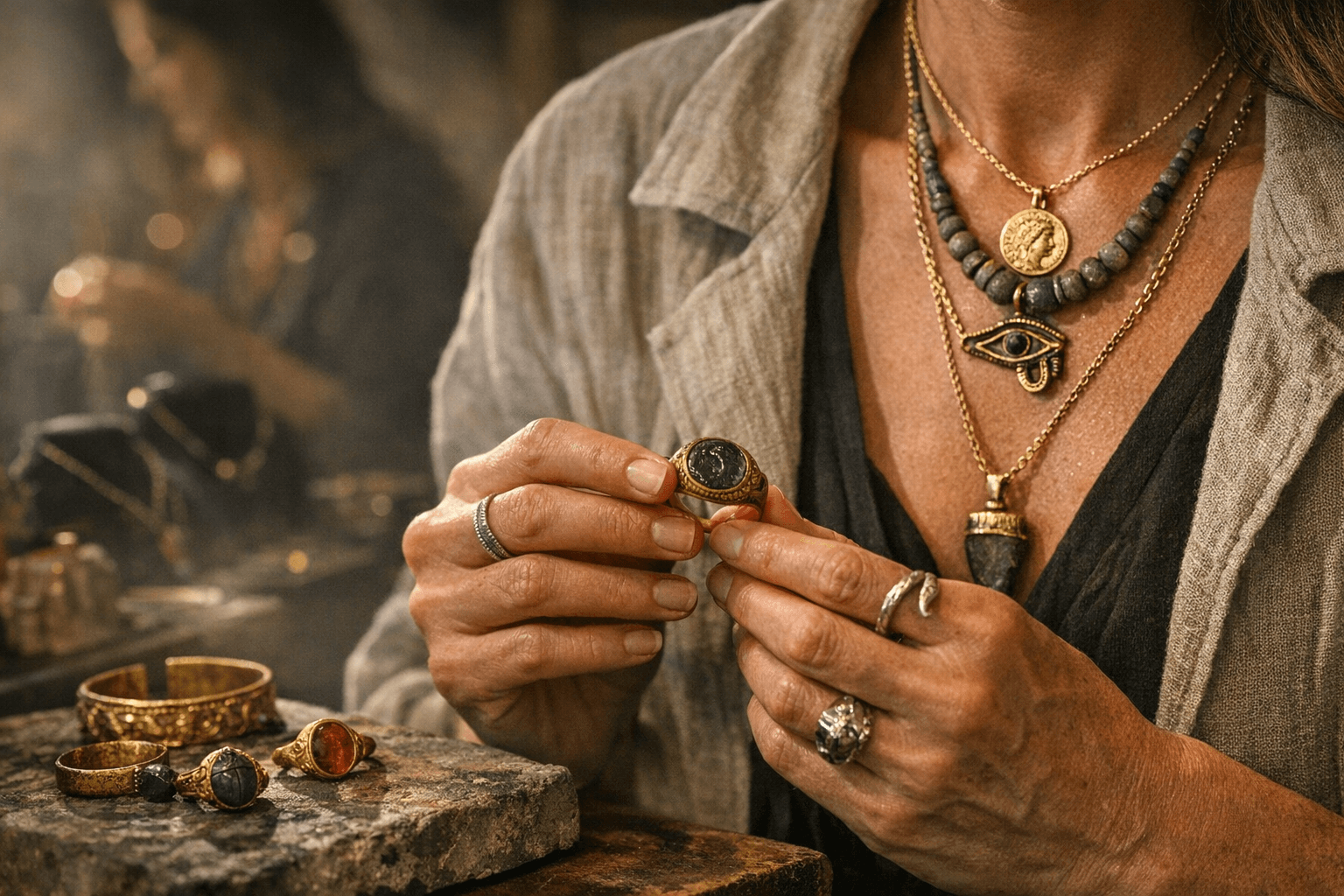
The easiest way to wear ancient-inspired jewelry now is to think in layers, not in costumes. A chain necklace with a symbolic pendant can sit against the collarbone, while a second, longer chain adds movement and prevents the look from becoming flat. If the pendant carries a recognizable motif, such as a coin, scarab, snake, or classical profile, keep the surrounding chains clean so the image reads clearly.
Carved rings work best when they are treated like punctuation. One intaglio or engraved ring can anchor a stack of smoother bands, especially if the setting is substantial enough to look intentional rather than delicate to the point of invisibility. Hoop earrings do the same job at the ear: they can echo ancient forms while staying modern if the profile is simple, the scale is balanced, and the finish is polished rather than theatrical.
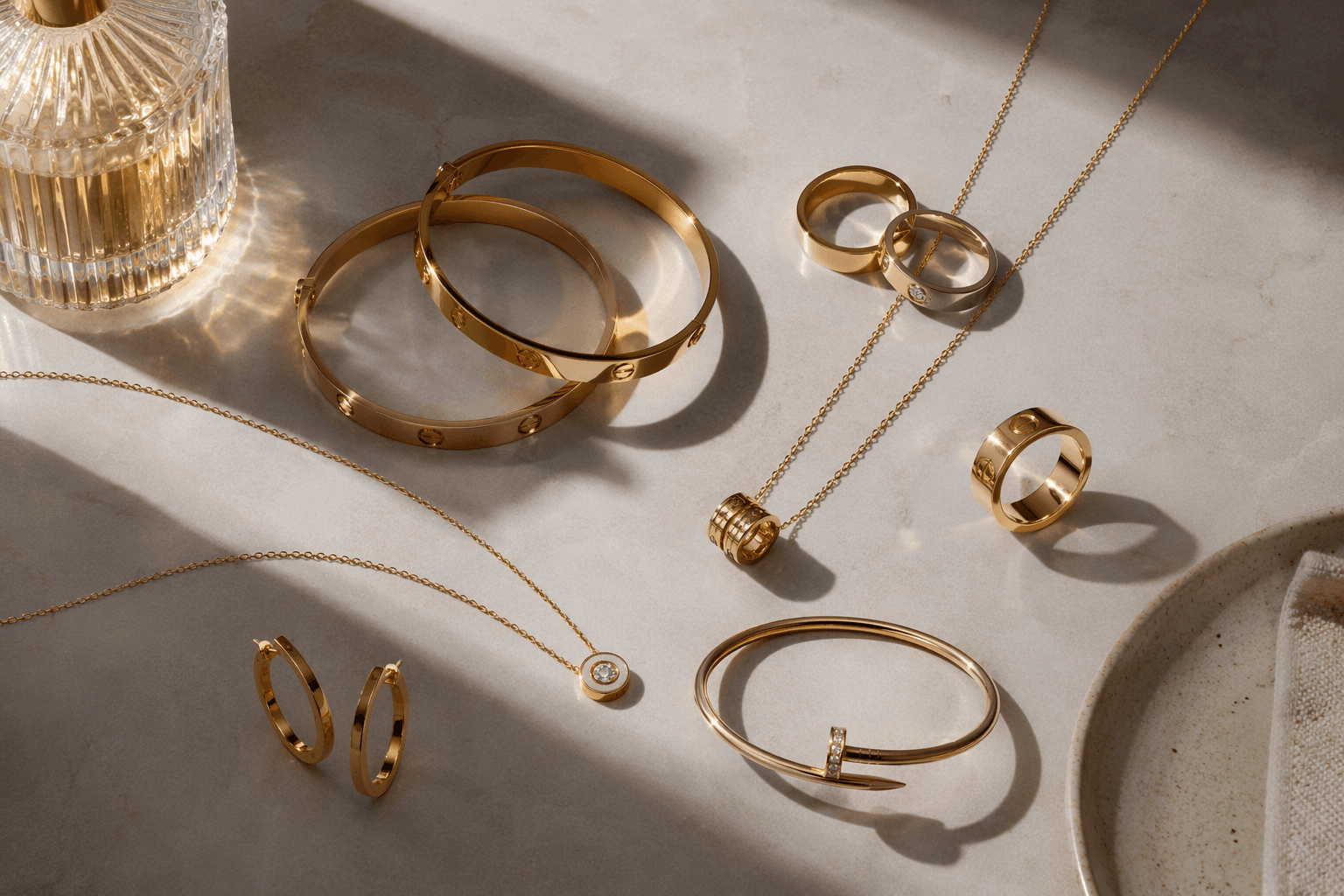
The key is contrast. Pair a historically coded piece with something stripped back, such as a plain chain, a silk cord, or a smooth band, so the old-world reference has room to breathe. Business of Fashion has noted that high gold prices are pushing designers toward sterling silver, silk cords, and lab-grown diamonds, and that shift can work to your advantage because mixed materials make a look feel lived-in instead of over-curated.
Build a length ladder
A convincing layered necklace look usually works best when the chains fall at different points on the chest. Start with a short chain or choker, then add a mid-length pendant, then finish with a longer chain or charm. That separation keeps each piece visible and prevents clasps, links, and pendants from colliding into one heavy cluster.
Texture matters as much as length. A fine cable chain beside a more substantial link chain creates visual depth, while a pendant on a silk cord can soften a harder, more architectural necklace. Ancient jewelry often used rich surfaces and mixed materials together, so a modern stack should do the same.
Keep one motif in charge
The easiest way to avoid a costume effect is to choose one historical idea and let everything else support it. If the lead piece is a Greek-style coin pendant, then the rest of the jewelry should stay quiet and contemporary. If the anchor is a carved ring with an ancient figure or animal, avoid piling on too many other symbolic references at once.
This is where provenance and story matter. Antique and period jewelry has long attracted collectors because it offers a chain of ownership and a sense of place, and the current revival taps the same desire for portable history. A piece that feels rooted in Greece, Rome, Egypt, the Near East, or India reads as personal when it is worn as one chapter in a larger stack, not as a full historical reenactment.
Why the market is moving now
The social-media engine is accelerating the return. The Associated Press reported in July 2024 that TikTok had more than 170 million users in the United States and that a majority were under 30, an audience that retailers prize. AP also noted that the platform has shortened the shelf life of trends and changed how people engage with fashion and food, which helps explain why a niche vintage look can jump quickly into the mainstream.
That speed is important in jewelry, where trends used to move much more slowly. McKinsey reported that during the pandemic, fine-jewelry revenue fell 10 to 15 percent and watch revenue fell 25 to 30 percent, while online sales represented 13 percent of the global fine-jewelry market and just 5 percent of the watch market in the pre-digital era it examined. The category is still catching up digitally, so a social-driven trend like ancient-inspired layering can have an outsized effect on what consumers notice and buy.
How to wear the revival without losing the point
The best looks feel composed rather than themed. Choose one metal family as the base, then introduce one contrast, such as silver against gold, or a silk cord against a chain. Keep shapes clean, especially near the face, and save the most ornate piece for either the neckline or the hand, not both.
- Start with one historical reference, such as a coin pendant, snake ring, or carved intaglio.
- Add one or two quiet modern pieces to frame it.
- Vary lengths, finishes, and textures so the eye moves easily.
- Stop before every piece starts competing for attention.
A practical formula works well:
That approach honors the original logic of ancient jewelry, where sets were designed to work in concert and symbolic forms carried clear meaning. The result is not a museum display on the body, but a living style language, one that turns history into something intimate, wearable, and unmistakably current.
This article was produced by Prism’s automated news system from verified source data, official records, and press releases, then run through automated quality and moderation checks before publishing. The system is built and supervised by the people who set the standards it runs under. Read our full AI policy.
Did this article answer your question?