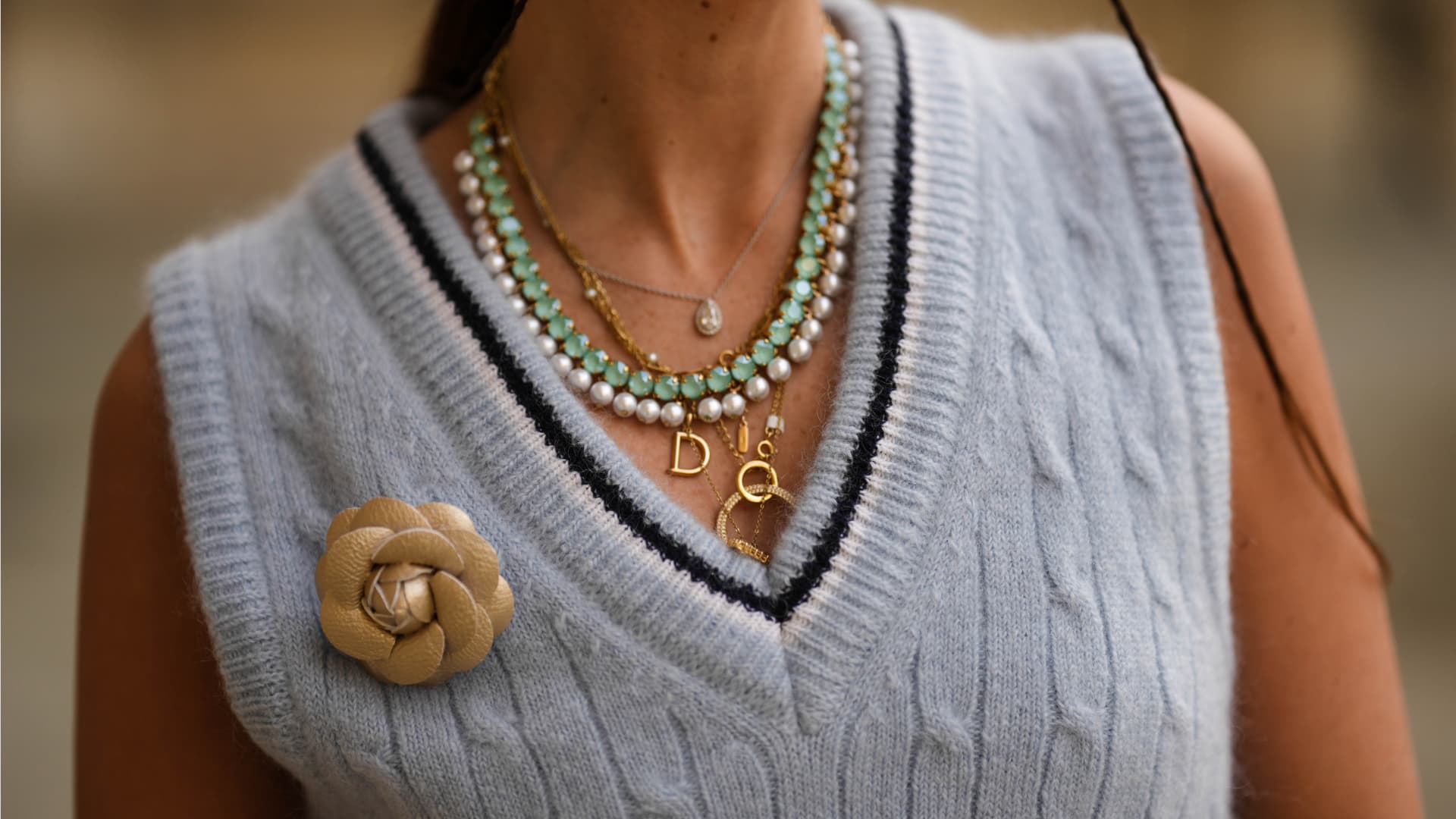
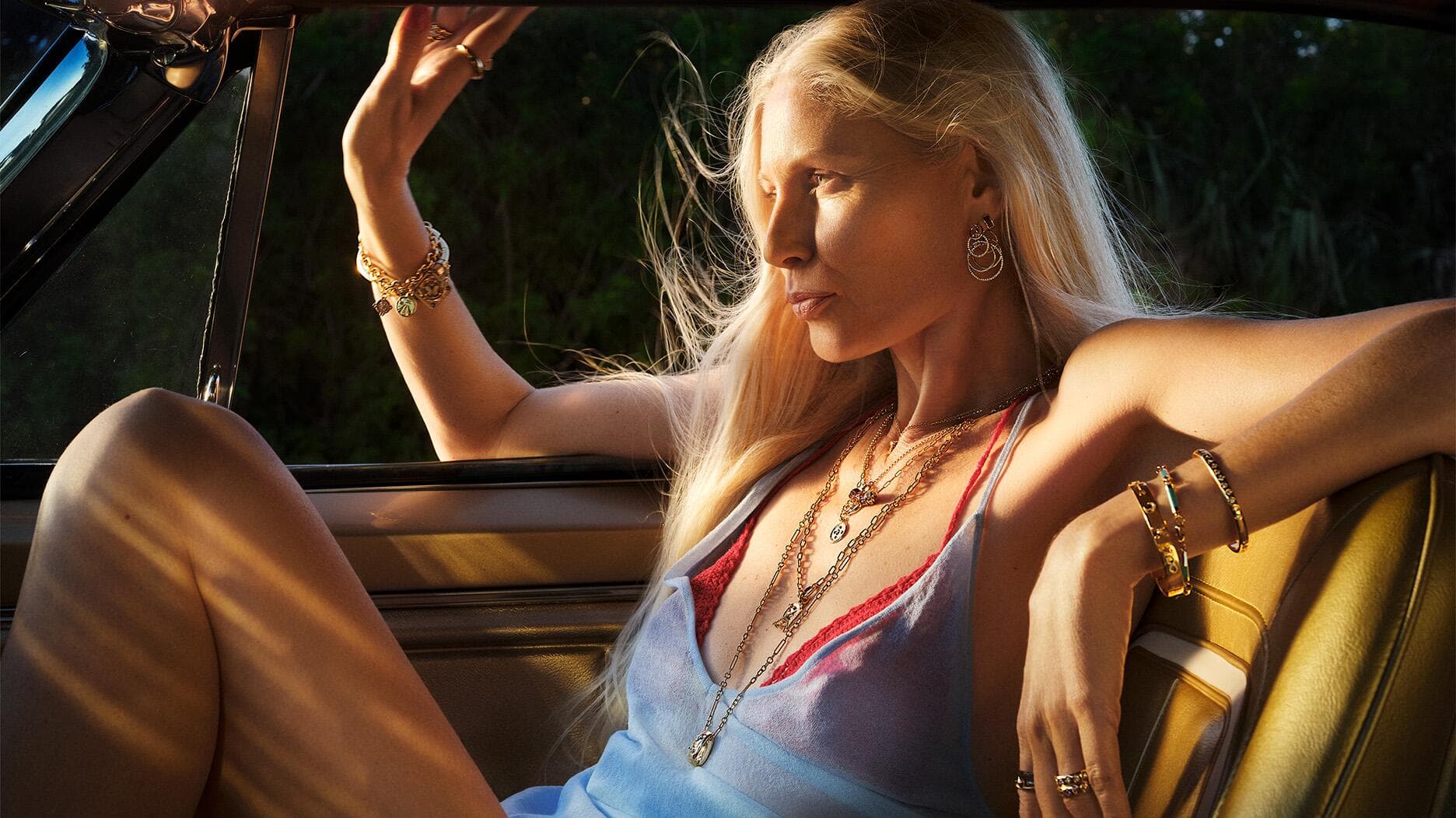
Beaded jewelry leads the shift from quiet luxury to playful style
Beaded necklaces and bracelets are pushing layering out of quiet luxury, giving summer 2026 stacks more color, texture, and personality.
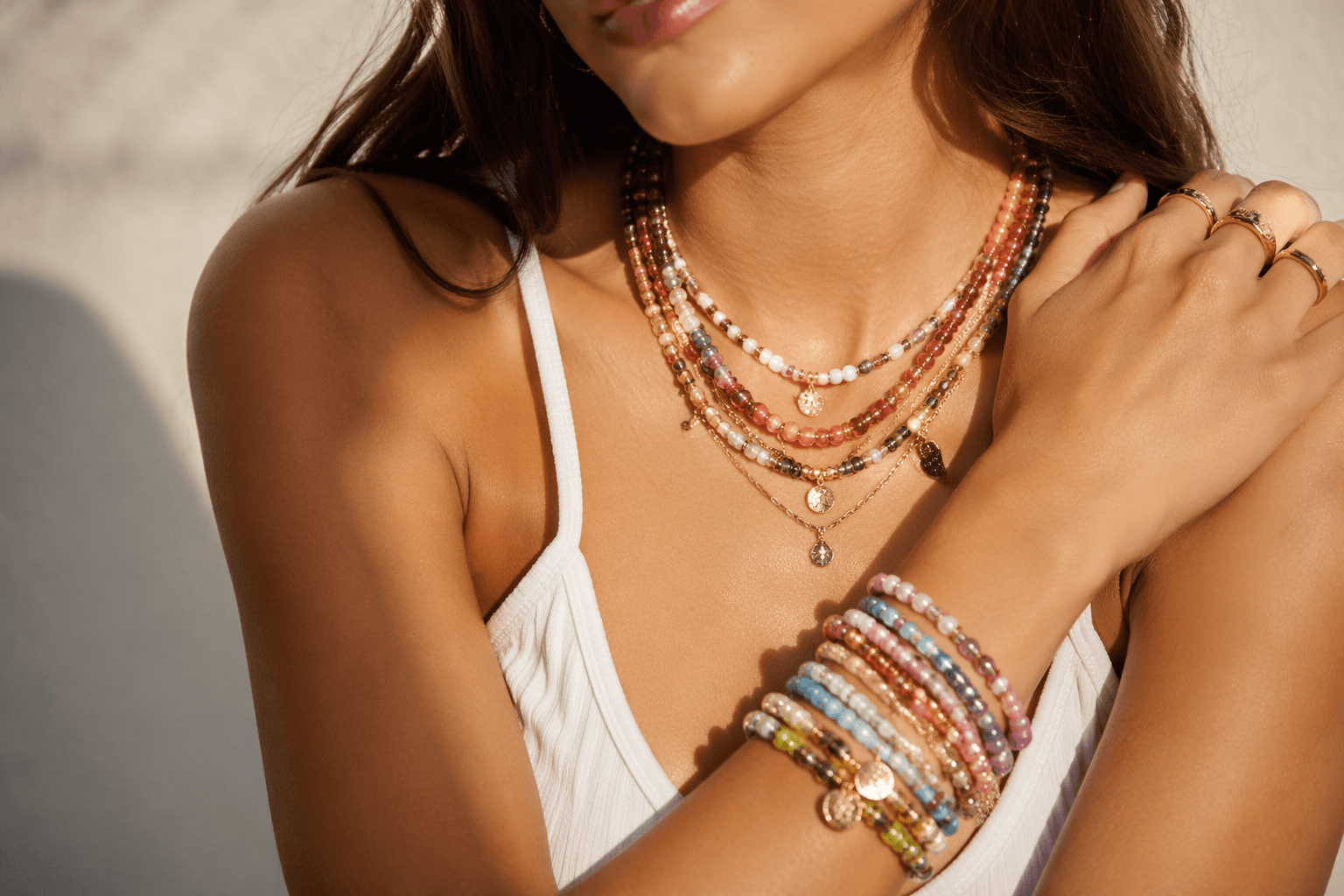
The bead is back, and it is doing more than adding color
Quiet luxury has spent several seasons teaching jewelry to whisper. Summer 2026 changes the register. Beaded jewelry has emerged as one of the clearest signals that the mood has swung toward playfulness, with jewelry once again functioning as the part of the outfit that can carry personality, not just polish. The shift is less about abandoning refinement than loosening the rules around it: pieces feel more expressive, more collectible, and more open to mixing.
That is what makes the bead such a useful shorthand for the moment. It can be crisp and graphic, or soft and artisanal. It can read as precious when it is closely spaced and carefully finished, or deliberately offbeat when the shapes are irregular and the colors feel almost candy-bright. In a season defined by fewer clothes and more visible accessories, the bead has become the easiest way to make a stack feel intentional rather than merely assembled.
Why the runway kept returning to beads
The clearest evidence came from the spring/summer 2026 runways, where beaded jewelry kept appearing not as a supporting detail but as a recurring styling language. Michael Rider’s second Celine collection used stacks of colorful beaded necklaces and long beaded earrings, a combination that made the neck and ear feel charged without relying on heavy metal or oversized stones. Polo Ralph Lauren showed beaded necklaces and earrings alongside piles of bracelets, often styled over shirts and sweaters in a way that made the jewelry feel lived-in rather than precious. Chanel also used draped beaded necklaces on the runway, reinforcing the idea that beads can create movement and softness across the body, not just ornament around it.
That matters because the trend is not simply about nostalgia. The bead is being used as a structural tool. It gives shape to the neckline, introduces texture against plain fabric, and changes the balance of a look faster than almost any other accessory. When clothing is pared back, as it is in summer, jewelry has more room to speak.
The new layering code is playful, not polished
Who What Wear’s broader 2026 jewelry coverage places this bead moment inside a larger pivot away from quiet luxury restraint and toward jewelry that feels more expressive and personal. The same editorial instinct appears in its runway layering coverage, which describes 2026 fashion as embracing layering and inventive styling after years of hyper-pared-back dressing. The result is a mood shift: stacks are no longer meant to look identical, tidy, or matched to the millimeter. They are meant to look chosen.
That is why the most current bead stories are not about symmetry. They are about contrast. A strand of glossy spheres feels sharper when it sits next to a sleeker chain. A colorful bead line can loosen up a signet ring. A beaded necklace with a candy-like rhythm becomes more modern when it is worn with a finer chain close to the collarbone or with a classic bracelet that reads almost inherited. The point is not to dilute the bead’s personality, but to let it interrupt perfection.
For summer, that interruption is the whole appeal. Beads bring movement and surface interest to a neckline that might otherwise be bare, and they create a visual transition between skin, fabric, and metal. In the right stack, they do what polished uniform sets cannot: they make the jewelry look like it was built over time.
Shapes, colors, and pairings that feel current now
The most relevant bead looks for 2026 are the ones that feel a little more art-school than beach souvenir. Think spherical beads worn in tight, short necklaces that sit high at the neck, or longer bead strands that read almost like color lines. The spring/summer runway examples leaned into volume and repetition, which is part of what gives them authority, but the summer edit also points to the bead’s softer side, where it can add shape without heaviness.
Color is doing a lot of work here. Bright beaded necklaces feel especially current when the palette is clear and saturated rather than muddy or overly tropical. The effect is less resort trinket, more edited statement. For readers who prefer a subtler register, neutral or monochrome beads still participate in the trend if the proportions are strong enough, especially when worn against gold hardware, diamond studs, or a clean signet.
- short bead necklaces with slim chains or a single pendant
- colorful beads with classic bracelets or signet rings
- long beaded earrings beside a restrained neckline
- draped bead strands with structured shirts or lightweight sweaters
The smartest pairings this season are the ones that create friction between precious and playful:
The styling lesson is simple: let one piece carry the joke, then ground it with something precise.
Why younger buyers are helping the trend stick
The bead revival is also landing because it fits a broader appetite among younger shoppers for jewelry that can be worn often and built into a personal collection over time. WWD has reported growing interest in classic and heritage styles such as tennis bracelets, signet rings, diamond studs, and pearls, especially among Gen Z and younger Millennials. That appetite is not really about understatement. It is about pieces that can survive beyond a single trend cycle.
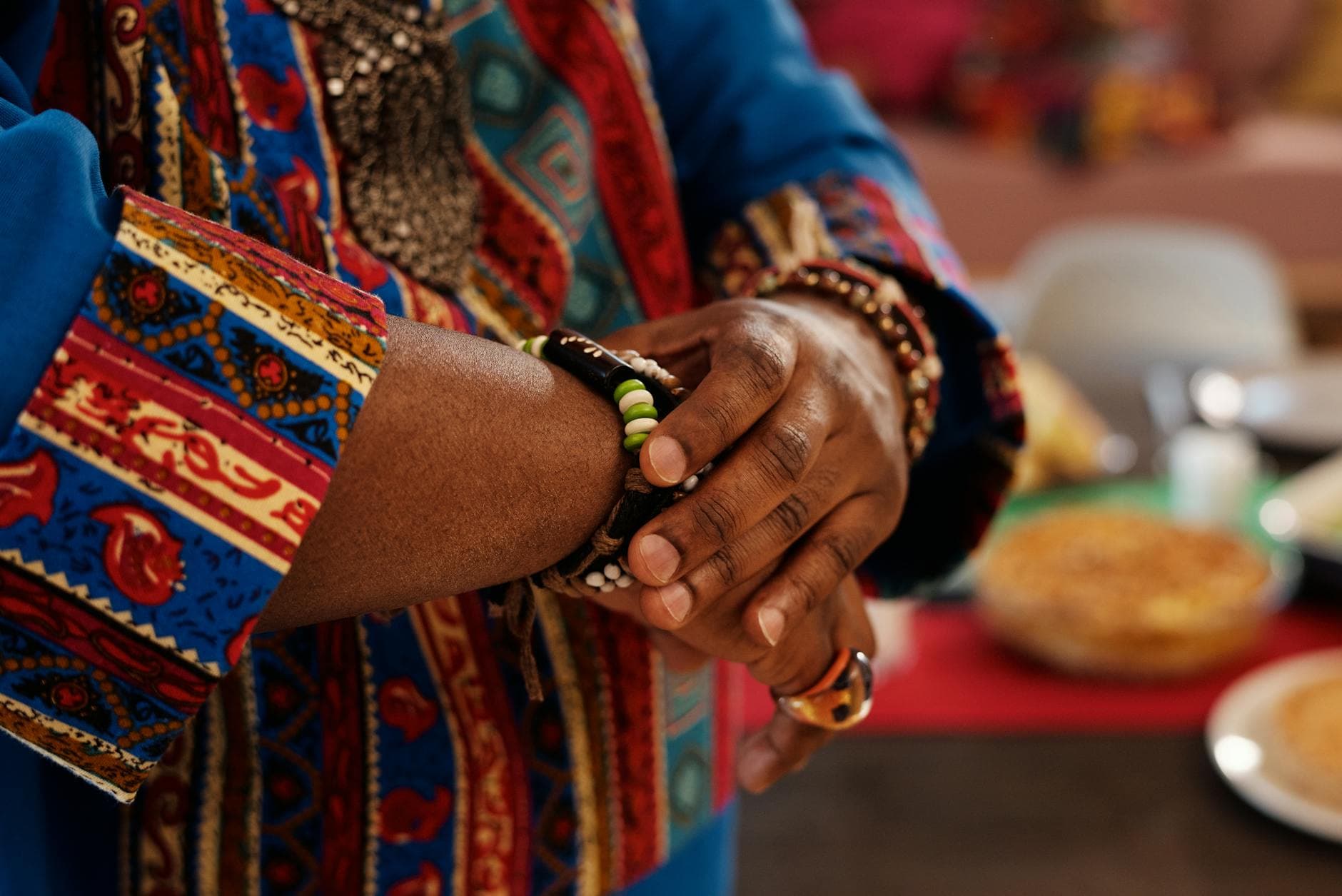
Material Good’s Teresa Panico has pointed to that desire for everyday wear and long-term collecting, while Ring Concierge’s Nicole Wegman has emphasized versatility as the quality that gives jewelry staying power. Those ideas explain why beaded jewelry is thriving beside more classic categories rather than replacing them. It feels fresh, but it also behaves like the kind of piece that can join a rotation and stay there.
The search data backs up the mood. Lyst saw tennis bracelet searches rise 365 percent at their peak, tennis necklace searches were up 219 percent year-to-date, signet ring searches increased 53 percent month-to-month, and pearl searches rose 75 percent in the first quarter of the year. That mix of numbers matters because it shows consumers are not abandoning tradition. They are remixing it.
The nostalgia factor gives the trend depth
There is also a longer memory at work. WWD has noted that the 2000s have been a perennial source of style inspiration since at least the mid-2010s, with puka shells and nameplate necklaces returning again and again in different forms. The current bead moment borrows that same sense of easy personal expression, but it feels more edited and less literal than the early-2000s references that shaped previous cycles.
That is what keeps this trend from becoming costume. A beaded necklace today can nod to nostalgia without collapsing into it, especially when it is worn with sharper, more classic jewelry nearby. The most convincing stacks do not look like one theme repeated several times. They look like a collection of individual decisions, which is exactly the kind of jewelry language that summer 2026 is rewarding.
The brands setting the tone
The bead story is also being shaped by designers and brands that already understand the balance between wit and polish. Don’t Let Disco, Chan Luu, Completedworks, Gohar World, Jia Jia, Julietta, and Sophie Buhai all sit comfortably inside that art-school, personality-forward lane, where jewelry is meant to feel collected rather than uniform. Their work helps explain why this trend has traction beyond the runway. It has emotional range. It can be playful without losing sophistication, and personal without becoming precious.
That is the larger shift underway. Jewelry is moving back toward expression, and beads have become one of the clearest signs of that change. After years of uniform restraint, the most current stack is the one that looks a little less perfect and a lot more alive.
Know something we missed? Have a correction or additional information?
Submit a Tip