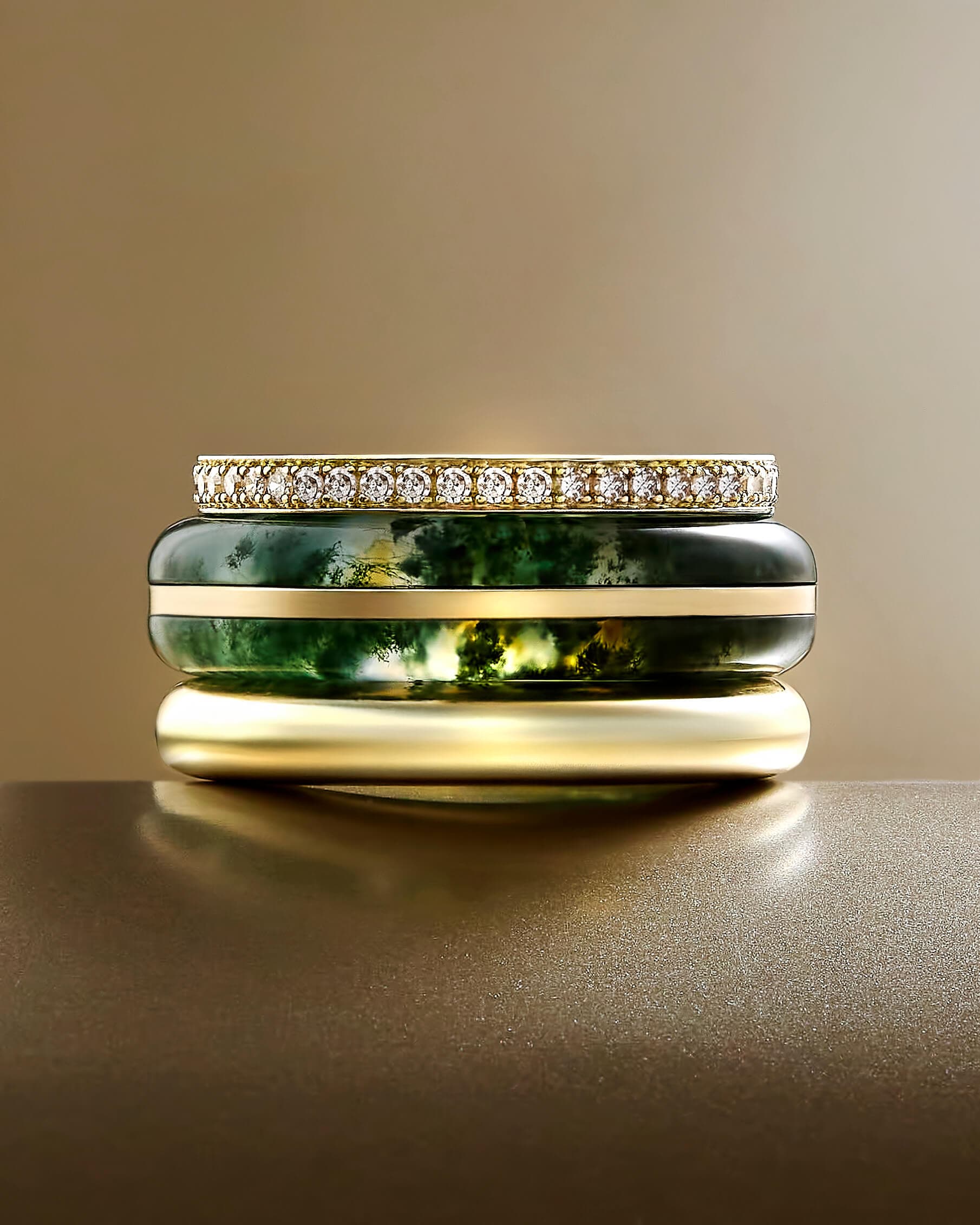
Couture Show spotlights yellow-gold layering and fine jewelry in Las Vegas
Yellow gold and layered chains define Couture’s 2026 message: jewelry is becoming more intentional, more edited and noticeably bolder.

Intentional layering is the new luxury code
Las Vegas is rewarding jewelry that looks assembled with purpose, not piled on by accident. At The Couture Show, running May 27-31 at Wynn Las Vegas with opening night on May 27 at 6:00 p.m., the clearest signal on the floor is a turn toward yellow-gold necklaces, mixed statement lengths and more assertive stacks that feel composed rather than decorative.
That matters because Couture is not a casual showcase. The show positions itself as the most exclusive and intimate destination for designer fine jewelry and luxury timepieces in the United States, and it draws top-tier buyers from Bergdorf Goodman, Marissa Collections, TWIST, Reinhold Jewelers, Borsheims and Neiman Marcus. With roughly 350 exhibitors in the 2026 edition, the fair has the scale to turn a styling instinct into a buying mandate.
Yellow gold is back as the organizing metal
The strongest visual cue this year is yellow gold, which gives layered jewelry a warmer, more directional look than a scatter of unrelated pieces. WWD’s image roundup from the fair captured that shift clearly, with yellow-gold necklaces reading as the common thread among standout fine-jewelry presentations from names as varied as Mikimoto and Future Reference Vintage.
Yellow gold works here because it creates coherence across different lengths and textures. A short chain close to the collarbone, a longer line that reaches lower on the chest and a third piece with more weight can all coexist without feeling busy when the metal family is consistent. The result is a look that feels deliberate, almost tailored, and that is exactly why it is resonating now.
Statement necklaces are growing more architectural
The necklace story is bigger than metal color alone. InStore’s trend reporting points to the statement necklace as one of the defining silhouettes for Couture 2026, and the forms are broadening: rivieres, wide bibs, eternity styles with a single centerpiece, and drop-and-station motifs all continue to shape the conversation.
What ties those categories together is scale. Rivieres can sharpen a neckline with a continuous line of light, while wide bibs bring a more sculptural presence; eternity necklaces with a single focal stone or motif shift attention toward a central point, and drop-and-station designs break the line into rhythm and movement. Layering works best against that kind of structure because it lets each piece do a different job, one as foundation, one as punctuation and one as the visual exclamation point.
Vintage references are making layering feel smarter, not costume-like
The other major signal is the return of chain types that reach back across centuries. InStore notes that styles inspired by the 17th century through the 1970s are reemerging, especially paperclip, trombone, rounded curb and mariner links. Just as important, these pieces are being worn alone, layered or paired with talismans and charms.
That is where the trend feels most current. Vintage references are no longer being used as nostalgia for its own sake; they are giving modern jewelry a sense of memory and texture. A paperclip chain can cool down a more ornate necklace. A rounded curb link can add weight to a stack that might otherwise feel too polished. Talismans and charms, meanwhile, bring narrative into the composition, making the necklace stack read like a personal archive rather than a styling formula.
The ring stack is getting fuller, not quieter
The same appetite for intention is extending to hands. Even when necklaces dominate the conversation, the logic of 2026 layering points toward ring stacks with more volume, more contrast and more visible personality. In a market where buyers are looking for freshness, differentiation and originality, the ring story is moving away from tiny repeats and toward combinations that feel more architectural.
That broader mood fits the day-one atmosphere in Las Vegas. Diamond World described a cautious-optimism environment, with stronger U.S. exhibitor dominance and lower international participation than in previous editions. In that kind of market, jewelry has to do more than sparkle. It has to offer a point of view, and ring stacks with substance are one of the clearest ways to do that.
Why Couture still defines the direction of fine jewelry
Couture’s influence comes from more than its setting at Wynn Las Vegas. Forbes says the 2026 fair has expanded its reach with a partnership with Time to Watches, bringing 18 watch brands into the mix, with Baume & Mercier among the best-known names. That cross-category breadth reinforces the larger luxury message: consumers are moving toward layered adornment across the board, not just in necklaces.
The programming underscores that shift as well. On May 28, Paola De Luca is hosting a live discussion on global jewelry-market convergences, and on May 29 De Beers is sponsoring a podcast recording on bridal jewelry with Nicole Carosella, David Farrugia, Hiba Husayni and Sally Morrison. In other words, Couture is not only showing what is beautiful; it is mapping where the business is headed.
The lesson from this year’s show is clear. Layering has moved past trend status and into a design language of its own, with yellow gold, heritage chains, mixed lengths and fuller ring volumes all pointing toward the same idea: jewelry now wins when it looks intentional, collected and unmistakably personal.
This article was produced by Prism’s automated news system from verified source data, official records, and press releases, then run through automated quality and moderation checks before publishing. The system is built and supervised by the people who set the standards it runs under. Read our full AI policy.
Know something we missed? Have a correction or additional information?
Submit a Tip