Eight Tastemakers Reveal the Secrets to Stylish Jewelry Stacking
The best stacks don't shout. They balance a watch, a few rings, and just enough empty space to make every stone look intentional.
The best stack starts with editing
The sharpest stacks are not about abundance. PORTER's conversation with eight fine-jewelry connoisseurs, among them Maria Dueñas Jacobs, Emily Johnston and Charlie Boyd, treats the wrist and hand as a composition problem: one anchor, then a sequence of textures and scales that earn their place. That discipline feels especially relevant in a luxury market where Bain & Company said jewelry was the most resilient core category even as only about one-third of luxury brands were expected to end the year with positive growth.
Let the watch set the tempo
A watch changes the entire wrist because it gives the eye a fixed point. If the case is slim, one bracelet beside it is often enough to create polish; if the watch is bolder, the surrounding pieces should stay disciplined so the hardware does not begin to compete with itself. The clasp, crown and bezel need breathing room, which is why the most elegant stacks usually look as though each piece was chosen to support the watch rather than overpower it.
Texture is what keeps a stack alive
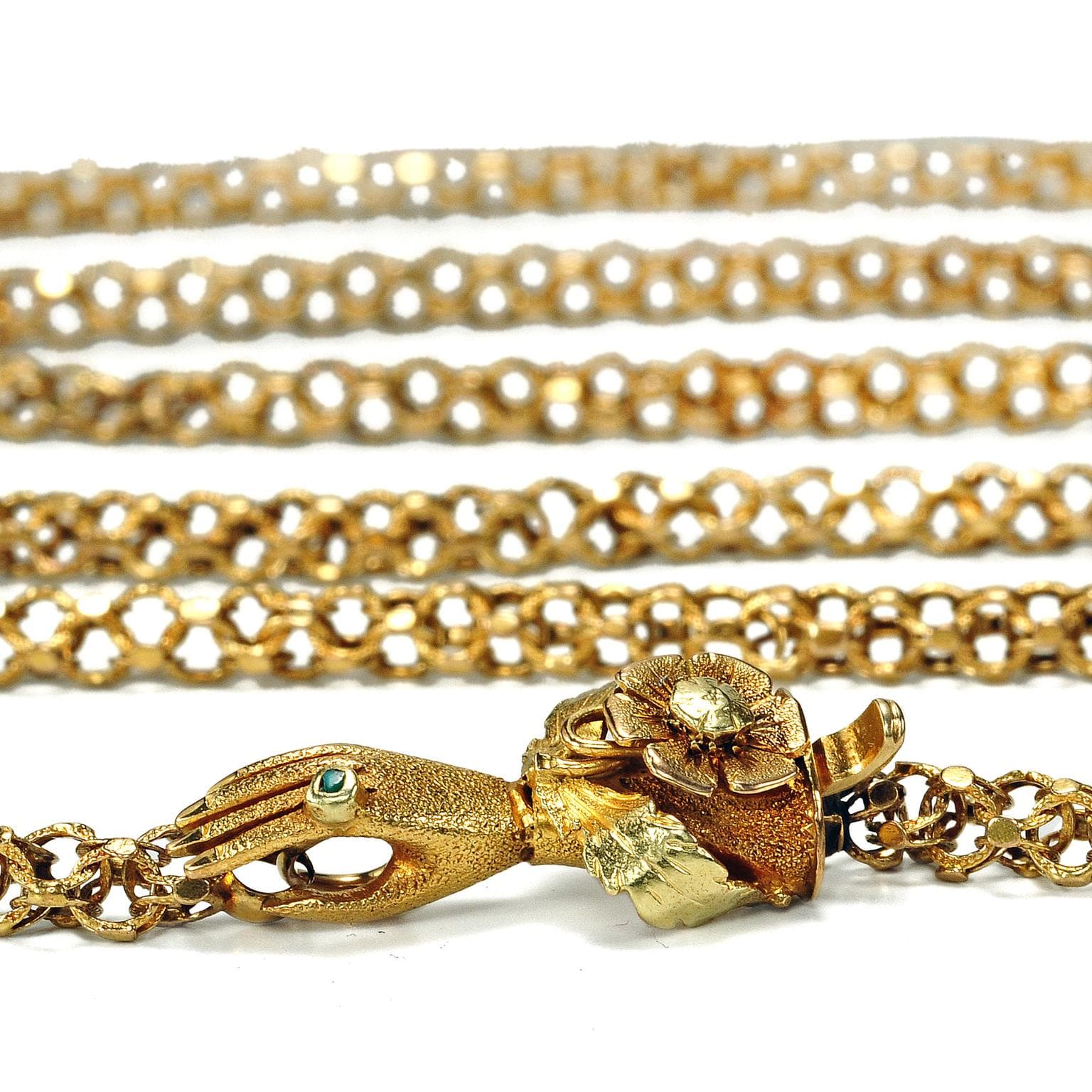
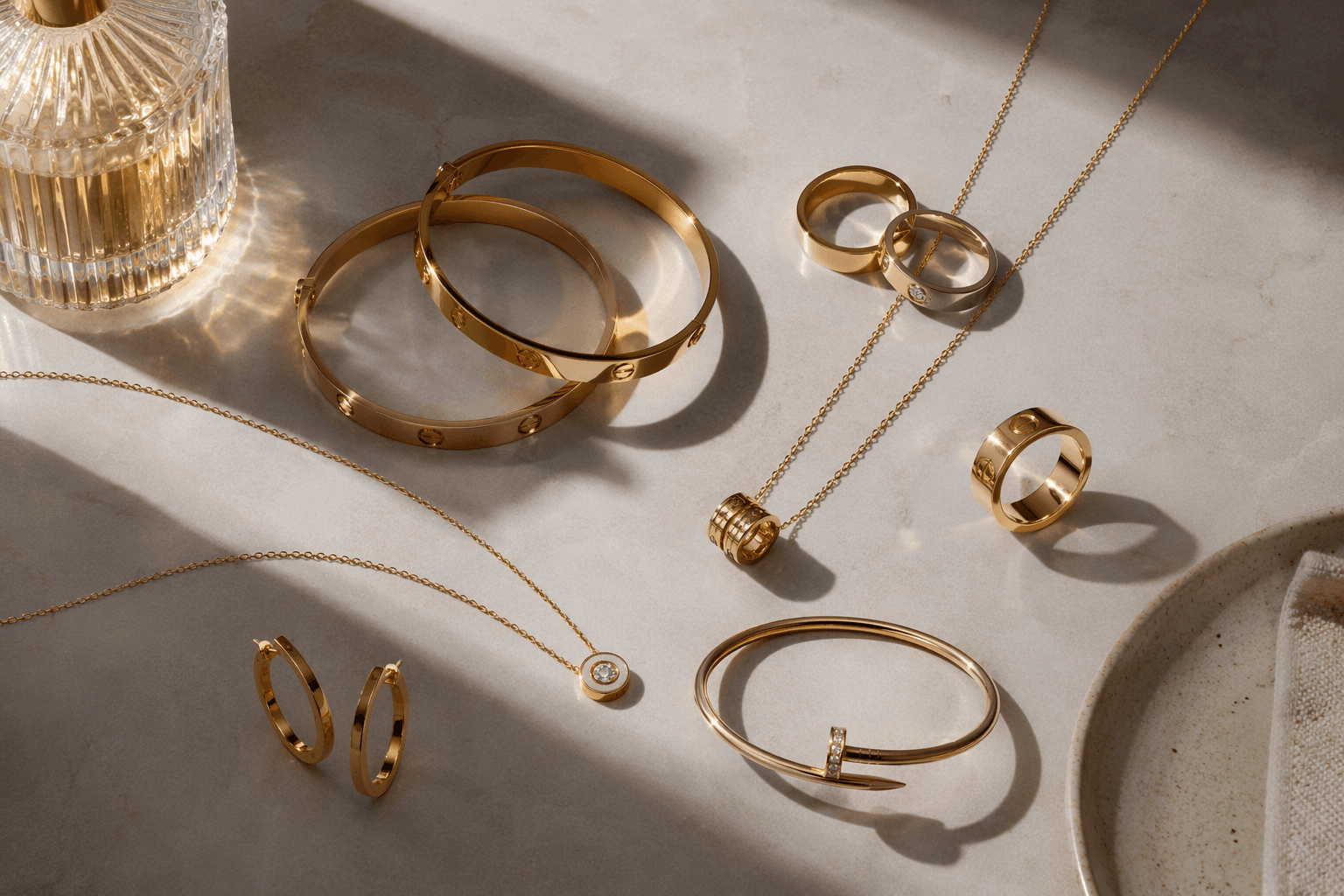
The difference between a stack that feels styled and one that feels static is texture. High-shine gold next to a brushed surface, a sculptural bangle beside a finer link, or a pavé finish against a plain band keeps the light moving and gives the stack dimension. That same appetite for scale and surface explains why bracelet stacking gained force on the SS25 runways at Chloé, Saint Laurent, Bottega Veneta, Zimmermann and Elie Saab, where volume was used as punctuation rather than clutter.
Bigger bracelets need a stronger point of view
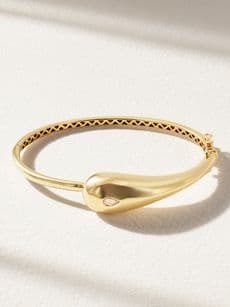
Emily Johnston, fine-jewelry buyer at NET-A-PORTER, made the trend line explicit: "The shift towards bigger, bolder bracelet stacking has definitely been influenced by the SS25 runway collections." The important word is influenced. A bold stack works when one bracelet carries the volume and the others echo it in slimmer proportions, so the result reads as rhythm, not bulk.
Rings should compose a line, not consume the hand
On fingers, the question is rarely how much can fit and more often where the eye should land first. One pronounced ring can anchor the hand, whether it is a signet, a bezel-set stone or a pavé band, while the surrounding rings should vary in width and height so they do not collapse into one dense strip of metal. A hand with one decisive stack and one bare finger usually looks more polished than a hand in which every finger is occupied.
Settings matter because they change the silhouette
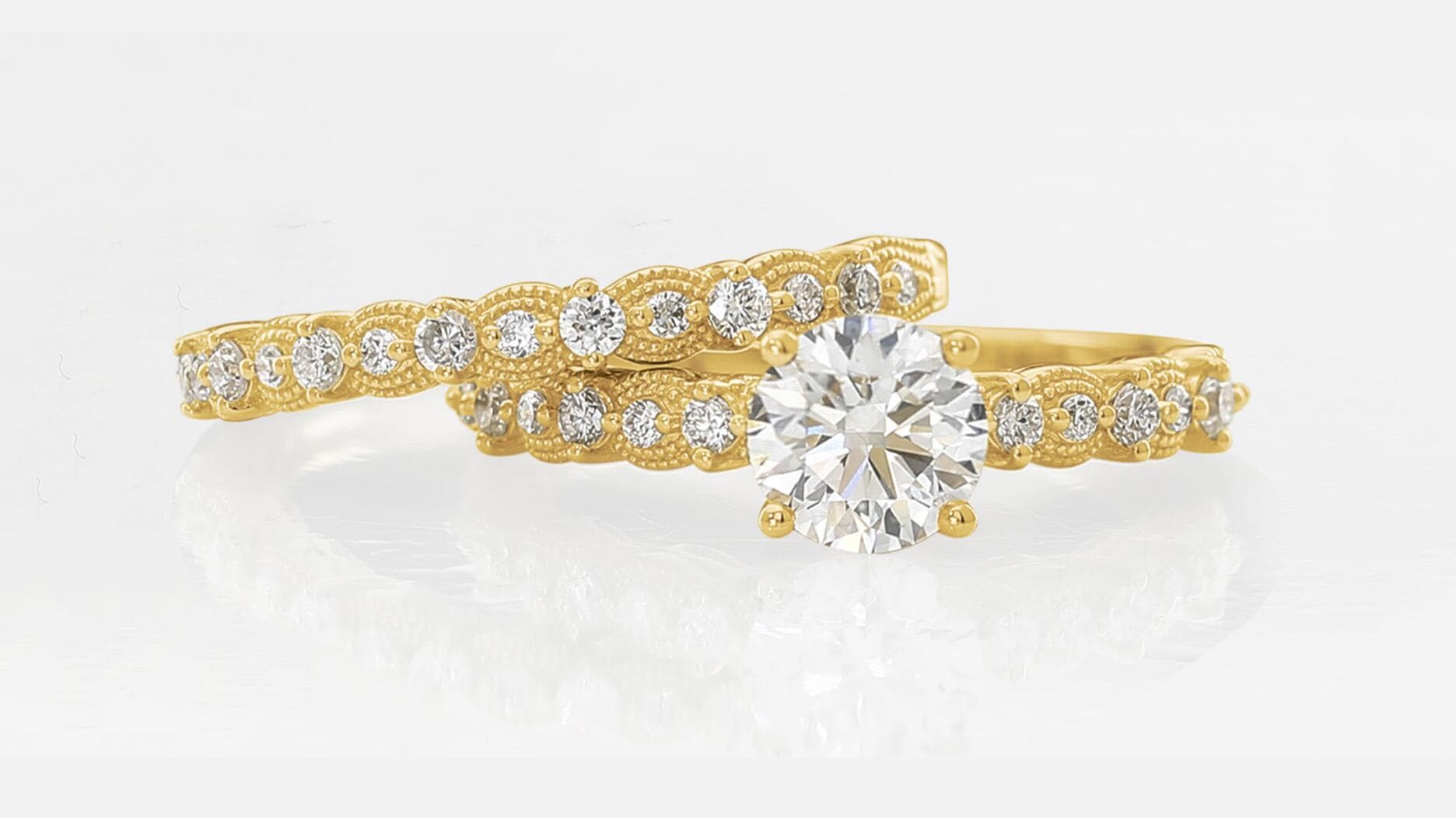
A bezel setting sits low and smooth against the finger, which makes it ideal when you want a ring to feel integrated with a stack or stay comfortable beside a cuff. Prong settings lift the stone into the light and add sparkle, but they also create height, which means they need more space and can snag more easily when rings are layered tightly. In stacking, that practical difference matters as much as carat weight because it determines whether the jewelry moves like clothing or behaves like hardware.
Negative space is part of the design
What you leave bare matters as much as what you wear. A bare wrist beside a stacked one gives the eye a place to rest, and an empty finger can make a single ring feel more intentional than a full hand ever could. This is the simplest way to keep fine jewelry feeling curated rather than crowded: give each piece a small pocket of air so it can be seen, not just counted.
Stacking has ancient roots, but the modern version is restraint
The current fascination with layering may look fresh, but the habit is old. The Metropolitan Museum of Art notes that bracelets were often worn in pairs in the Hellenistic period, while ancient Egyptian, Greek and Roman jewelry traditions show that rings and arm adornment have long carried meaning as well as beauty. The Victoria and Albert Museum describes jewelry as a universal form of adornment since ancient times, often tied to protection or status, which makes today's edited stack feel less like a passing trend than a refined continuation of a very old language.
This article was produced by Prism’s automated news system from verified source data, official records, and press releases, then run through automated quality and moderation checks before publishing. The system is built and supervised by the people who set the standards it runs under. Read our full AI policy.
Did this article answer your question?