Everyday Jewelry Pieces That Layer, Stack, and Personalize Effortlessly
Three numbers, 16, 18, and 22, can build a necklace system that also works on wrists and rings, with each piece earning its place every day.
The three-number rule
Three numbers, 16, 18, and 22, do more than style a neckline. They give you an operating system for jewelry: a short layer close to the collarbone, a mid-length focal piece, and a longer strand that keeps the whole stack from collapsing into one knot. In a market Statista projects at US$408.64 billion worldwide in 2026, with 5.10 percent annual growth expected through 2031, the appeal is obvious: these are pieces you wear repeatedly, not once, and they have to work as a system.
That is why the smartest everyday jewelry wardrobe is built around necklaces, bracelets, and rings that can move between solo wear and layering without looking overworked. Statista’s U.S. market coverage still centers the classic categories, rings, necklaces, earrings, bracelets, and other small decorative pieces, while Jewelers of America says more clients are choosing everyday jewelry elevated by finer materials, with yellow gold, solitaires, sustainability, and repurposed heirloom pieces standing out. The story is no longer about one standout purchase. It is about assembling a modular case of pieces that add up to more than the sum of their parts.
The necklace operating system
Base layer: the 16-inch anchor
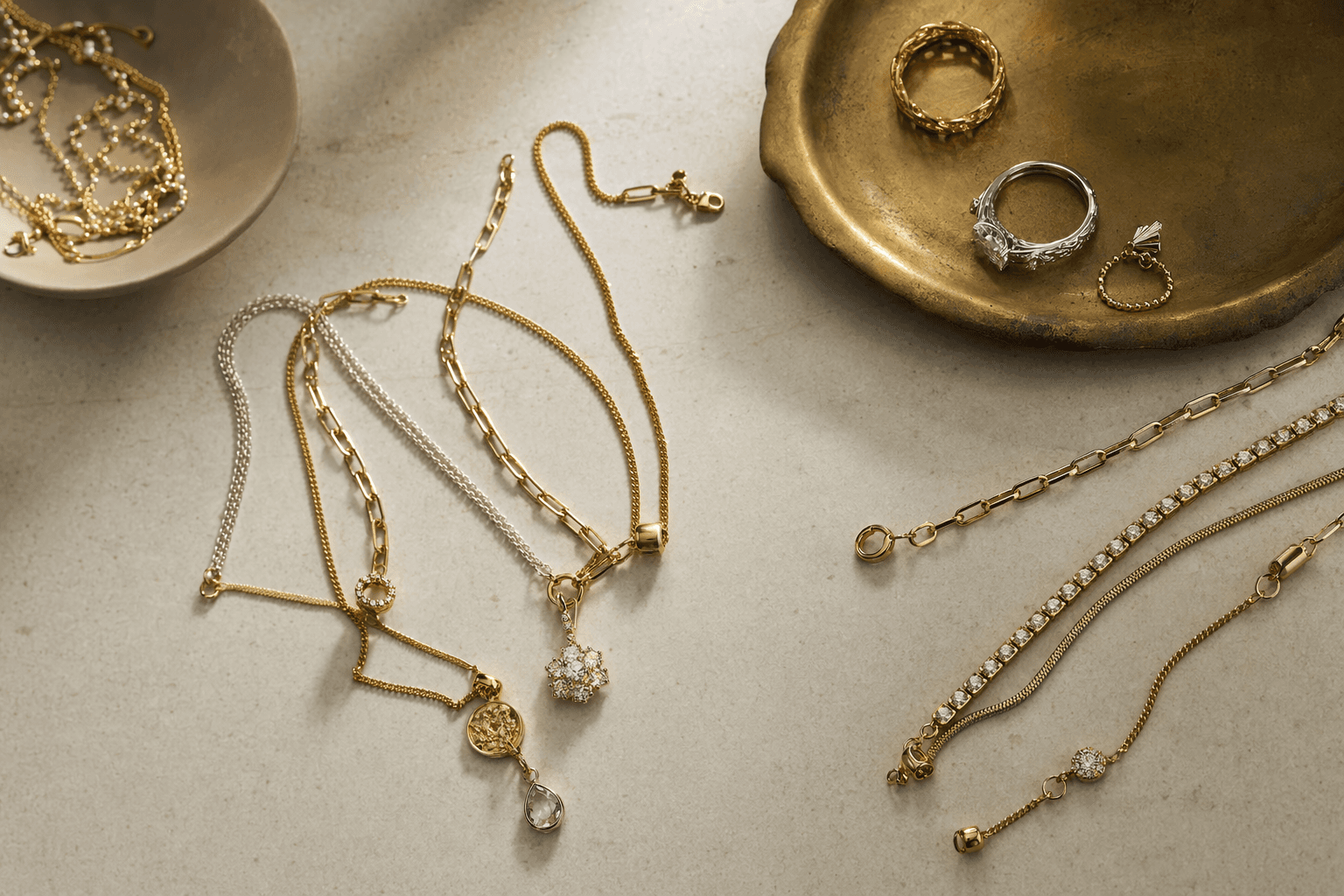
Start with a 16-inch necklace that sits high enough to frame the collarbone without fighting the rest of your wardrobe. This is the quiet workhorse in the stack, the piece that keeps a pendant from slipping too low and gives a layered look its first line. In current necklace styling, longer chains are back after a period dominated by chokers, but the short anchor still matters because it gives structure.
A base chain can be plain, lightly textured, or finished with a small charm, but its real job is balance. If you wear mixed metals, this is the best place to test the idea, because the shortest layer is the least visually risky and the easiest to wear every day.
Focal layer: the 18-inch pendant or charm necklace
The 18-inch piece is where personality enters. Pendant necklaces and charm necklaces are especially useful because they can do double duty as everyday signatures and visual anchors in a stack. A single stone, a medallion, or a sentimental charm gives the eye a place to land without making the necklace feel too precious to repeat.
This is also where the jewelry story becomes personal, which is exactly where current demand is headed. People are leaning toward sentimental, personalized pieces instead of one-off statement jewelry, and an 18-inch focal necklace is usually the easiest way to do that without disrupting the rest of the wardrobe. If the chain is too delicate for the pendant weight, it will twist all day; if it is too heavy, it will overpower the shorter layer. The right middle chain should feel visible, not bossy.
Spacer layer: the 22-inch longer chain
The 22-inch necklace is the spacer that keeps the whole stack from bunching up at the throat. It also reflects the current move toward longer statement pendants, one of the clearest shifts in 2026 layering coverage. This length works especially well with a simple drop, a locket, or a more substantial charm because it creates vertical movement and lets the two shorter pieces breathe.
A longer chain is also the most practical anti-tangle move in the group. It gives the eye a third point of reference, which makes the stack read as designed instead of accidental. If you only buy one necklace beyond the base and focal pieces, make it this one, because it extends the life of everything else you already own.
The wrist stack that actually gets worn
The bracelet pair: tennis line plus cuff
On the wrist, the most useful pairing is a tennis bracelet and a cuff. The tennis bracelet brings a continuous line of sparkle, while the cuff adds shape and weight, which keeps the stack from feeling too fragile. That combination also matches the broader shift toward intentional layering and bolder textures rather than random wrist clutter.
A cuff should feel like architecture, not costume. Choose one with enough presence to hold its own next to a flexible bracelet, then let the tennis bracelet provide movement and light. If both pieces are too dainty, the stack disappears. If both are too heavy, daily wear becomes annoying fast.
For cost-per-wear, this pairing is hard to beat. A tennis bracelet can move from work to dinner without a change of jewelry, and a cuff can be worn alone on low-key days. Together, they become a repeat uniform rather than a special-occasion compromise.
The rings that make the stack personal
Stacking rings, solitaires, and one signature piece
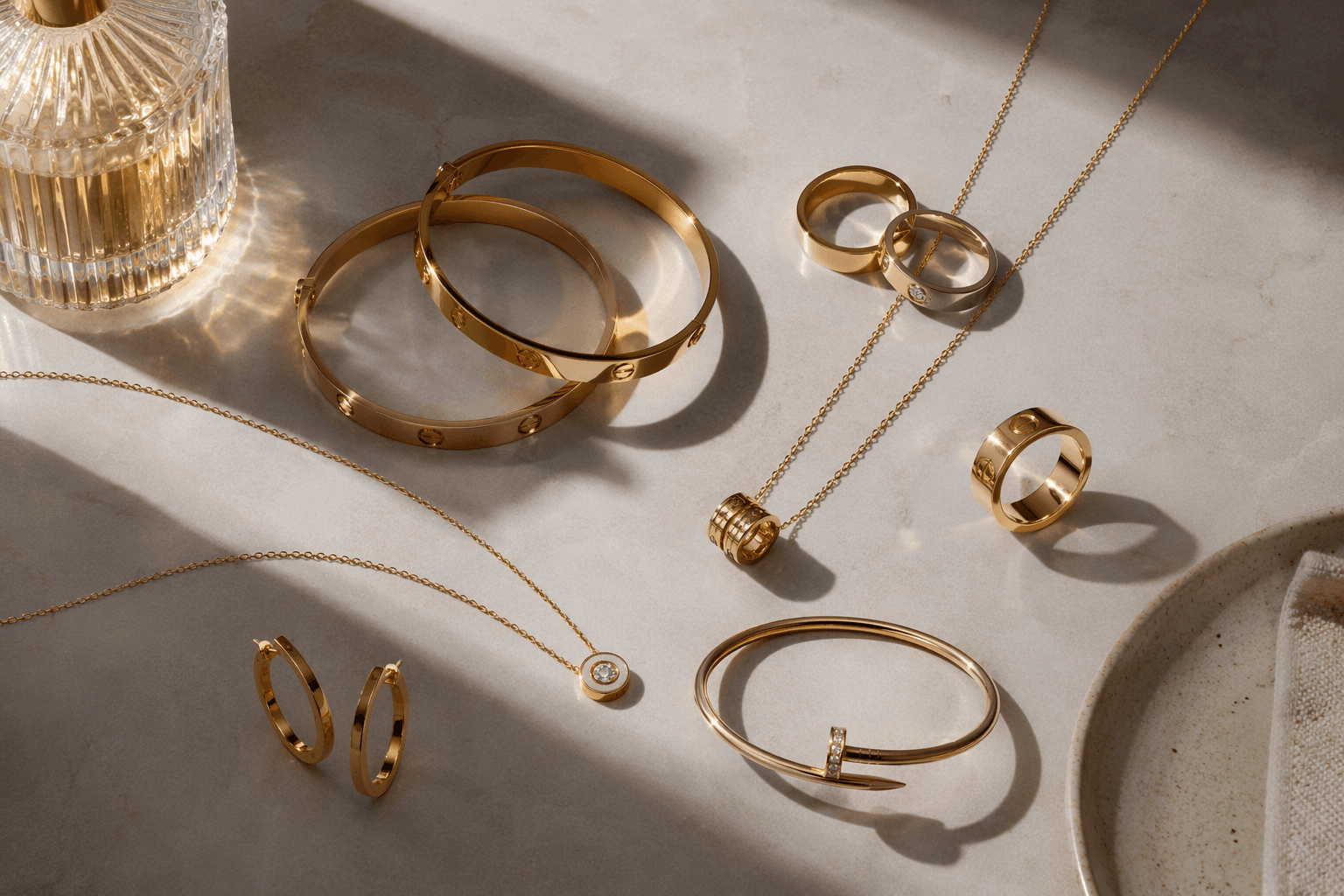
Rings are where layering becomes intimate. A slim stack of bands can sit beside a solitaire, a signet, or a personalized piece without looking crowded, especially when you vary width and texture. Jewelers of America has highlighted solitaires and repurposed heirlooms as part of what clients want now, which is a useful signal: the most wearable ring stacks often mix clean modern forms with pieces that carry memory.
The best ring wardrobe is built in layers. One plain band acts as the base, one ring with a stronger shape or stone becomes the focal point, and one personalized ring, perhaps engraved or inherited, adds meaning. Yellow gold remains especially strong here, but mixed metals are also part of the current look, so the goal is not perfect matching. The goal is visual rhythm.
What to buy first
- a 16-inch anchor chain
- an 18-inch pendant or charm necklace
- a 22-inch longer chain or drop pendant
- a tennis bracelet
- a structured cuff
- a slim stacking band
- a solitaire, signet, or personalized ring
If you are building from zero, the smartest 5 to 7 pieces are these:
That list covers necklaces, wrists, and rings without trapping you in a single style. It also keeps the wardrobe modular, which matters when the same piece needs to work with office clothes, weekend knits, and dressier layers. The cost-per-wear is strongest when each item can appear both solo and stacked, because then every purchase solves more than one styling problem.
How layered jewelry stops working, and how to keep it alive
Layered jewelry starts failing in real life the moment the lengths are too close together, the chains are too similar in weight, or everything is stored in one pile. Tangling is not a styling flaw so much as a spacing problem. Keep the necklace lengths meaningfully separated, use different textures where you can, and give heavier pendants the room to hang below lighter chains.
The same rule applies to storage and care. Separate necklaces before putting them away, and do not leave cuffs, bracelets, and rings nested together where they can scratch each other. Remove layered pieces before sleep, workouts, and anything that pulls at chains or bends rings out of shape. Jewelry that is meant to be worn daily still needs a little discipline, especially when the value is as much emotional as monetary.
That is the real case for this kind of capsule: it is not a pile of trends, it is a repeatable system. In a jewelry market that is still expanding, the pieces worth buying first are the ones that can be worn on Monday, stacked on Friday, and still look intentional a year from now.
This article was produced by Prism’s automated news system from verified source data, official records, and press releases, then run through automated quality and moderation checks before publishing. The system is built and supervised by the people who set the standards it runs under. Read our full AI policy.
Did this article answer your question?