GIA explains how to stack rings with metals, stones, and band widths
The smartest ring stack starts with proportion: band width, stone height, metal color, and finger placement decide whether the look feels balanced or crowded.
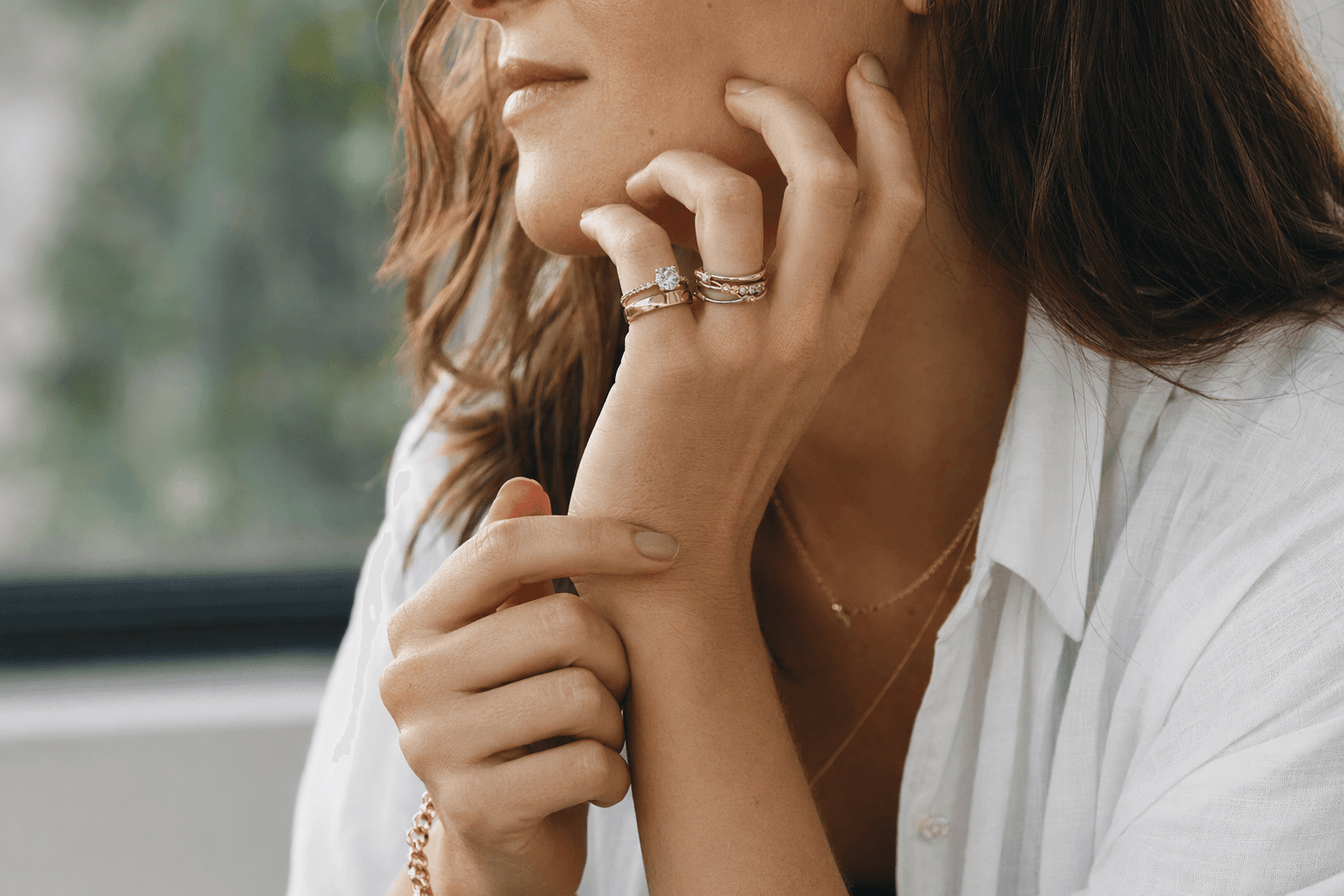
**The easiest ring stack looks effortless because the math is right.** GIA treats stacking as a creative expression, but the most polished versions are built on four variables: band width, stone height, metal mix, and where the rings sit on the hand. A diamond is not visually neutral in that equation, either. Its facets reflect the band and prongs around it, so the metal you choose changes the entire reading of the stack.
Start with proportion, not accumulation
The biggest mistake in stacking is treating every ring like it deserves equal volume. Wide bands, tall settings, and multiple bold stones can make the hand look crowded before the look ever feels styled. GIA’s sizing guidance matters here because wide rings fit more tightly than narrow ones, simply because they contact more skin. That means a stack can feel snug, or even suddenly uncomfortable, long before it looks finished.
If a stack starts to feel bulky, the fix is usually subtraction, not another ring. Trade one thick band for two slimmer ones. Keep the tallest setting to one focal point, then let the surrounding bands sit lower and flatter so the eye has somewhere to rest.
If your stack looks too bulky, do this
A bulky stack usually comes from three things at once: too much width, too much height, and too little breathing room between pieces. A prong-set ring can add lift and sparkle, while a bezel setting sits closer to the finger and tends to read cleaner beside other bands. That difference matters when you are building around an engagement ring, a wedding band, or a favored right-hand ring that already has presence.
- Pair one substantial band with one or two thinner bands, not several mid-weight rings fighting for attention.
- Keep high-set stones to a single ring in the stack, then use lower profiles around it.
- If the stack presses into the adjacent finger, move one ring to another hand rather than forcing a tighter fit.
The goal is not to erase personality. It is to make each ring legible.
Metal mix is where a stack becomes personal
GIA is clear that metal choice is not only aesthetic. It should also reflect durability, maintenance, affordability, and lifestyle. That is the right filter for stacking, too. If you live in your rings, the most beautiful combination is the one you can actually wear without thinking about it all day.
Mixing metals works because it creates contrast, but the contrast should feel deliberate. Diamonds reflect the color of the band and prongs around them, so a white metal can make a stone read cooler and crisper, while warmer metals change the tone of the same diamond entirely. That means a mixed-metal stack does more than break up monotony. It can alter the mood of the stones themselves.
If your stack looks too matchy, break the rhythm
A stack that is all one metal, one finish, and one width can look orderly, but also flat. If that is the problem, introduce one deliberate contradiction. Put a polished yellow-gold band next to a white-metal ring. Offset a plain band with a stone ring. Let one piece be structured and another feel softer.
The smartest mixed stack does not scatter metals randomly. It repeats one metal twice, then introduces the third note once, so the eye reads intention instead of noise. That is often enough to make the whole arrangement feel collected rather than coordinated to the point of stiffness.
Finger placement is part of the design
Where you wear the stack changes everything. The left ring finger carries its own symbolism, thanks to a custom that reaches back to Ancient Rome and the idea of the vena amoris, the imagined vein of love leading directly to the heart. Even if you are not building an engagement or wedding stack, that history gives the finger cultural weight and visual authority.
Placement also affects comfort and scale. A wide ring may need more room than you expect because it fits more tightly, and a stack that looks balanced on the index finger can feel heavy on the ring finger. If the composition seems visually uneven, shift the heaviest band to a finger with more surface area, then let slimmer rings do the framing nearby.
If your stack looks uneven, adjust the anchor
Uneven stacks usually happen when every ring is trying to be the center. The fix is to choose one anchor and let the others support it.
- Use one ring with a distinct shape or stone as the visual center.
- Place the widest band where the hand has the most room, then taper outward with slimmer bands.
- Move a ring from the left ring finger to the middle or index finger if the silhouette needs more balance.
That kind of editing is what turns accumulation into composition.
Repeatable formulas that actually work
The best stacks are repeatable because they solve the same problems every time. Think in terms of structure, not trend-chasing.
- One wide plain band, one slim band, one stone ring with a low profile.
- Two thin bands in the same metal, plus one contrasting metal ring as the focal point.
- One diamond ring whose metal repeats in the bands beside it, so the stone and setting stay visually connected.
- One symbolic ring on the left ring finger, with quieter bands on the neighboring fingers to keep the story from becoming crowded.
These formulas work because they balance weight, height, and shine. They also leave room for the hand to look like a hand, not a display case.
Why stacking keeps coming back
Ring stacking is not just a styling trick. It is a way to layer meaning, metal, and memory on one part of the body that people notice constantly. Google Trends can track jewelry interest by time and location, and that kind of search behavior is part of the point here: stacking keeps resurfacing because it adapts easily to changing taste, whether the mood is minimal, mixed, or boldly eclectic.
The best stack never looks accidental. It looks chosen, with enough discipline to feel refined and enough contrast to feel alive.
This article was produced by Prism’s automated news system from verified source data, official records, and press releases, then run through automated quality and moderation checks before publishing. The system is built and supervised by the people who set the standards it runs under. Read our full AI policy.
Did this article answer your question?