Silver Layering Gains Ground as Chokers and Mixed Metals Return
Silver is changing the logic of layering, making stacks look sharper, cooler, and more modern, while chokers and mixed metals bring the look back into daily rotation.
Silver resets the layering equation
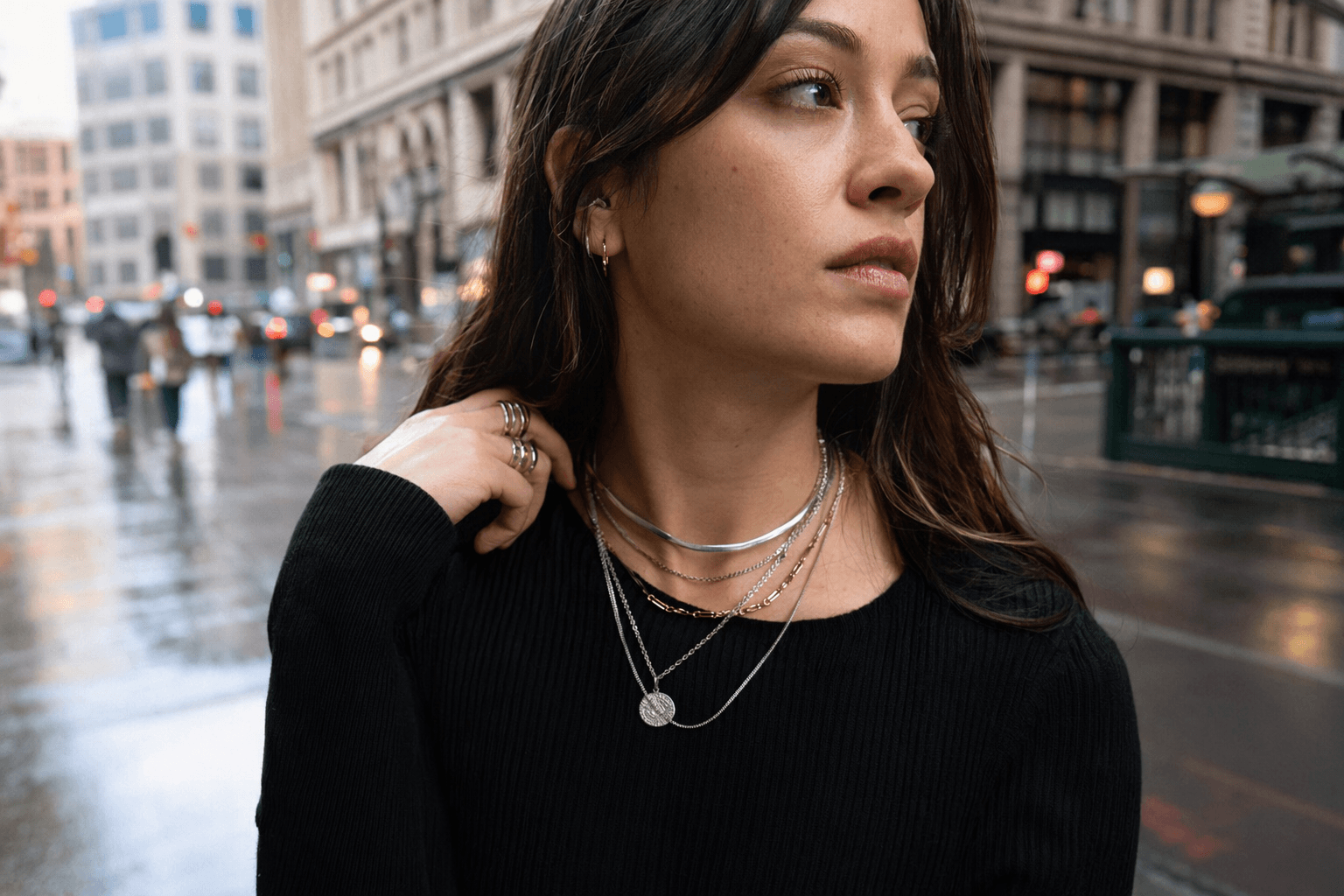
Silver is no longer playing backup to gold. Editorialist frames the metal as directional without trying too hard, and that is exactly why it feels so current in a year when wardrobes lean cleaner, cooler, and more edited. Layered silver necklaces create contrast that gold often softens, which is why they read sharper against a T-shirt, a blazer, or bare skin.
The market signal backs up the style shift. The Silver Institute has published its World Silver Survey annually since 1990, and the 2025 edition was released on April 16, 2025 in New York City. That survey spans jewelry, tableware, bullion trade, investment, recycling, supply and demand, and industrial demand, a broad view that makes silver feel less like a trend and more like a material with real staying power.
Why the cool tone feels modern now
The appeal of silver in 2026 is partly visual and partly practical. Professional Jeweller reports that silver jewelry logged 9,900 average monthly UK searches and rose 22% in the last quarter, even as gold still holds the top spot. That says something important about the current mood: people are not abandoning warmth entirely, but they are making room for a cooler, more reflective finish that sharpens a look instead of romanticizing it.
Silver also solves a common layering problem. Gold-heavy stacks can blur together when every chain has the same warmth and glow, but silver’s brighter edge separates one piece from the next. That makes it especially useful for everyday dressing, where a few well-chosen layers need to do the work of a whole jewelry wardrobe.
The choker is back, and it changes the proportions
Chokers are central to this shift because they reset the neckline. 2026 trend coverage places chokers inside a wider multi-length layering movement, which means the look is no longer about one close-fitting band alone. It is about building from the neck outward, with a choker setting the top line and longer chains dropping below it for contrast and movement.
Their return makes historical sense too. Chokers were a major 1990s jewelry staple, so the style already lives in fashion memory. What feels new now is the way the piece is styled: less as a club-night accessory, more as a clean first layer under a silver chain stack or mixed into a polished day look.
Celebrity styling has accelerated that revival. Marie Claire pointed to Keke Palmer wearing a vintage Dior piece as a strong signal for the choker comeback, and that kind of visibility matters because it repositions the style as current rather than nostalgic. A choker today does not read as costume when it is paired with sleek tailoring or a simple knit. It reads as the anchor that makes the rest of the stack make sense.
How to rebuild a gold-heavy collection
The easiest way to bring silver into an existing jewelry box is not to replace everything at once. Start with one silver anchor piece, then let the rest of the stack respond to it. A close-fitting silver choker or collar necklace gives the outfit structure, while a longer chain adds length and keeps the neckline from feeling too compressed.
From there, work in mixed metal with intention. Mixed metal is set to define 2026 jewelry trends, and the point is not to blend everything until it disappears. It is to let silver and warmer tones sit beside each other with clear purpose, so the contrast looks styled rather than accidental.
A practical roadmap looks like this:
- Begin with the shortest layer as the anchor, ideally a silver choker or a collar-length chain.
- Add one mid-length necklace to create the visual drop that makes layering feel finished.
- Finish with a longer chain or pendant so the stack has depth, not just density.
- Mix textures, not just metals, so each layer has a distinct surface and catches light differently.
- Keep one piece visually dominant, then let the others support it instead of competing with it.
That structure matters because silver shows detail quickly. A polished chain, a flatter link, or a more substantial collar will read differently at every length, so the stack needs contrast in both tone and texture. The result is a cleaner silhouette, which is why silver feels especially sharp against the cooler, more minimal styling that is defining the year.
What the silver rebound really says
The renewed interest in silver is not only about taste, it is about confidence in the category. When 53% of U.S. jewelry retailers say silver sales increased in 2024, and 63% say holiday sales rose compared with the 2023 season, the message is that the metal is not living on nostalgia alone. It is selling, and selling across both everyday and gift-driven moments.
That commercial strength helps explain why silver stacks now look more editorial than compromise-driven. The metal offers a way to refresh a collection without abandoning the gold pieces already in rotation. It also opens the door to a more dimensional kind of layering, where a choker, a mid-length chain, and a longer line create a deliberate frame around the face and collarbone.
Silver is gaining ground because it does what jewelry at its best should do: it changes the proportions of an outfit, sharpens the finish, and makes a familiar formula feel new again. In 2026, the most convincing stack is not the heaviest one, but the one that uses cool contrast, careful lengths, and a single strong anchor to make every layer count.
This article was produced by Prism’s automated news system from verified source data, official records, and press releases, then run through automated quality and moderation checks before publishing. The system is built and supervised by the people who set the standards it runs under. Read our full AI policy.
Did this article answer your question?