Tactile jewelry adds texture, movement, and grounding to layered stacks
Tactile layers keep stacks from feeling flat. Texture, movement, and one kinetic focal point can make jewelry feel grounding, not chaotic.
The tactile turn
The most compelling layered jewelry now does more than catch the light. It asks to be touched, turning texture, dimension, and movement into part of the wearing experience rather than an afterthought. Rings, bracelets, and necklaces with visible construction and artisanal detail bring a stack to life, especially when the goal is to make everyday dressing feel considered without looking overworked.
That is the appeal of tactile jewelry in its purest form: it behaves like a discreet stress reliever as much as an accessory. JCK has described the category as “like a fidget toy for grown-ups,” and that phrase lands because it captures the real pleasure of these pieces. A grooved ring, a sculpted bracelet, or a necklace with small moving elements creates a tiny grounding moment of focus in the middle of a busy day.
How to build a stack that feels composed
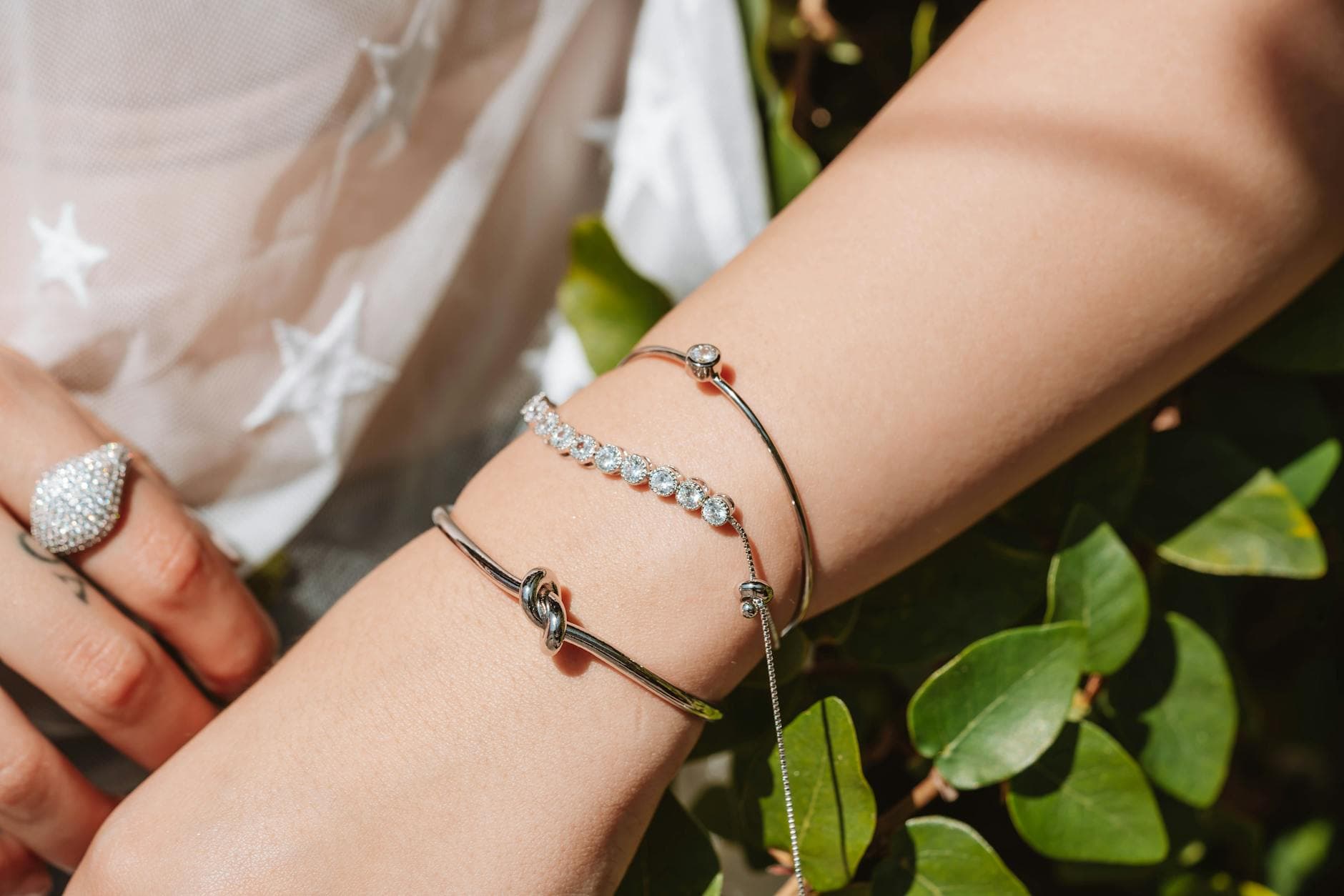
The cleanest tactile stacks begin with one piece that does the most talking. If a bracelet swings, a charm moves, or a ring has a strong three-dimensional motif, let that item set the tone and keep the rest quieter. The balance comes from contrast, not competition: a kinetic piece needs room to breathe, while smoother companions keep the overall effect polished.
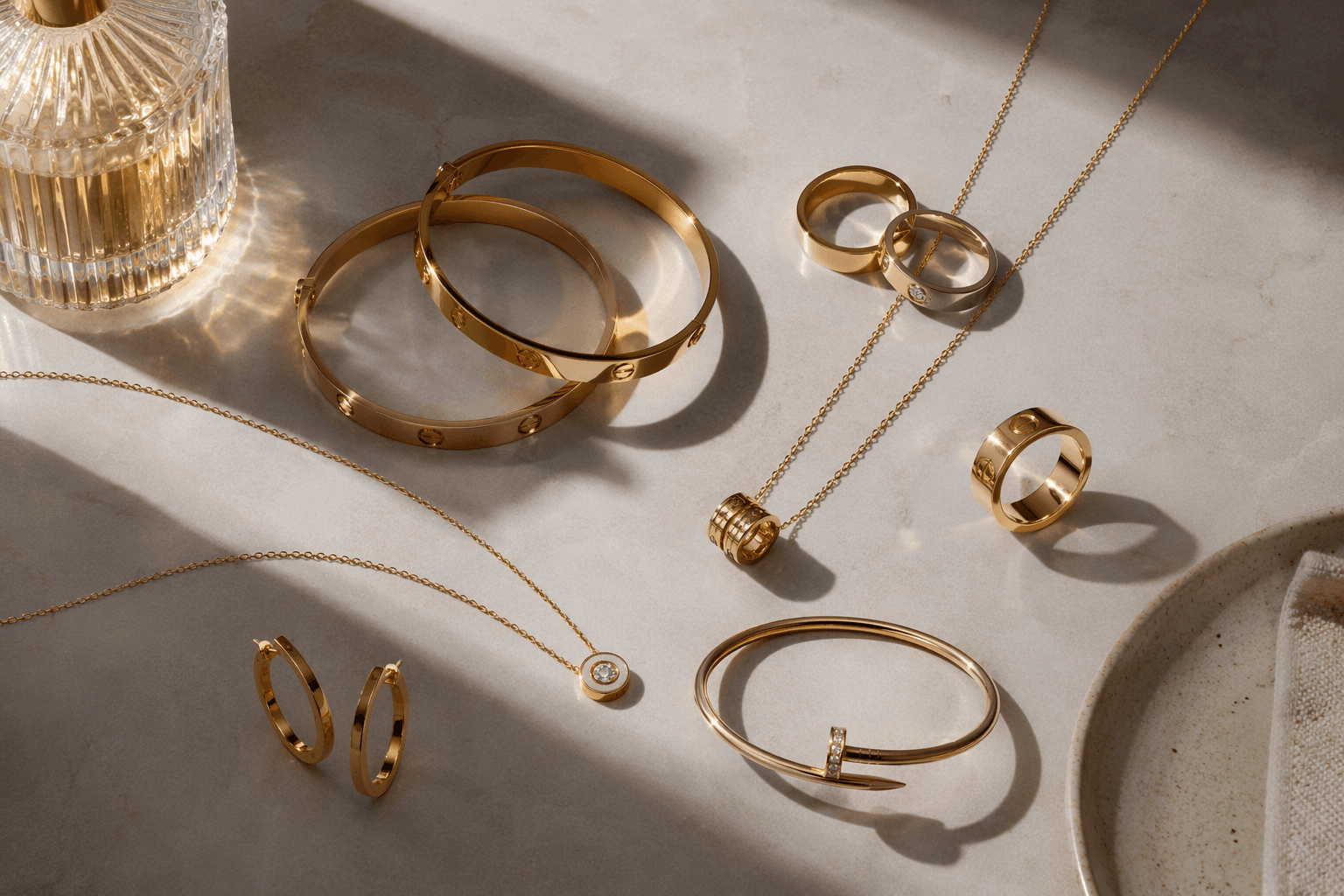
That principle has already been validated by the broader layering boom. JCK’s 2025 trend coverage placed layering at the center of jewelry dressing again, with long necklaces back, multistrand chain layering on the rise, and bangle stacks making the wrist sound and feel alive. PORTER saw the same motion earlier, tracking layered necklaces from FW24 runways to the red carpet, proof that stacking is no longer a niche styling trick but part of the main fashion cycle.
A good rule of thumb is simple: if one piece moves, let the others stabilize it. Pair a tactile ring with a plain band, or a sculptural bracelet with a sleek chain. When several pieces are textured, keep one thing consistent, whether that is metal color, scale, or finish, so the eye understands the hierarchy.
Where tactile jewelry works hardest in daily life
Tactile jewelry has particular power with clothes you already want to touch. Knitwear is the most obvious partner because ribbing, cable, and soft yarns echo the same sense of surface and depth, but the trick is to avoid snagging and bulk. Rounded bracelets, lower-profile rings, and necklaces with clean movement work best with sweaters and cardigans, because they add interest without fighting the fabric.
The same logic applies to work basics. A crisp shirt, a blazer, or a simple knit dress can feel sharper with one textured ring or a bracelet that shifts as you gesture. When clothing is relatively flat, jewelry can supply the tactile contrast that makes an outfit feel finished, and a single kinetic element often has more authority than several busy ones fighting for attention.
This is also where mixed textures improve balance. A polished chain beside a brushed cuff, or a smooth bangle beside a more dimensional ring, prevents a stack from looking too precious or too rigid. The contrast makes each piece legible, and that clarity matters when jewelry is part of a daily uniform rather than reserved for evening.
The craft is visible, and that is the point
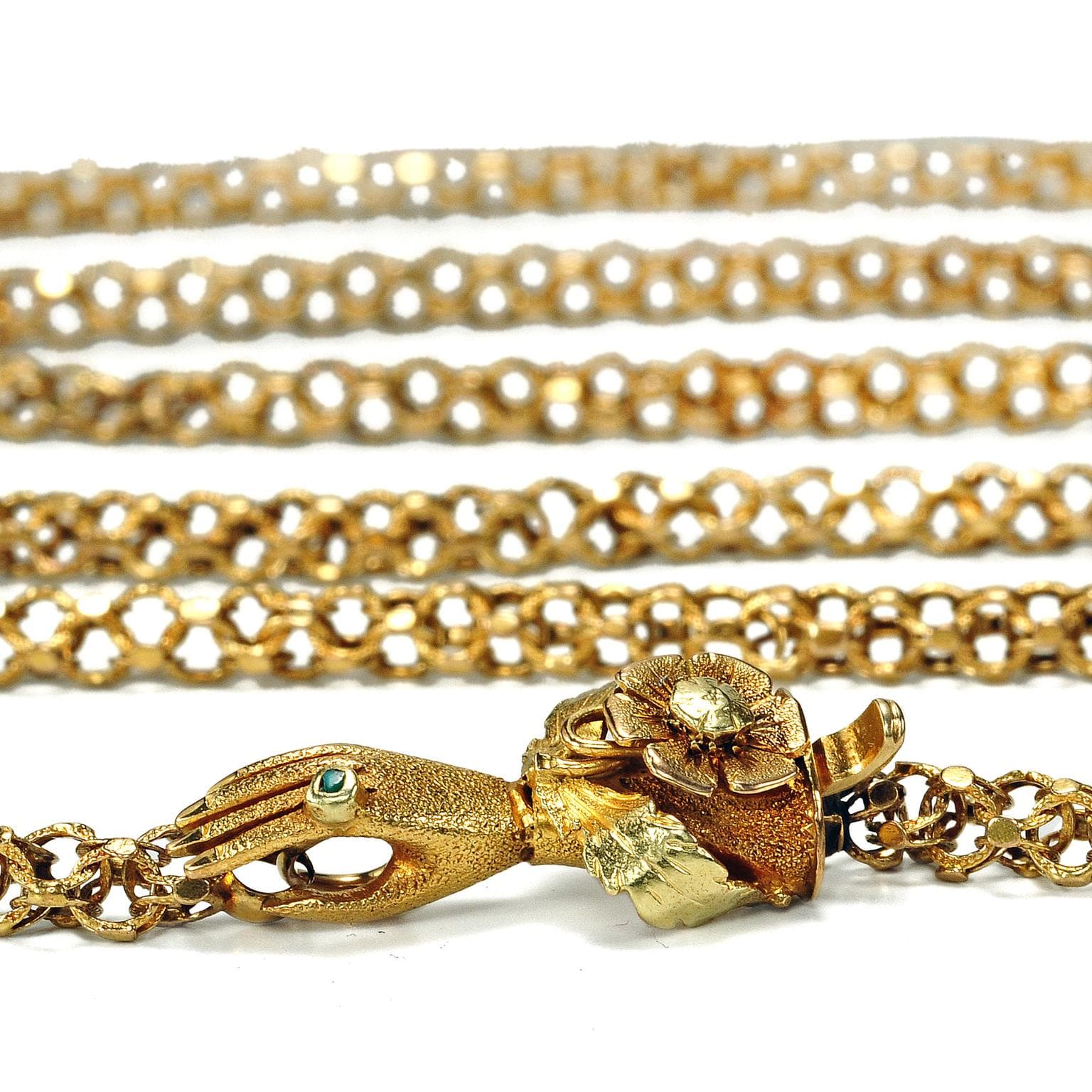
What distinguishes this category from simply “more jewelry” is the way the construction is meant to be seen. JCK singled out three-dimensional motifs and artisanal details that reveal how a piece is made instead of hiding the mechanics. That visibility gives tactile jewelry its character. It feels designed to be experienced in motion, not merely admired from a distance.
The Toonz by Ash Arcadia bracelet was highlighted as a standout for that reason, because it embodies the category’s mix of play and polish. Pieces like that do not rely on a large center stone or a single declarative shape. Instead, they build interest through contour, movement, and the way one surface leads into the next.
That sensibility also connects to earlier kinetic jewelry, which JCK has described as serving “equally as adornment and fidget object.” Spin, flip, and hidden surprises have long been part of the vocabulary, and the current tactile wave feels like an evolution of that language rather than a reinvention. Mattia Cielo made the ergonomics of the idea explicit in 2024, saying he was bringing ergonomic thinking to spiral bracelets, rings, necklaces, and earrings. The common thread is comfort made visible.
Why the trend has staying power
This is not happening in a vacuum. Statista projects worldwide jewelry revenue of about US$408.64 billion in 2026, with a 5.10% compound annual growth rate through 2031. In the United States, the jewelry market was about US$63 billion in 2023, and online jewelry and watch sales grew at a 10.0% CAGR between 2019 and 2024. That combination of scale and digital comfort helps explain why consumers are willing to discover jewelry online, then want pieces that feel more personal once they are on the body.
Trade-show reaction has backed that up. At Vegas Jewelry Week in Las Vegas, Nevada, retailers were especially drawn to texture, tennis bracelets, and yellow gold, while 2025 coverage noted that small charms were adding playful movement to stacked looks. Those details matter because they show buyers responding not only to visual glamour, but to jewelry that has motion, touch, and a little bit of personality built in.
There is also a sensory-design dimension to all of this. Research on tactile and visual inputs in clothing shows that what people wear is shaped by how it feels as much as how it looks, and jewelry follows the same logic. The most satisfying stack is often the one that gives the hand something to do, the eye something to trace, and the wearer a small point of calm. In that sense, tactile jewelry is not a decorative extra. It is the part of a layered look that gives the whole composition pulse, rhythm, and a reason to keep reaching for it.
This article was produced by Prism’s automated news system from verified source data, official records, and press releases, then run through automated quality and moderation checks before publishing. The system is built and supervised by the people who set the standards it runs under. Read our full AI policy.
Did this article answer your question?