2026 Engagement Rings Pivot Toward Sculptural Forms and Symbolism
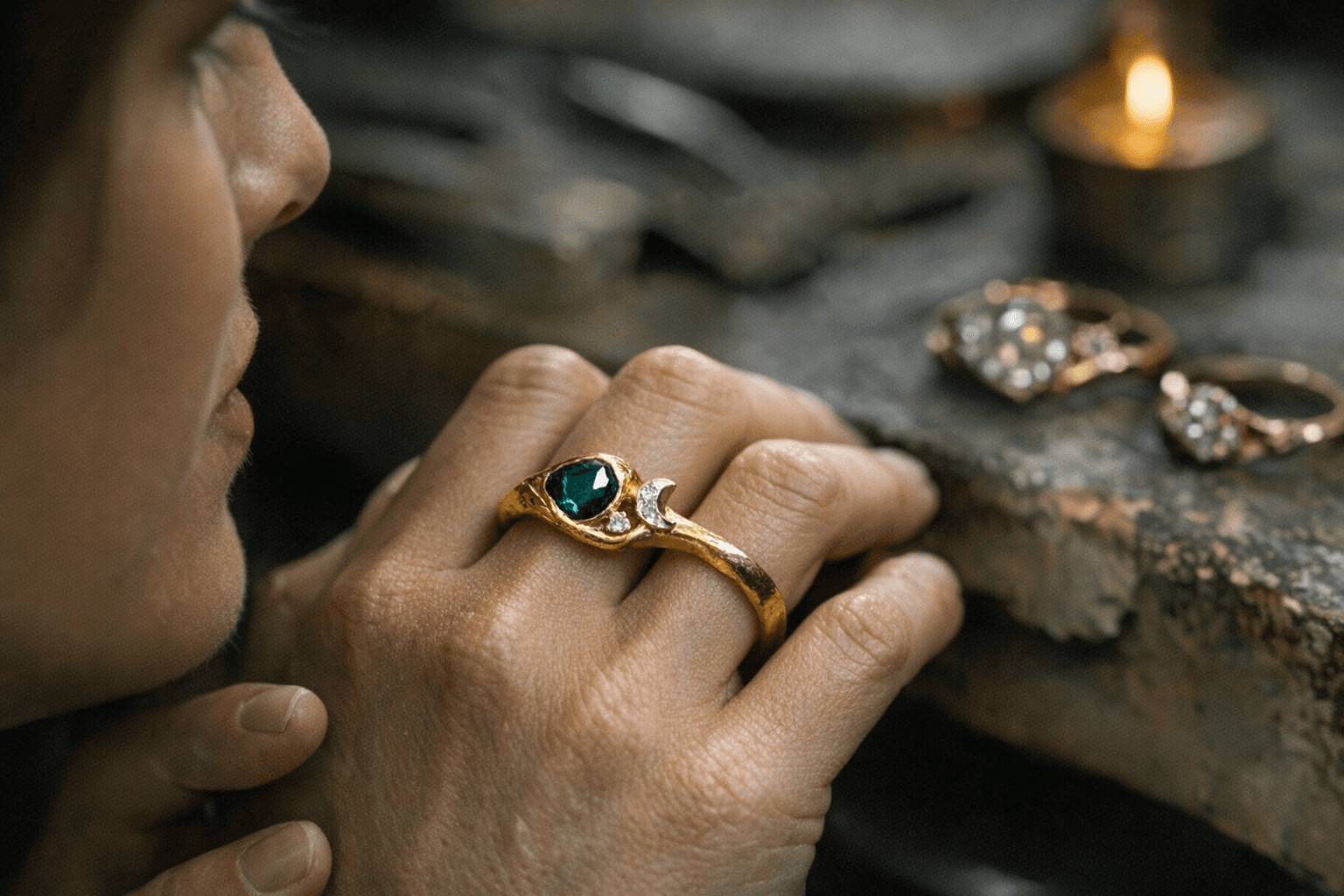
Sculptural engagement rings favor textured gold bands and bezel-set colored centers, with asymmetrical profiles designed to accommodate heirloom stones and symbolic settings.

Engagement rings unveiled in the latest trend guidance moved decisively away from solitaire diamond formulas toward sculptural, story-forward designs, a shift documented on February 24, 2026. The defining details are textured gold bands, bezel-set colored centers, asymmetrical profiles that allow space for personal stones, and a deliberate choice of settings for symbolism as much as gemstone size.
Textured gold bands emerged as a signature surface treatment in the trend guidance, with designers using visible texture to read as both handcraft and narrative. The guidance highlights textured gold as a counterpoint to high-polish, machine-finished rings, though it does not specify karat weights, recycled content, or responsible sourcing certifications for that gold. That omission matters for buyers who prioritize provenance and who expect Fairmined, Fairtrade, or Responsible Jewellery Council credentials to accompany premium materials.
Bezel-set colored centers are singled out as a technical and aesthetic choice that supports the broader movement toward meaning-driven rings. Bezel settings lower the profile of the stone and secure colored gems for daily wear, which designers point to as one reason for choosing sapphires, spinels, or other non-diamond centers over larger brilliant-cut diamonds. The trend guidance pairs bezel settings with colored centers to emphasize color and story rather than carat count.
Asymmetrical profiles are described in the guidance as deliberate structural moves that accommodate heirloom stones and bespoke narratives. Rings with offset settings, varying shoulder heights, and integrated bezel cups are shown to accept a family stone without forcing the piece into a conventional symmetrical silhouette. The guidance stresses that clients are requesting rings to hold personal stones, and that many jewelers are redesigning mounts to preserve patina and provenance while improving wearability.
The guidance frames symbolism as equal to, and sometimes more important than, gemstone size in 2026. That choice has practical repercussions: parlors and ateliers are rethinking warranty language, setting techniques, and documentation to record provenance when an heirloom is reset. Yet the guidance leaves gaps on certification, chain-of-custody practices, and how jewelers verify the origin of colored stones or recycled metals, signaling a need for clearer standards as the market shifts.
The movement toward sculptural, symbolic engagement rings on February 24, 2026 reflects a deeper consumer preference for personalization and resilience in design. If the market follows the guidance, expect more bezel-set color, more textured gold surfaces, and more asymmetrical mounts built around family stones, provided jewelers add the sourcing transparency and certifications buyers now demand.
This article was produced by Prism’s automated news system from verified source data, official records, and press releases, then run through automated quality and moderation checks before publishing. The system is built and supervised by the people who set the standards it runs under. Read our full AI policy.
Did this article answer your question?