Brilliant Earth Earns Praise for Sustainability, Provenance, and Heirloom Quality
Brilliant Earth goes beyond the sparkle with certified sustainable sourcing, blockchain traceability, and a customization experience that turns fine jewelry into genuine heirlooms.

There is a question every serious jewelry buyer eventually asks: not just "Is it beautiful?" but "Where did it come from, and at what cost?" Brilliant Earth has spent two decades building its answer to that question into the structure of the brand itself, and the results are now independently recognized. In February 2026, the company was named the #1 Most Sustainable Jewelry Brand in the 2025 AIDI Sustainable Jewelry Rankings, published by the Association of Intelligent Diamond International, an independent global membership organization focused on advancing standards in lab-grown diamonds and responsible jewelry. That ranking didn't arrive by accident. It reflects a sourcing philosophy, a traceability infrastructure, and a shopping experience that together make a persuasive case for buying fine jewelry with a conscience.
What "ethically sourced" actually means here
Vague sustainability claims are the oldest trick in luxury marketing. Brilliant Earth's approach is specific enough to hold up to scrutiny. The brand was recognized for its long-standing leadership in ethical sourcing, use of repurposed precious metals, blockchain-enabled traceability, customizable designs, and ambitious climate goals, including validated net-zero targets. On the diamond side, the brand operates what it calls its Beyond Conflict Free Diamonds standard. That standard, established in 2005, exceeds typical industry requirements, and fewer than 1% of natural diamonds worldwide meet its criteria. Brilliant Earth sources its Beyond Conflict Free Diamonds from Botswana, Namibia, South Africa, and Canada, countries classified as low or moderate risk by the Gemstones and Jewellery Community Platform Index.
For those who prefer a mining-free stone entirely, the lab-grown offering is equally rigorous. The brand offers two innovative lab-grown diamond collections: the Renewable Collection, which showcases diamonds grown, cut, and polished with 100% renewable wind and solar energy, and the Capture Collection, which features diamonds grown with CO2 captured before it's released into the atmosphere. Brilliant Earth diamonds receive certification from respected gemological institutions including the Gemological Institute of America (GIA), International Gemological Institute (IGI), and Gem Certification and Assurance Lab (GCAL). That combination of sourcing discipline and third-party certification is precisely what distinguishes a genuine commitment from a marketing slogan.
Repurposed metals: the part most brands skip
Stones get the attention, but metals tell the other half of the provenance story. Today, almost all of Brilliant Earth's gold and silver is repurposed, with a goal of 100% repurposed or Fairmined by the end of 2025. The term "repurposed" has a precise meaning here: the jewelry industry updated the definition from "recycled" to "repurposed" in 2024, and Brilliant Earth adopted it accordingly. The brand's precious metals are sourced from responsible refiners who hold repurposing certifications from the Responsible Jewellery Council or third-party validator Scientific Certification Systems (SCS). For gold that isn't repurposed, Brilliant Earth has been Fairmined certified since 2015, growing its line of Fairmined jewelry designs each year and providing grants through the Brilliant Earth Foundation to support new Fairmined certifications. This is accountability with receipts.
Provenance you can trace
Perhaps most compelling is the brand's investment in blockchain-based tracking. Select diamonds come with full provenance documentation, providing a transparent look into a stone's journey from earth to the finger on which it's worn. The AIDI's analyst note confirms that Brilliant Earth demonstrates industry-leading sustainability performance across all seven evaluation dimensions, with SBTi-validated targets and an independently verified greenhouse gas inventory placing it among the highest-scoring downstream brands in the AIDI index. It is worth noting, however, that a 2017 report raised questions about whether some diamonds listed as Canadian in origin were actually traceable to Canadian suppliers, a dispute the company contested. The brand has since significantly expanded its traceability infrastructure, but independent verification of every stone in every category remains an ongoing challenge for the industry at large, not just Brilliant Earth.
The shopping experience, in store and online
Brilliant Earth operates 42 showrooms across the United States and has served customers in more than 50 countries worldwide. Having the chance to try a selection of pieces in real life, a reviewer at Thegoodtrade came away "genuinely impressed," noting: "I love their lab-grown and ethically sourced stone selection, and their use of repurposed metals, all with competitive pricing since they sell direct to you."
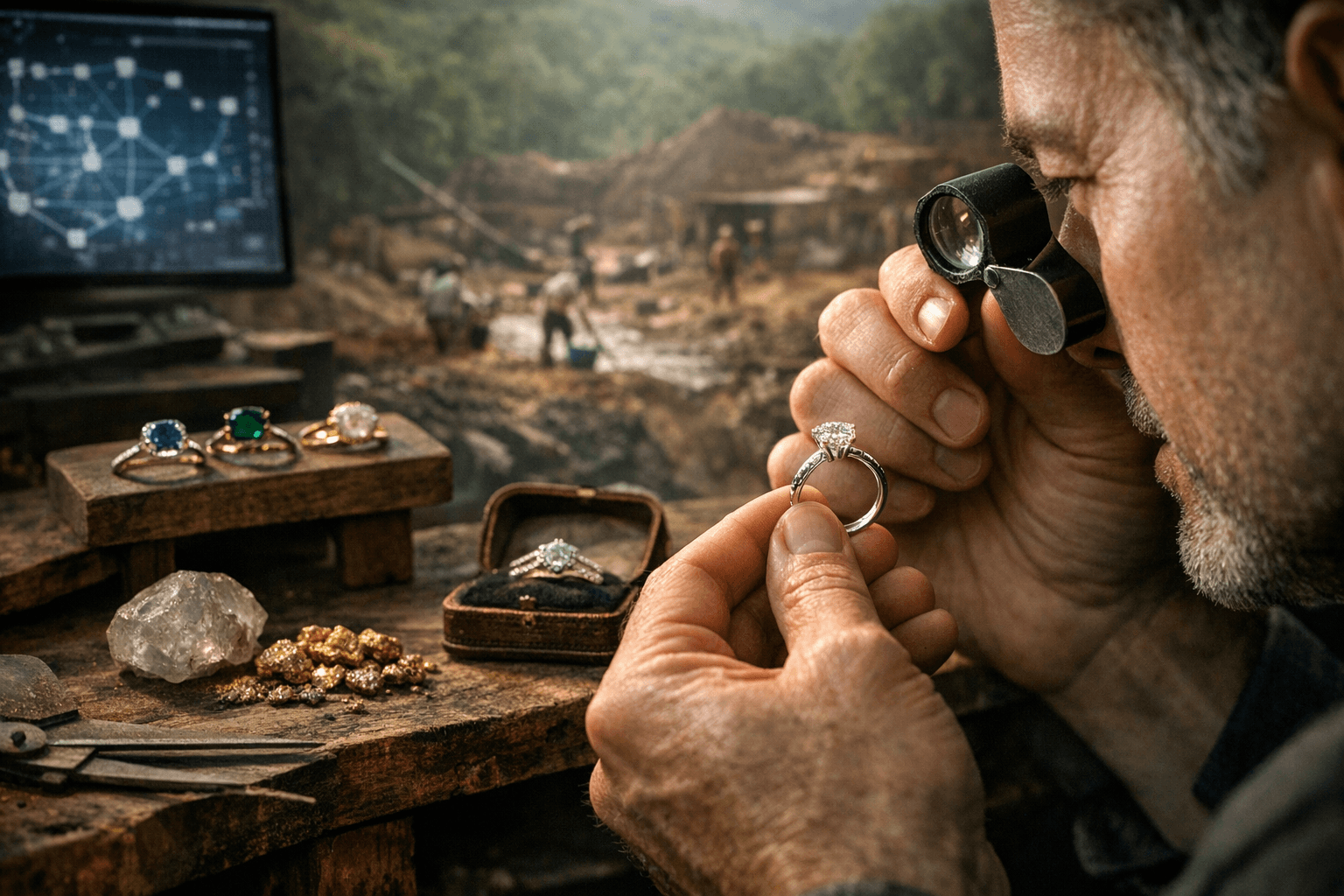
The in-person showroom experience is notably intimate. At an appointment, attendants retrieve diamonds individually from delicate wrappings, limiting the viewing to three stones at a time, then swap in additional options as preferences are ruled out. One reviewer noted that she was asked whether she could identify which stone was lab-grown and which was mined, and admitted she could not tell the difference.
Online, the tools are equally considered. Virtual try-on and design-your-own-pieces functionality allow you to configure a piece to your specifications before committing. The customization flow for a necklace, as described by Thegoodtrade, illustrates how granular the choices become: first, select the diamond shape from a vast available selection; then choose the chain metal, white gold, yellow gold, rose gold, or platinum; finally, determine the chain length so the piece sits exactly where it should. The result, as the reviewer put it, is something you can make your own heirloom keepsake, not just a purchase but a starting point for a piece designed to outlast you.
Pricing, transparency, and what a piece actually costs
The direct-to-consumer model has a practical consequence: savings are passed along rather than absorbed by wholesale margins. Pieces carry separate pricing for settings and gems, which means you can see precisely where your money is going and make tradeoffs that suit your priorities. That structure rewards intentionality over impulse.
The Angled Pear Lab Diamond Tennis Bracelet, listed at $6,200, illustrates both the range and the specificity on offer. A pear-shaped lab diamond set in a tennis configuration is not an entry-level piece, but within the fine jewelry market it represents competitive value for a stone with certified sourcing and documented provenance. For context, a comparable natural diamond tennis bracelet at a traditional retailer would typically carry a significantly higher price point, and without the same chain-of-custody documentation.
Policies that match the investment
Fine jewelry purchased online demands the kind of after-sale confidence that fine jewelry purchased in person takes for granted. Brilliant Earth addresses this directly: free two-way shipping, 30-day returns, and a one-year resize policy come standard. Once a custom design is complete, it is cast in the chosen repurposed precious metal, then each stone is hand-set by Brilliant Earth's skilled artisans, a process that warrants the care those policies reflect. If it's time for something new, a free lifetime upgrade program allows customers to find a new diamond, with the old materials repurposed or recertified so they can take a new turn in the jewelry lifecycle. That circular commitment is where the heirloom proposition becomes something more than a marketing phrase: it is built into the brand's infrastructure.
The bottom line on sustainability claims
Co-Founder and CEO Beth Gerstein has said: "For more than 20 years, we have worked to redefine what sustainability, responsible sourcing, and transparency look like in our industry." Verification of those claims extends to Tier 1 independently audited standards, including GRI 2021 Universal Standards, SASB Consumer Goods compliance, SBTi validation, and SEC Form 10-K annual reporting. For a buyer who wants to know not just that a piece is beautiful but that it was made responsibly, that level of documentation is rare in fine jewelry and genuinely meaningful. The challenge, as with all responsible sourcing claims in the diamond industry, is that supply chain complexity means perfection is elusive. What Brilliant Earth offers is the most transparent, independently verified picture currently available in the mainstream fine jewelry market, and that, for now, is the standard worth measuring everyone else against.
This article was produced by Prism’s automated news system from verified source data, official records, and press releases, then run through automated quality and moderation checks before publishing. The system is built and supervised by the people who set the standards it runs under. Read our full AI policy.
Did this article answer your question?