Colorful symbols and charm motifs define luxury jewelry's summer shift
Luxury jewelry is leaning into talismans, not just color. Cartier, Tiffany, and Dior are turning summer pieces into symbols with more personality and bite.
The summer jewelry reset
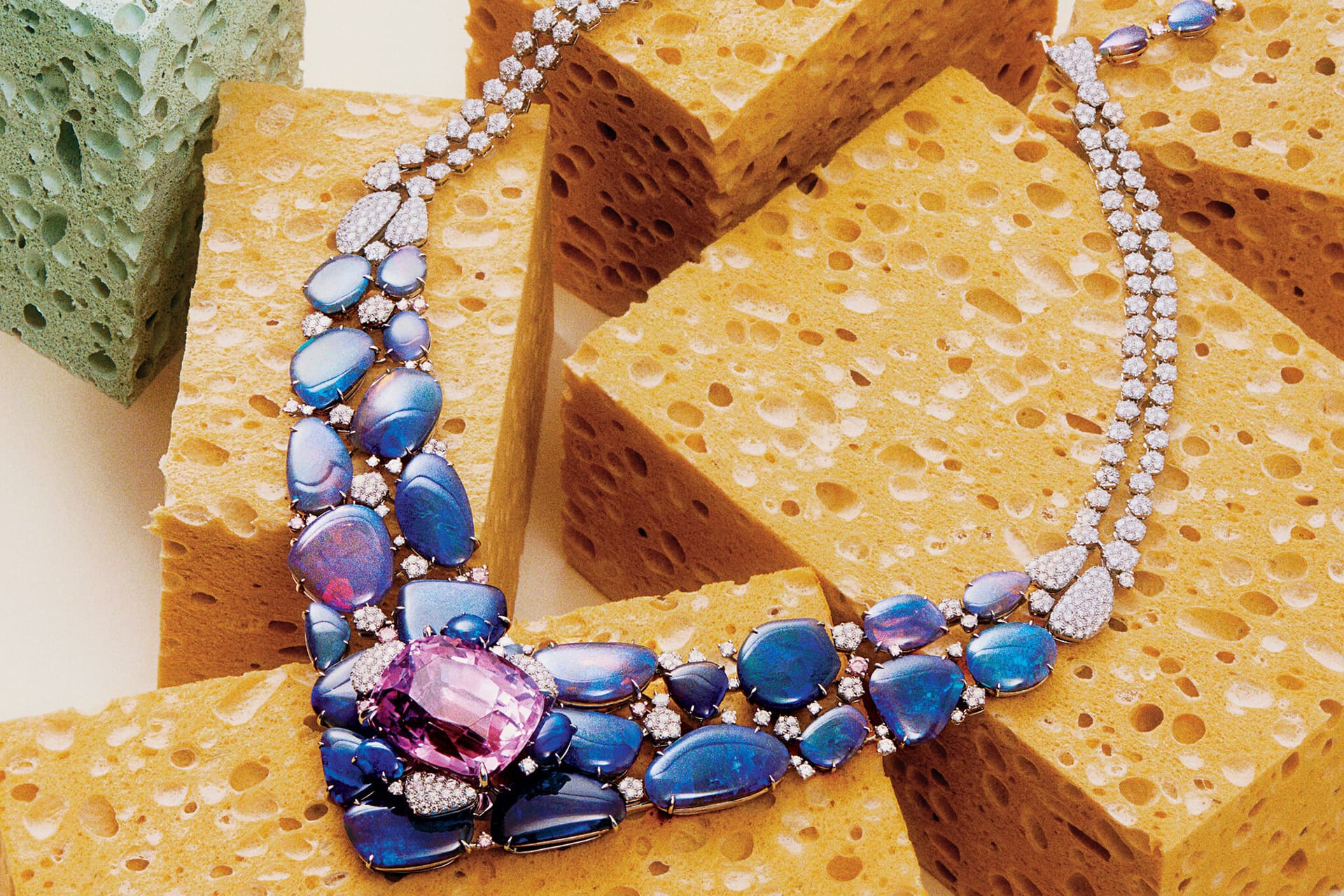
Fine jewelry is getting louder, but not in the usual logomania way. WWD’s May 24, 2026 summer roundup places Cartier, Boucheron, Tiffany & Co., Dior, Louis Vuitton, Piaget, and Chanel inside a shift toward bold, playful pieces that feel more personal than purely decorative. The season’s visual code is clear: onyx, chrysoprase, coral, pink opal, turquoise, mother-of-pearl, and rope motifs are doing the work of making luxury look collectible, symbolic, and a little more escapist.
That matters because the strongest summer jewelry stories are no longer built around sparkle alone. They are built around recognizable signs, whether that means a panther, a lucky charm, a flower, or a stone color that reads instantly from across a room. The result is jewelry that behaves less like a finishing touch and more like a private emblem, something the wearer chooses for meaning as much as for style.
Color, but with intent
The clearest design signal in the roundup is saturated color handled through hard stones and luminous surfaces. Chrysoprase brings a vivid green that feels fresh without turning pastel. Turquoise gives the lineup its brightest summer lift, while coral and pink opal push the mood warmer and softer. Onyx holds the composition together with graphic contrast, and mother-of-pearl adds that quiet shimmer luxury houses often use when they want richness without heaviness.
Why these materials read as summer now
These stones work because they are legible. A turquoise cabochon, a coral accent, or a strip of mother-of-pearl does not need much explanation. In a season when luxury is leaning toward personality-driven dressing, these materials deliver instant mood and an almost talismanic shorthand. Rope motifs deepen that effect, bringing texture and a nautical tension that feels especially apt for summer without slipping into cliché.
The houses in the roundup are not simply making colorful jewels. They are using color to create identity, and identity is what makes a piece memorable enough to collect.
Tiffany’s Hidden Garden turns nature into a high-jewelry code
Tiffany & Co. gives the season one of its most defined statements with Blue Book 2026: Hidden Garden, unveiled in April 2026. Designed by Nathalie Verdeille, senior vice president and chief artistic officer, alongside the Tiffany Design Studio, the collection draws from nature and reinterprets Jean Schlumberger’s flora-and-fauna motifs for a new generation of collectors.
That connection matters because Schlumberger remains one of Tiffany’s most important visual anchors. By returning to his botanical and animal language, the house is not simply mining archive imagery. It is reframing nature as a source of structure, not decoration, and that is what makes Hidden Garden feel current. Tiffany describes the concept as a secret landscape where quiet transformations unfold in radiant beauty, and the phrasing matches the jewelry’s appeal: intimate, layered, and built to reward close looking.
For buyers, that means the value is not only in gemstone presence or setting craftsmanship, but in the coherence of the design idea. When a high-jewelry suite is rooted in a strong house language, it often becomes easier to identify, easier to remember, and more collectible over time.
Cartier’s symbols and the enduring force of the panther
Cartier’s symbolic vocabulary remains one of the most powerful in luxury jewelry because it is so direct. The maison’s Symbols and Logos collection is built around motifs that already carry meaning, and the panther remains the most famous of them all. That feline icon gained force in part through Jeanne Toussaint, whose influence helped make the panther a shorthand for strength, independence, and glamour.
Why the panther still feels modern
The panther’s longevity is not an accident. It has shape-shifted through countless incarnations over time, which allows Cartier to keep the motif alive without flattening it into nostalgia. The animal can be stylized, pavé-set, graphic, or nearly abstract, and it still reads as Cartier. That flexibility is precisely what makes symbolic jewelry durable in a market that prizes recognizable signatures.
This is also where the roundup’s emphasis on talismanic design becomes clearest. A panther brooch or ring is not just a decorative object. It is a house emblem with emotional charge, and that charge is part of what luxury buyers are chasing when they look for pieces that feel meaningful rather than merely expensive.
Dior’s lucky charms push jewelry toward superstition and self-definition
Dior’s summer jewelry story connects to Jonathan Anderson’s Spring-Summer 2026 creative reset, which reinterprets Dior heritage while refreshing the house’s codes. In the Lady Dior context, Anderson’s lucky charm references, including buttercups, bees, and four-leaf clovers, extend that reset into the language of adornment.
These motifs work because they move beyond branding and into belief. Buttercups and clovers are not just pretty shapes, they carry associations with luck, optimism, and personal ritual. Bees bring energy and structure, while the overall effect suggests that jewelry can be worn as a private signal, almost like a portable superstition.
Dior’s approach also shows how the summer shift is not simply about brighter colors. It is about giving those colors a reason to exist. A charm with symbolic weight feels more emotionally durable than a generic gem cluster, and that distinction is increasingly shaping how luxury jewelry is designed and sold.
The maisons named in the roundup point to a broader collector’s mood
Boucheron, Louis Vuitton, Piaget, and Chanel round out the lineup, and their presence matters even where the roundup focuses less on individual product narratives. Their inclusion confirms that the summer mood is not a one-house experiment. It is a wider luxury consensus that jewelry should feel more graphic, more playful, and more rooted in recognizable signifiers.
Chanel’s statement pieces, Dior’s charms, Cartier’s icons, and Tiffany’s nature rework all land in the same conversation because they treat jewelry as a vessel for identity. The stones may be vivid, but the bigger shift is conceptual: luxury is making summer feel personal and meaningful, not just fashionable.
That is why this season’s strongest pieces are the ones with a clear motif and a strong material point of view. Whether it is chrysoprase against onyx, a panther reimagined, or a floral high-jewelry suite shaped from Jean Schlumberger’s legacy, the message is the same: the most compelling summer jewelry now looks like something chosen, not simply worn.
This article was produced by Prism’s automated news system from verified source data, official records, and press releases, then run through automated quality and moderation checks before publishing. The system is built and supervised by the people who set the standards it runs under. Read our full AI policy.
Did this article answer your question?