Couture 2026 buyers split between investment jewels and entry pieces
Couture 2026 showed a market split in plain sight: clients chased heirloom-grade jewels at the top and intentional self-treats at the entry level, leaving the middle softer.

At Wynn Las Vegas, Couture 2026 made the new fine jewelry divide hard to miss. Buyers kept spending on pieces that felt worthy of inheritance or deeply personal, but the broad middle of the market softened as shoppers became more selective about what deserved a place in their collections.
Retailers walking the fair described a customer base that had grown sharper, not looser, in its tastes. Rarity mattered. Craftsmanship mattered. Longevity mattered. So did the feeling that a jewel was genuinely special, not merely expensive. That pressure pushed demand toward two poles: investment-level pieces with strong materials and clear provenance, and more accessible jewels that functioned as intentional self-expression.
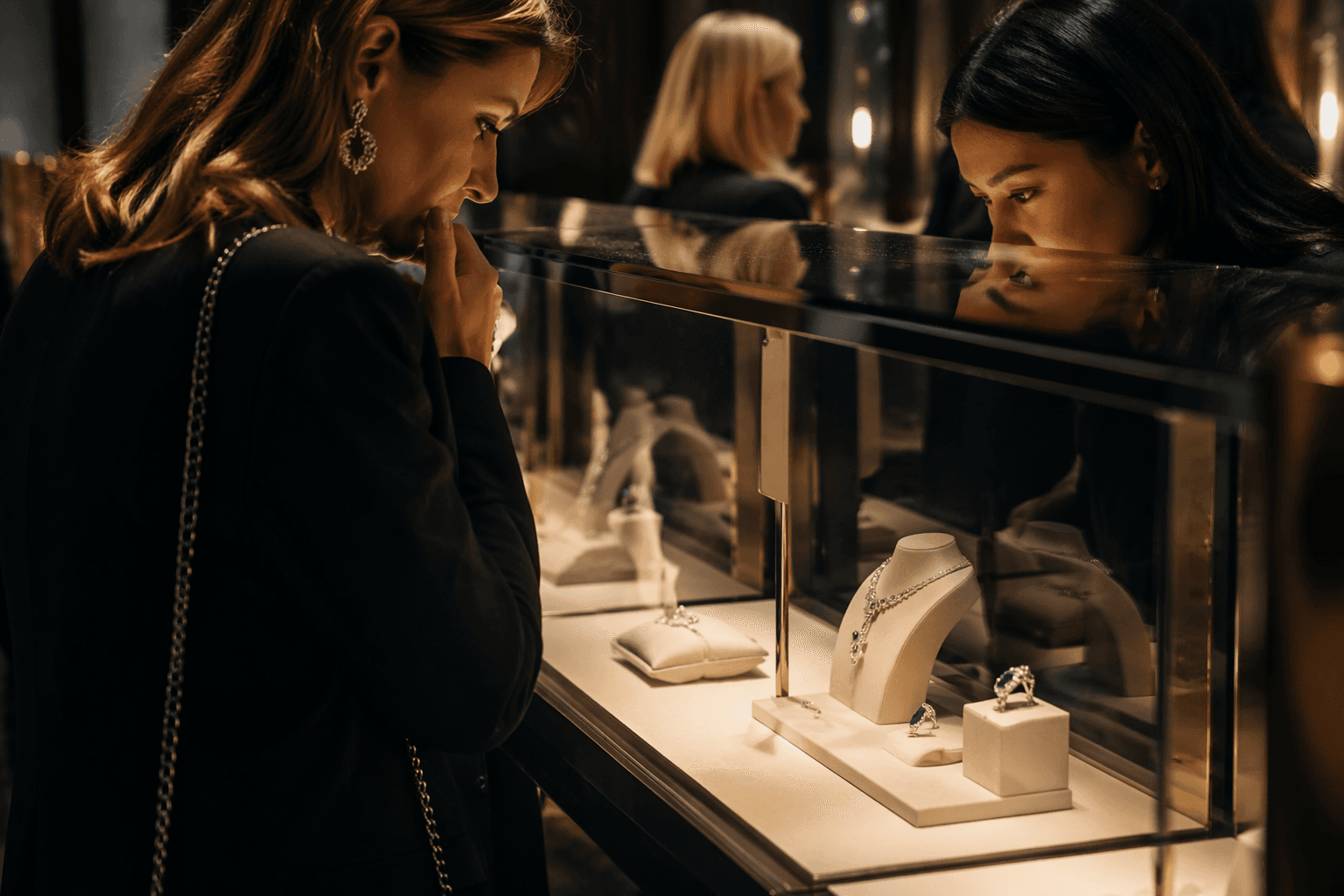
The market logic was visible across the floor. Rising gold prices have changed how buyers assess value, while vintage and collector-driven purchases have added momentum to estate-style thinking. Bold gold work, antique-inspired settings, colored stone combinations and archival references surfaced throughout the show, underscoring a hunger for pieces with a story, not just a carat weight.
The split fits a broader luxury backdrop that has been weakening in the middle. Bain & Company said 2025 luxury spending was shaped by macroeconomic uncertainty, sustained price elevation, weaker sentiment among aspirational consumers and regional polarization. Bain also found that spending by price tier remained polarized, with the high-end tier representing about 40 percent of the market and contracting slightly between 2023 and 2025, while the accessible segment was flat to slightly negative over the same period.
That pattern helps explain why the market now rewards clarity. Altagamma’s 2025 consumer research found that the highest-end customers make up just 0.1 percent of total consumers but account for 37 percent of market value. That group prioritizes personalization, intimacy, excellence and well-being, a profile that aligns neatly with the most compelling jewels at Couture: unusual stones, careful settings and pieces made to feel singular.
The same discipline is showing up in executive expectations. Deloitte’s 2026 luxury survey found 66.9 percent of executives expecting stable or growing revenues and 70.7 percent expecting to maintain or improve margins. In a market like that, broad-based demand is no longer the assumption. Desirability, experience and pricing discipline are.
For the 350 or so jewelry designers and luxury brands exhibiting at the show from May 27 to 31, the message was clear. The middle may be softening, but the ends of the market are still strong, because both speak directly to meaning: one through permanence, the other through immediate personal pleasure.
This article was produced by Prism’s automated news system from verified source data, official records, and press releases, then run through automated quality and moderation checks before publishing. The system is built and supervised by the people who set the standards it runs under. Read our full AI policy.
Did this article answer your question?