Cove Fine Jewelry and Bam! Let's Mahjong unveil heirloom charms
Cove and Bam! Let’s Mahjong turned Garden Party tiles into 14k gold charms, priced from $3,000 to $3,600, and built for passing down.

Cove Fine Jewelry has translated mahjong’s table culture into something far more intimate than a novelty charm. Its limited-edition collaboration with Bam! Let’s Mahjong turns the Garden Party tile set into two handcrafted pendants in 14k yellow or white gold, each set with lab-grown diamonds and designed to be worn as a small, visible marker of friendship, luck, and ritual.
The collection lands squarely in fine jewelry territory. The smaller charm is priced at $3,000, while the larger version, which features a lab-grown diamond bail, is $3,600. Customers can buy the pendants separately or on a bracelet or necklace, a detail that matters because it gives the pieces a second life beyond a single chain: they can function as a standalone keepsake or join an existing jewelry wardrobe. Cove says the charms are handcrafted in the USA, designed in New York’s Diamond District, and intended to be worn, collected, and passed down.
The design language comes directly from Bam! Let’s Mahjong’s Garden Party set, whose hand-painted acrylic tiles are rendered in a pastel palette of pink, sea-glass green, violet and light blue. That visual softness gives the collaboration its charm, but the real appeal is symbolic. Mahjong has always been a social game with memory built in, and Cove founder Alyson Iarrusso said the project was meant to celebrate what mahjong means to people and “another inspiring female founder,” referring to Lisa Munz, who created Bam! Let’s Mahjong. Munz called mahjong “far more than a game,” describing it as “a ritual of connection and memory-making,” and said the pieces are meant to become part of families’ stories.
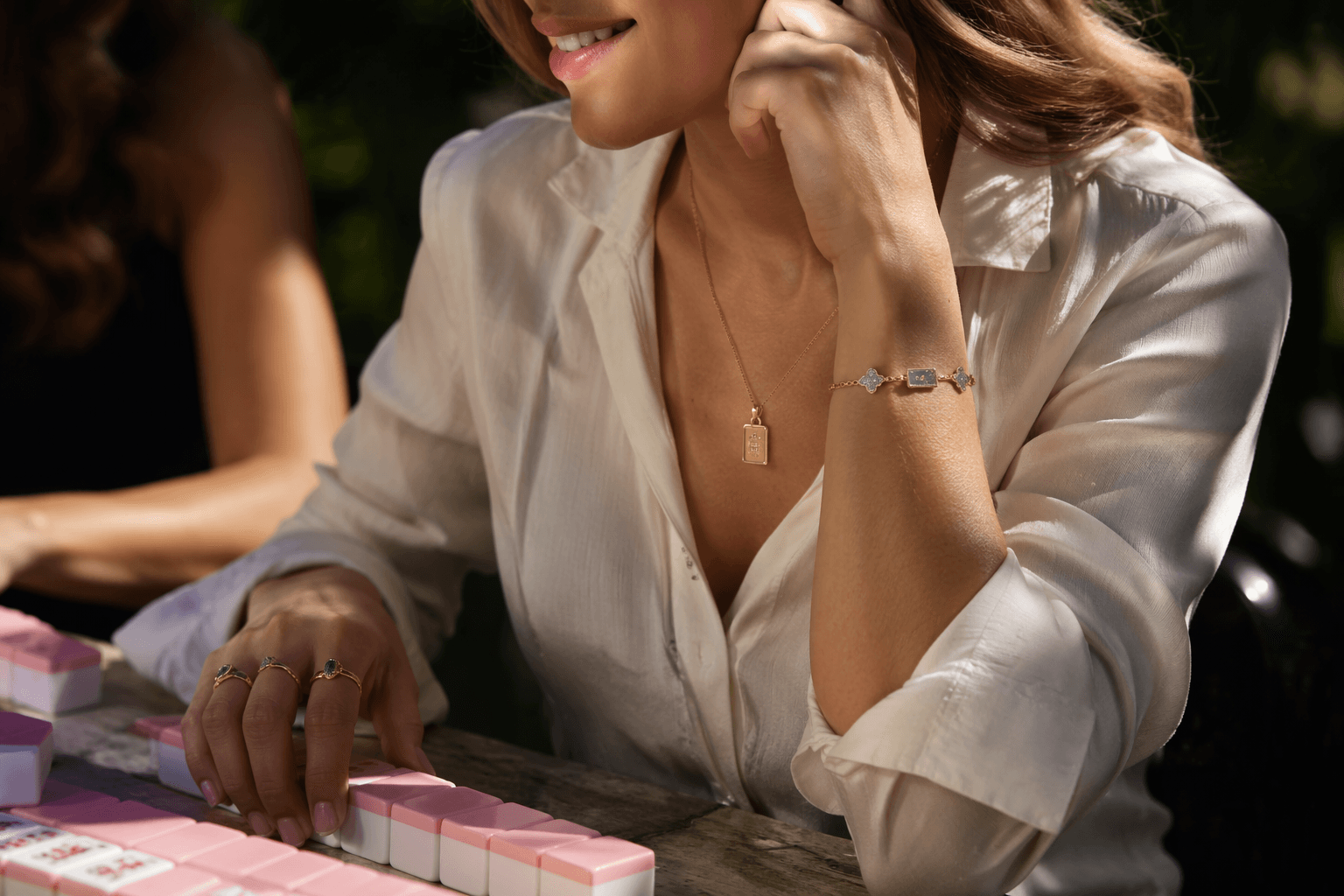
That framing explains why mahjong iconography works so well in jewelry now. The game arrived in the United States in the 1920s, gained deep associations with Jewish American women in the mid-20th century, and has since surged again as an offline social activity for younger players drawn to clubs, pop-up events and the slower pleasure of a table. The National Mah Jongg League, founded in New York City in 1937 to standardize American play, began with 32 members and now counts more than 350,000. In that context, a tile-shaped charm is more than a trend piece. It becomes a tiny social relic, one that carries the code of the table into gold, diamond and the language of heirloom jewelry.
This article was produced by Prism’s automated news system from verified source data, official records, and press releases, then run through automated quality and moderation checks before publishing. The system is built and supervised by the people who set the standards it runs under. Read our full AI policy.
Know something we missed? Have a correction or additional information?
Submit a Tip