Flower jewelry turns blooms into symbols of love, hope, and remembrance
A flower jewel can whisper love, grief, or gratitude, depending on the bloom, its color, and even how many flowers appear.
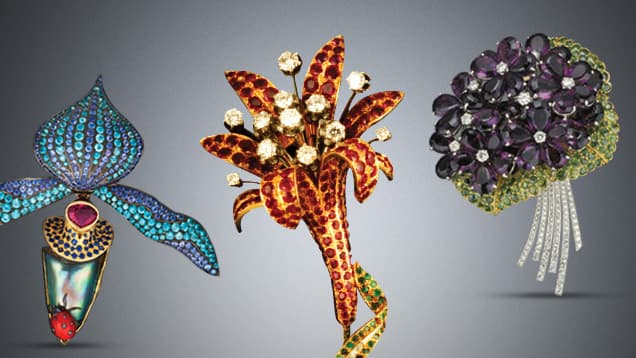
A floral pendant can say more than “pretty.” In floriography, the language of flowers, a bloom becomes a message before it becomes ornament: the flower type, its color, and even the number of flowers can carry feelings such as love, joy, or sadness. That is why a floral pendant, ring, or brooch can feel intimate in a way a generic motif never quite does: it is visual shorthand with emotional intent.
The old code behind the bloom
Floriography turns decoration into readable symbolism. In the Victorian era, flowers could profess undying commitment, signal refusal, or even act as an accusation of infidelity. The Language of Flowers: An Alphabet of Floral Emblems from 1857 places that code in a real 19th-century tradition, not a modern marketing invention.
Set into gold or silver and worn close to the skin, a flower carries that code with it. A brooch shaped like a blossom, a ring with a tiny floral cluster on the shank, or a pendant with a single stylized bloom can all read differently because the jewel is doing the work of a note passed by hand. A large floral design announces itself; a small one feels like a private signal reserved for the wearer and the person who knows what it means.
What a rose says, and how a lily changes the tone
Among floral symbols, the rose is the clearest statement of love. In the Victorian floral language, red roses pointed to passionate, romantic love, pink softened that into a gentler affection, and white roses shifted the register toward virtue and chastity.
The lily moves differently. It tends to read as quieter and more ceremonial than the rose, which makes it useful when you want tenderness without the obvious heat of romance. In jewelry, that distinction matters: a rose motif is often chosen when the message should land immediately, while a lily can suggest purity, composure, or a more reflective kind of affection.
Color changes the sentence
The same flower can mean something quite different once color enters the picture. Color is part of the message, not an afterthought. In floral jewelry, a rose rendered in red enamel or ruby-hued stones carries a different emotional temperature from the same bloom translated into white gold, pearls, or diamonds.
Materials sharpen that difference. A rose in yellow gold feels warmer and more romantic; a white floral cluster in platinum or silver can feel cooler, cleaner, and more suited to remembrance. Colored stones and enamel make the symbolism legible at a glance, while diamonds and pearls often mute the expression into something more formal; floral jewelry can move easily between celebratory gifts and pieces meant to be worn every day.
Why the number of blooms matters
The number of flowers is part of the message, and that detail gives floral jewelry a surprising amount of precision. A single bloom can feel like a whisper, while a cluster suggests abundance, ceremony, or a more public declaration. Even when the design is small, the count changes its emotional scale.
A single flower can be chosen for a birthday or a self-purchase, while a fuller spray can suit an anniversary, graduation, memorial, or another moment that deserves more than one symbolic note at once.
How style changes the message
The same floral symbol can look utterly different depending on the setting and the era that shaped it. Art Nouveau was defined by sinuous, undulating lines and nature-inspired design, and that movement transformed flowers into one of jewelry’s most persuasive visual languages. In Art Nouveau pieces, petals often unfurl in enamel and curved gold, while later designs compress the same idea into diamond cluster rings, antique brooches, or everyday stacking rings.
Craftsmanship affects how the symbolism lands. A bezel setting can make a bloom feel more graphic and enclosed, as if the petals have been drawn in metal; prong settings let a cluster open toward the light, which can make the flower seem looser and more lifelike. A broad pendant reads as a statement, while a tiny flower tucked into a ring shank can feel like a secret only the wearer knows.
How to choose a floral jewel with intention
- Choose a rose when you want the message to read as love without ambiguity.
- Choose a lily when you want the gesture to feel cleaner, calmer, and less openly romantic.
- Let color do part of the speaking: red heightens passion, pink softens it, and white lends restraint.
- Pay attention to the number of blooms, because one flower and a cluster do not say the same thing.
- Match the scale to the occasion, since a dramatic floral pendant and a discreet blossom on a band carry very different degrees of intimacy.
This article was produced by Prism’s automated news system from verified source data, official records, and press releases, then run through automated quality and moderation checks before publishing. The system is built and supervised by the people who set the standards it runs under. Read our full AI policy.
Did this article answer your question?