Forbes names Mejuri, Quince and Blue Nile top online jewelers for 2026
Forbes’ 2026 jewelry edit favors three different buying moods: Mejuri for detail, Quince for quiet value, and Blue Nile for engagement-ready stones.

Grips Intelligence estimated mejuri.com’s online-store revenue at $178.5 million in 2025, and in Forbes Vetted’s June 12, 2026 guide Mejuri is the overall jewelry pick, Quince the affordable-jewelry choice, and Blue Nile the pick for engagement rings and special occasions.
Editors researched reputable brands and sampled pieces, then weighed quality, customer service, and return policies across categories that include gold, diamonds, rings, earrings, lab-grown diamonds, and fine jewelry.
What the edit rewards
For a proposal, an anniversary, or a personal milestone, the most useful signal here is the mix of design restraint, service, and material transparency. The strongest picks can handle both the emotional and practical side of a purchase, from everyday wear to once-in-a-lifetime stones.
Mejuri brings the brand polish and repeat-wear appeal that has made it a fixture in modern jewelry boxes. Quince translates a direct-to-consumer model into lower prices without abandoning a refined look. Blue Nile occupies the diamond-first lane, especially where the purchase is tied to a ring and a specific occasion.
Mejuri: detail, scale, and the appeal of subtle luxury
Mejuri was founded in 2013 and is based in Toronto, Ontario. It is the top pick for attention to detail and ethical practices, a combination aimed at shoppers who want their jewelry to feel considered rather than loud.
The brand’s scale is part of the story too. A company-data estimate puts revenue near $187.9 million with about 600 employees.
For meaningful purchases, Mejuri’s appeal is that it sits comfortably between self-purchase and gift. It is the sort of retailer that can handle a first pair of gold hoops, a diamond stud upgrade, or a delicate ring meant to mark a career step or personal milestone. Forbes’ broader affordable-jewelry guide also names Mejuri the overall affordable-jewelry winner.
Quince: lower prices without a showy finish
Quince, based in San Francisco, was founded in 2018 and built its reputation on a manufacturer-to-consumer model that ships goods directly from partner factories to customers. That structure is the heart of its value proposition. By skipping traditional wholesale layers, Quince can keep prices lower while still presenting jewelry that reads as restrained and polished rather than flashy.
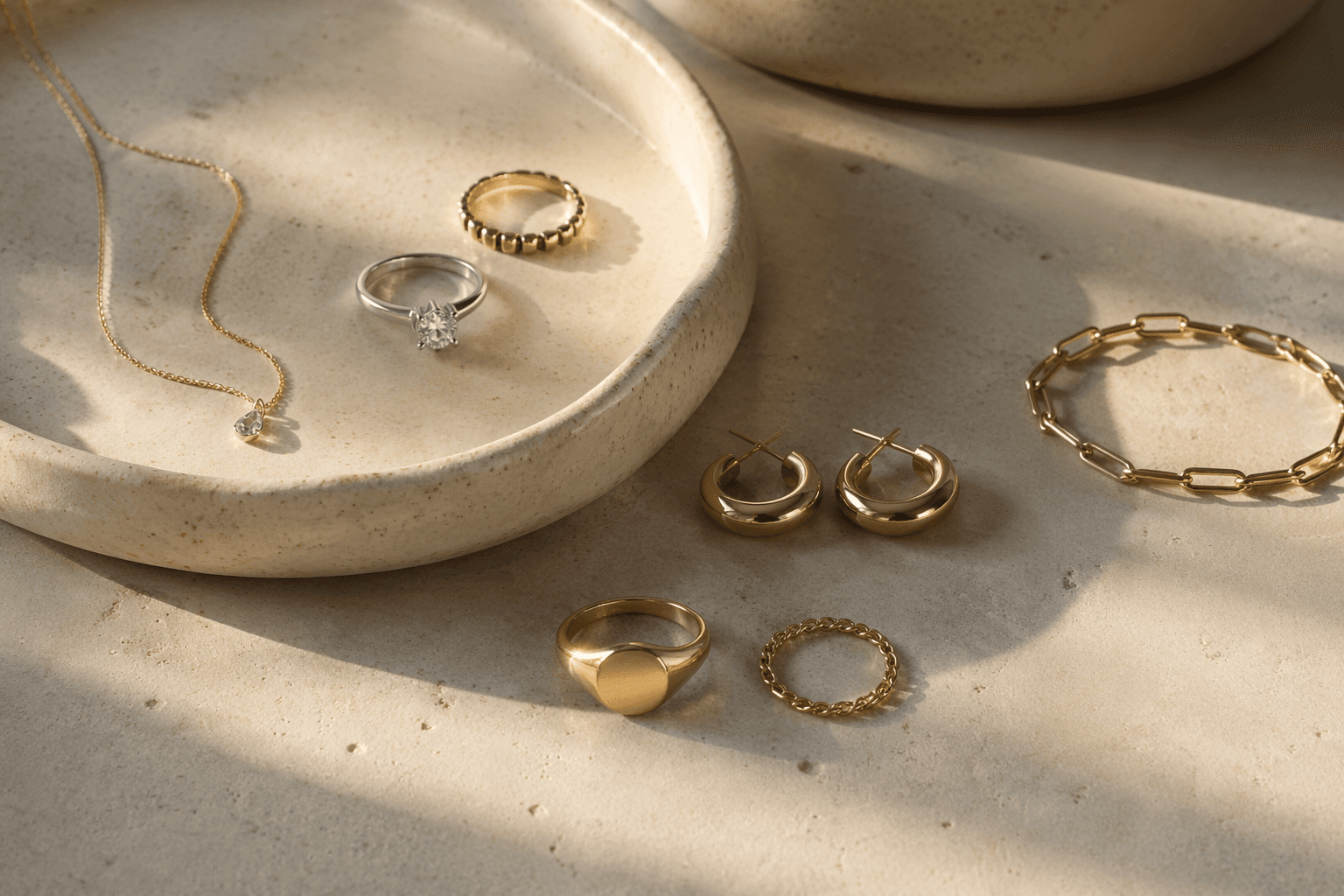
Quince is the affordable-jewelry pick for that balance. It fits tasteful, subtle jewelry at lower prices, which is exactly the lane many milestone buyers want when the emotional meaning matters more than carat size. A piece chosen for daily wear, a graduation, or a first anniversary often needs to feel elegant without becoming precious in a way that discourages use.
The direct-to-consumer model also shapes expectations. Quince is not trying to position itself as a heritage house or a diamond specialist. It is a streamlined option for shoppers who want clean lines, accessible pricing, and the sense that the money is going into the object itself rather than a chain of middlemen.
Blue Nile: the stone-first classic for rings
Blue Nile was founded in 1999 and calls itself the original online jeweler, with early roots in Seattle and a long run as one of the most established online diamond retailers. That history still defines its niche. When the purchase is a ring, especially an engagement ring, Blue Nile remains the familiar name because it is built around diamond selection.
Blue Nile is the engagement-ring recommendation and also a pick for special occasions. The retailer’s appeal is broader than one category, though. It offers natural and lab-grown diamonds and backs them with a price-match guarantee, a combination that gives shoppers room to compare size, origin story, and budget without leaving the site.
Blue Nile also appears in Forbes’ affordable-jewelry coverage as the best affordable wedding jewelry pick.
How to choose a digital jeweler when the piece has to last
A meaningful jewelry purchase asks for more than a good photograph. Look first at the retailer’s materials story: does it clearly separate natural from lab-grown diamonds, and does it explain what makes a piece worth the price? Blue Nile’s diamond options and price-match guarantee make that comparison easier, while Mejuri and Quince show how design and pricing can carry a lot of the emotional load even without a center stone.
Then look at service. Customer care and return policies can determine whether a purchase feels safe or risky.
This article was produced by Prism’s automated news system from verified source data, official records, and press releases, then run through automated quality and moderation checks before publishing. The system is built and supervised by the people who set the standards it runs under. Read our full AI policy.
Know something we missed? Have a correction or additional information?
Submit a Tip