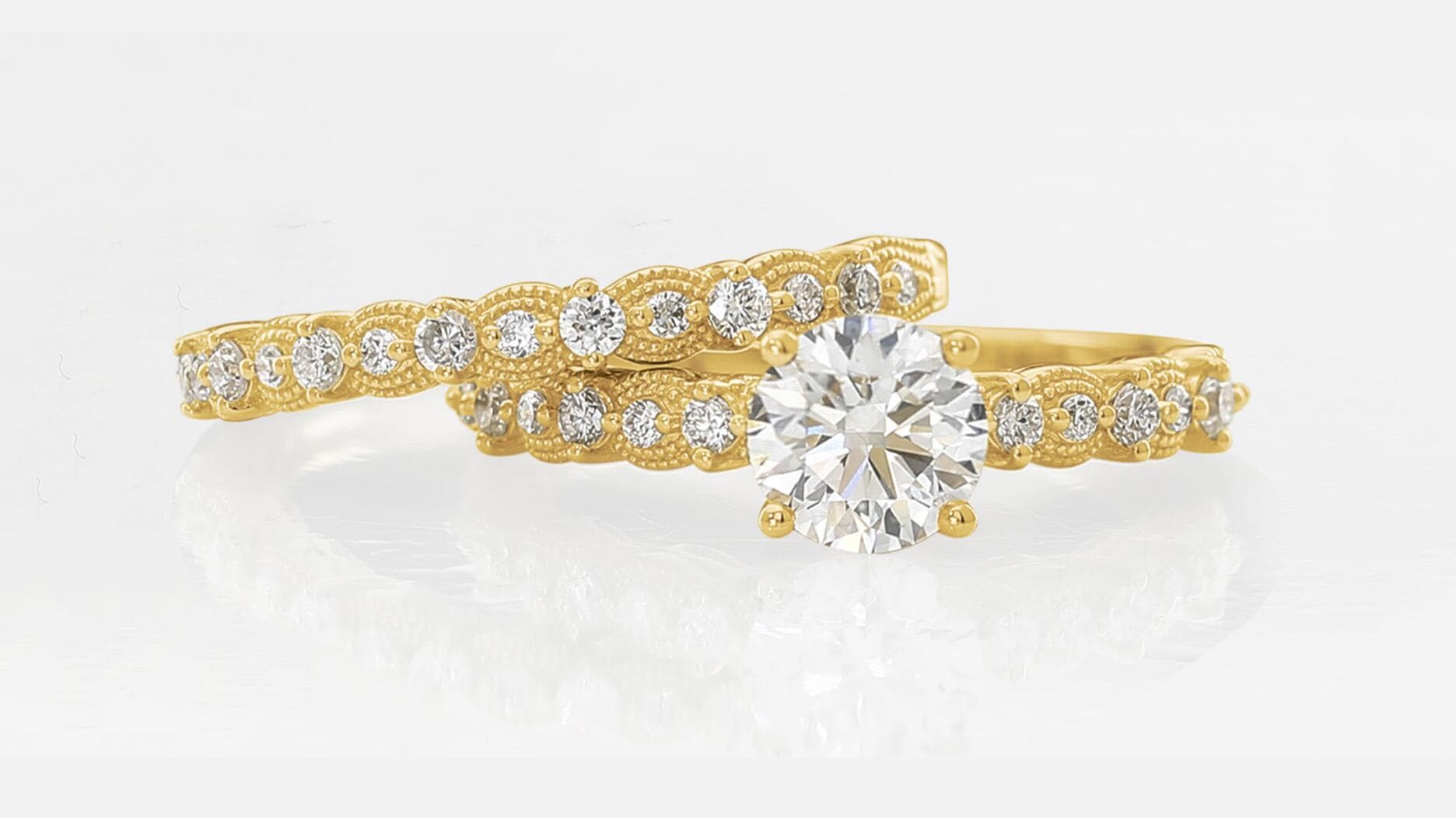
Gold slips below $4,000, pressuring jewelry prices and margins
Gold’s fall below $4,000 could ease costs for bridal rings and chains, but jewelers with pricier stock may still face margin pressure.

Gold broke below $4,000 an ounce on June 24, touching $3,965.20 in early trading and still hovering near $4,027.10 at press time. For jewelry, that matters less as a market headline than as a cost reset for bridal bands, curb chains and heavier investment-style pieces that wear their gold weight on the invoice.
The move came after spot gold briefly lost a level it had not traded under since November 2025. U.S. gold futures settled at $4,008.80, while spot prices were pressured by a firmer dollar and expectations that U.S. rates could stay elevated longer, or rise later in 2026. Conflicting signals around U.S.-Iran peace talks added to the swing. UBS had already moved first in May, cutting its year-end 2026 forecast to $5,500 from $5,900 an ounce, a sign that lower targets were no longer a fringe call.
That pullback lands after a year of punishing raw-material costs for the trade. The World Gold Council said first-quarter 2026 gold demand reached 1,231 tonnes, worth a record $193 billion. Jewelry demand volumes fell 19% from a year earlier even as spending rose 47%, a split that shows how high prices were forcing buyers to pay more for less metal. The council also said 2025 total demand topped 5,000 tonnes and gold set 53 all-time highs that year, leaving retailers and manufacturers to build collections around a metal that had become progressively more expensive to source.
If gold stays off its highs, the first relief should show up in categories where metal content drives the ticket price. Plain wedding bands, hollow or semi-hollow chains, and wider bangles can benefit quickly from softer input costs, especially for brands that buy in frequent lots and can reprice new orders faster. Heavier designer pieces, including statement cuffs and oversized rings marketed as investment-style purchases, also stand to gain if brands want to keep the final retail number within reach. But the savings will not land evenly: stores sitting on inventory bought when gold was higher may have to protect margins, move product more slowly or wait before cutting prices.
Lower forecasts do not automatically mean cheaper jewelry on the shelf. They change timing first, then pricing. For consumers, that can mean a better entry point on new stock later in the season. For retailers, it means a narrow window to decide whether to pass on the relief, hold the line on margins or use the softer metal market to refresh bridal and gold basics before the next buying cycle turns again.
This article was produced by Prism’s automated news system from verified source data, official records, and press releases, then run through automated quality and moderation checks before publishing. The system is built and supervised by the people who set the standards it runs under. Read our full AI policy.
Did this article answer your question?