Grandview Klein Diamonds Opens New South Africa Facility, Signals Industry Confidence
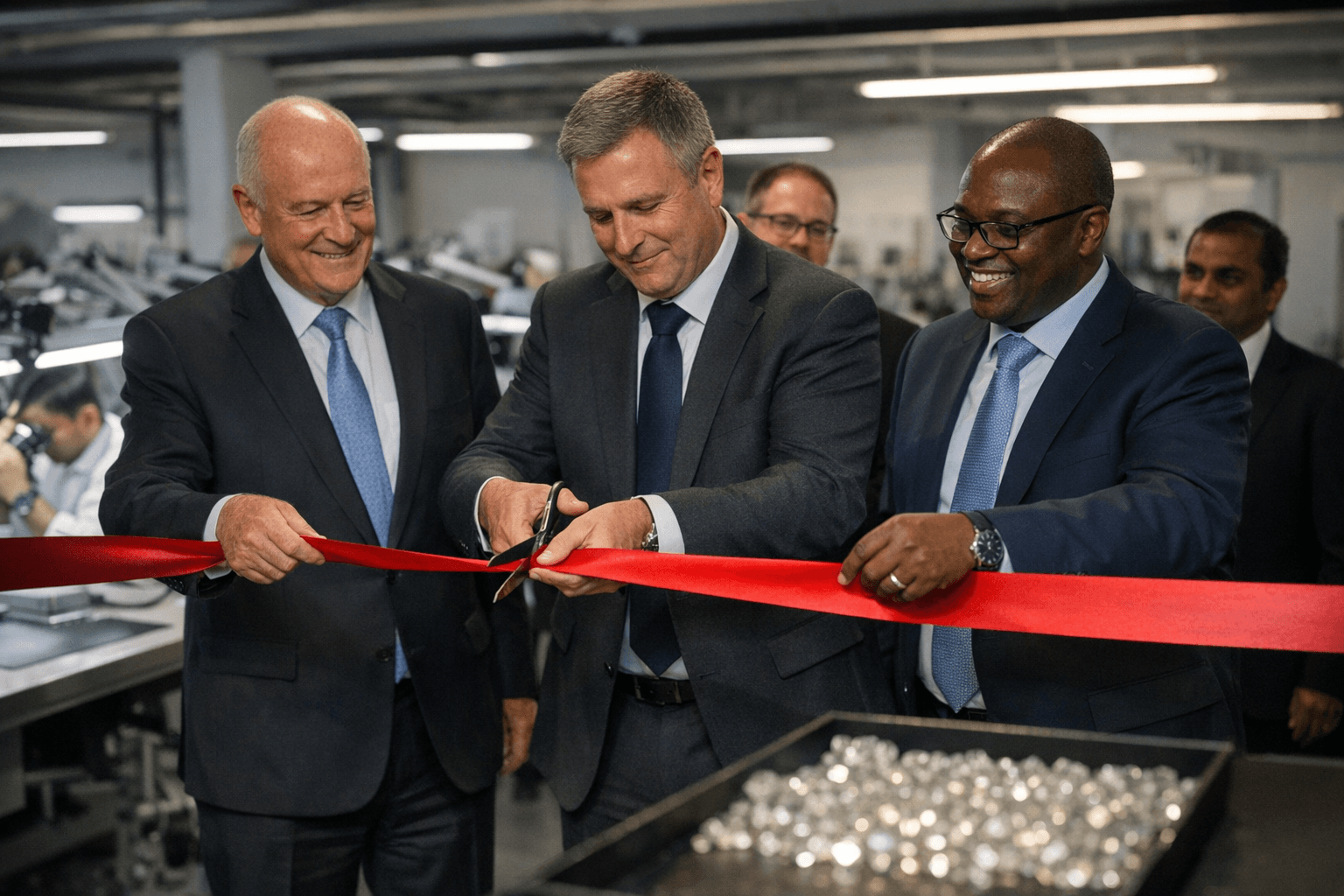
Grandview Klein Diamonds cut the ribbon on a 10,000-sq-ft Johannesburg facility on Feb. 23, with senior De Beers executives present amid natural diamond industry headwinds.

Grandview Klein Diamonds inaugurated a 10,000-square-foot office and manufacturing facility in Johannesburg on February 23, with company leadership and senior De Beers executives attending the ribbon-cutting. The opening marks one of the more deliberate statements of confidence in the natural diamond sector in recent memory, arriving at a moment when the industry is navigating sustained uncertainty around lab-grown competition and shifting consumer demand.
The facility currently employs 50 trained professionals and is positioned, in the company's own framing, as "a strategic investment in beneficiation and technical capacity at origin." That phrase carries weight in the southern African diamond trade: beneficiation refers to the processing and value-adding of rough diamonds within the country where they are mined, rather than exporting raw material to be cut and polished elsewhere. It is a policy priority the South African government has championed for decades, and one that most major industry players have honored unevenly.
Moshe Klein, CEO of Grandview Klein, offered language that suggested the company views this kind of in-country investment as constitutive rather than strategic. "It is embedded in our DNA," Klein said. "Our responsibility extends beyond production." That the ribbon-cutting drew senior De Beers executives rather than the usual regional representatives signals something about how Grandview Klein's relationship with the diamond giant is understood at the highest level. The company holds De Beers triple sightholder status, a designation that gives it access to De Beers rough diamond allocations and implies a sustained commercial relationship subject to rigorous compliance reviews.
Grandview Klein operates under De Beers Best Practice Principles and holds certification under the Responsible Jewellery Council Code of Practices, two frameworks that have become the baseline for credible claims about ethical sourcing in the sector. The RJC certification, in particular, requires independent auditing against social, environmental, and human rights standards.
South Africa's centrality to the global diamond industry is historical fact, but the country's share of polishing and manufacturing activity has long lagged behind its contribution as a source of rough. The Johannesburg facility is designed, at least in part, to address that asymmetry, enabling South Africa to participate further along the diamond value chain. The company said the expansion is intended to support diamond-producing countries broadly, beginning with South Africa. Amid ongoing industry uncertainty, the company characterized its ongoing investment as a signal of confidence in the long-term strength of the natural diamond sector and the communities that depend on it. Whether 50 trained professionals becomes the floor or the ceiling for this facility will say as much about that conviction as any ribbon-cutting ceremony could.
Know something we missed? Have a correction or additional information?
Submit a Tip