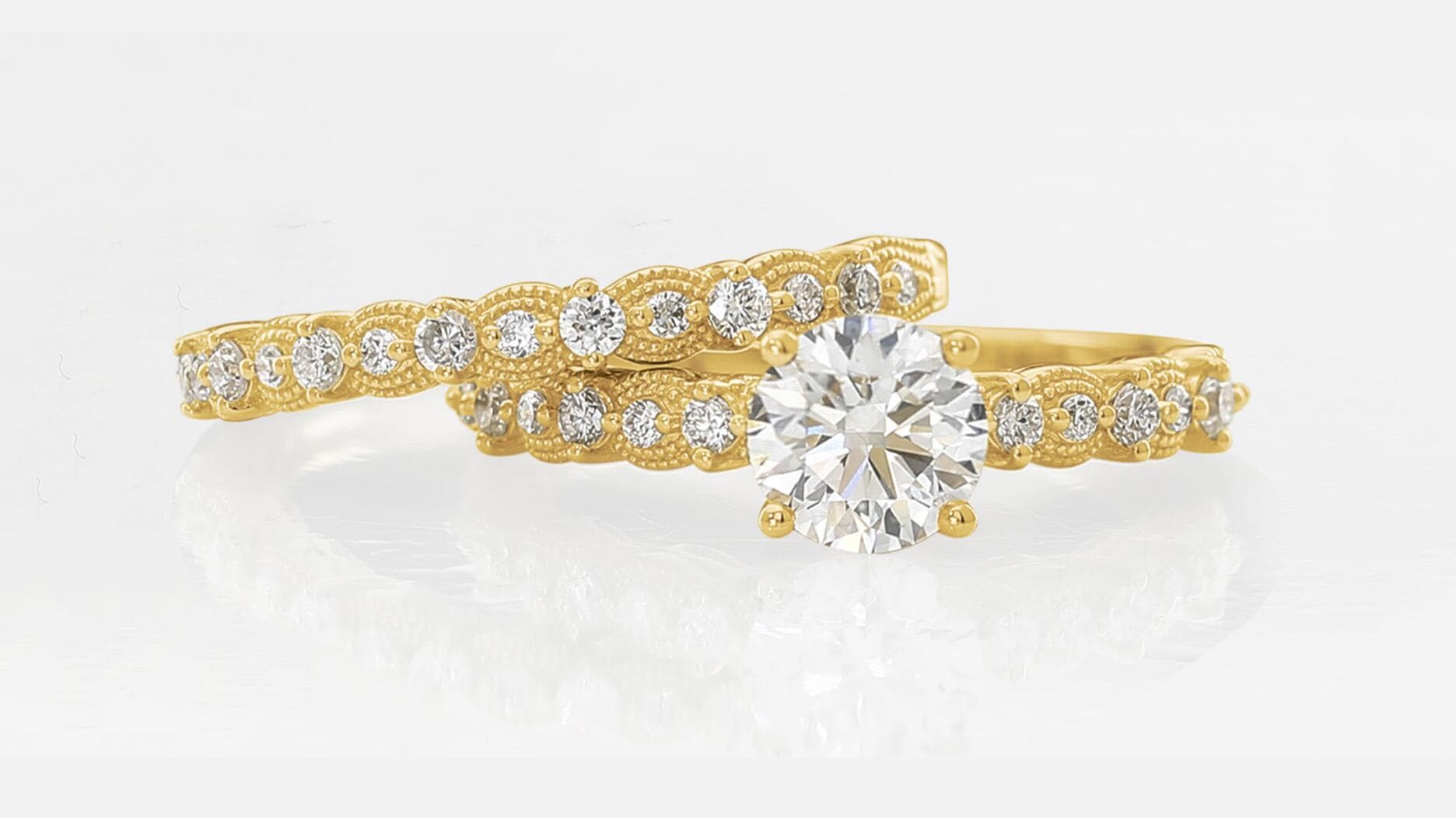
How to Care for Your Engagement Ring, Cleaning, Inspections, and Insurance
Your ring lasts longer when you treat handwashing, showering, and sleep as removal moments. A weekly clean and yearly inspection protect both brilliance and memory.

The small habits that do the most damage
An engagement ring is built for daily life, but daily life is exactly what wears it down. Soap, lotion, cosmetics, and constant contact can leave a cloudy film on the stone, while ordinary bumps and friction can bend prongs, loosen settings, and turn a beloved ring into a repair job. The damage is often slow enough to ignore, which is why care matters most when the piece still looks fine.
That is the trap: a ring can appear unchanged long before its setting weakens. Jewelers Mutual’s survey shows how often the smallest routines are overlooked, with 60% of respondents saying they do not remove their engagement ring when washing their hands, and more than 50% saying they keep it on in the shower. Those habits are common because the ring feels permanent, but permanence is precisely what daily wear can erode.
When to take it off
The safest rule is simple: remove your ring before anything that could scratch, bend, or chip it. That means sleep, showering, swimming, exercise, and hands-on tasks such as cleaning, lifting weights, gardening, or anything else that puts pressure on the setting. A ring should not have to compete with water, sweat, impact, or chemicals to keep its shape.
Hands are another overlooked hazard. Washing up may seem harmless, but repeated contact with soap and residue dulls brilliance over time, especially on diamonds, which the Gemological Institute of America says are drawn to grease. Even if the ring survives the moment unscathed, the buildup can make a well-cut stone look tired long before it should.
How to clean it safely at home
For most rings, the best home care is unglamorous and effective: warm water, mild dish soap, and a soft toothbrush. Jewelers Mutual recommends this gentle cleaning weekly, which is enough to lift daily buildup without stressing the metal or loosening the setting. For diamond rings in particular, that soap-and-water routine restores sparkle because it removes the oily film that clouds the surface.
A simple at-home routine
1. Fill a small bowl with warm water and a drop of mild dish soap. 2. Let the ring soak briefly so residue loosens. 3. Use a soft toothbrush to clean around the stone, under the head, and along the band. 4. Rinse carefully and dry with a soft, lint-free cloth.
The caution here matters as much as the method. The American Gem Society advises against cleaning over an open drain, and it is wise to follow that advice every time. A stone does not have to be large to disappear into plumbing, and even a tiny slip can turn a five-minute cleaning into a costly loss. Keep harsh products out of the routine as well, because the point of cleaning is preservation, not abrasion.
Why inspections matter more than most people think
A ring that is worn daily should be inspected regularly, not only when something looks wrong. The American Gem Society recommends taking jewelry to a jeweler at least once a year for professional cleaning and inspection, and Jewelers Mutual gives the same annual benchmark for cleanings, inspections, and insurance updates. For pieces that are worn heavily or carry especially high value, Jewelers Mutual says every six months can be appropriate, and some high-end pieces worn regularly may merit attention every three to four months.
That rhythm is not overcautious. Professional inspections catch what a fingertip cannot, including worn prongs, metal fatigue, and stones beginning to work loose. A setting can hold beautifully for years and still be one good knock away from trouble; the annual check is what keeps a hidden weakness from becoming a missing diamond.
The numbers around inspection habits are striking. In Jewelers Mutual’s self-purchasing survey, 39% of respondents said they have never had their fine jewelry professionally inspected. That is a revealing gap, especially in a category where one loose prong can carry real emotional and financial cost. The ring is not just an object on the hand. It is often the most visible heirloom in the making.
Why insurance belongs in the care routine
Insurance is part of maintenance because it protects the value that cleaning cannot restore. Jewelers Mutual says jewelry insurance typically costs about 1% to 2% of a ring’s value each year, which makes it a relatively modest line item when weighed against replacement or repair after loss. Some policies also require annual inspections to keep coverage active, so the jeweler’s visit is not just a best practice, it can be a condition of the policy itself.
That matters whether the ring was chosen together or bought independently. An insured ring can still be scratched, bent, or clouded, but it is less vulnerable to becoming a financial disaster if a stone goes missing or the piece needs serious repair. Care and coverage work best together: one preserves the ring, the other protects the investment behind it.
A ring that keeps its meaning also keeps its value
The best engagement-ring care is not fussy. It is disciplined, repeatable, and quietly protective of the thing that makes the ring matter in the first place. Take it off at the right moments, clean it gently once a week, and have it inspected often enough that a loose prong never becomes a lost stone.
Done consistently, that routine preserves more than brilliance. It protects the memory embedded in the metal, the symbolism carried by the stone, and the everyday proof that the piece was made to last.
This article was produced by Prism’s automated news system from verified source data, official records, and press releases, then run through automated quality and moderation checks before publishing. The system is built and supervised by the people who set the standards it runs under. Read our full AI policy.
Did this article answer your question?