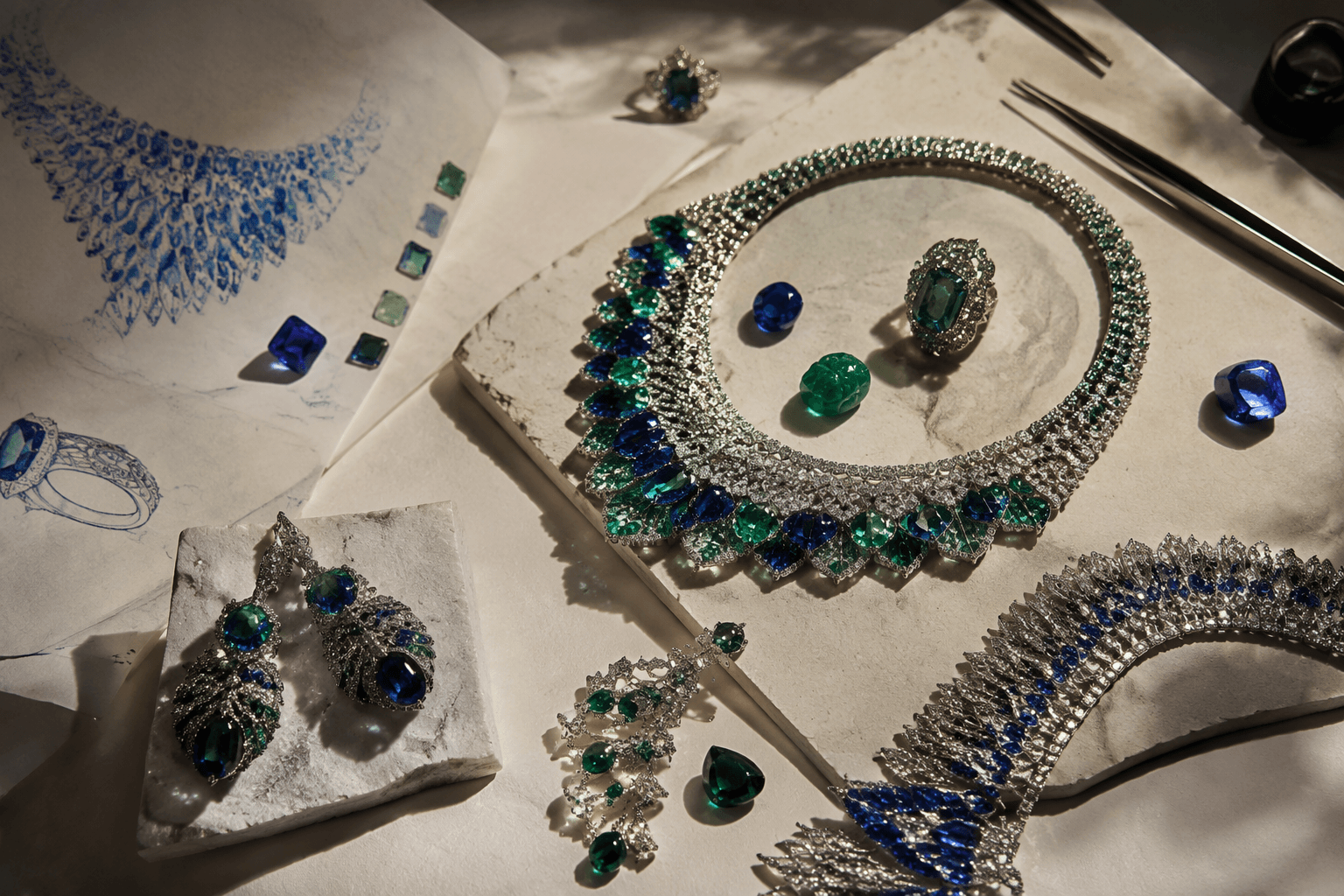
How to clean meaningful jewelry without damaging sentimental pieces
Clean for the weakest element, not the showiest one. Heirloom jewelry keeps its meaning only when you protect prongs, finishes, and inherited details from avoidable damage.
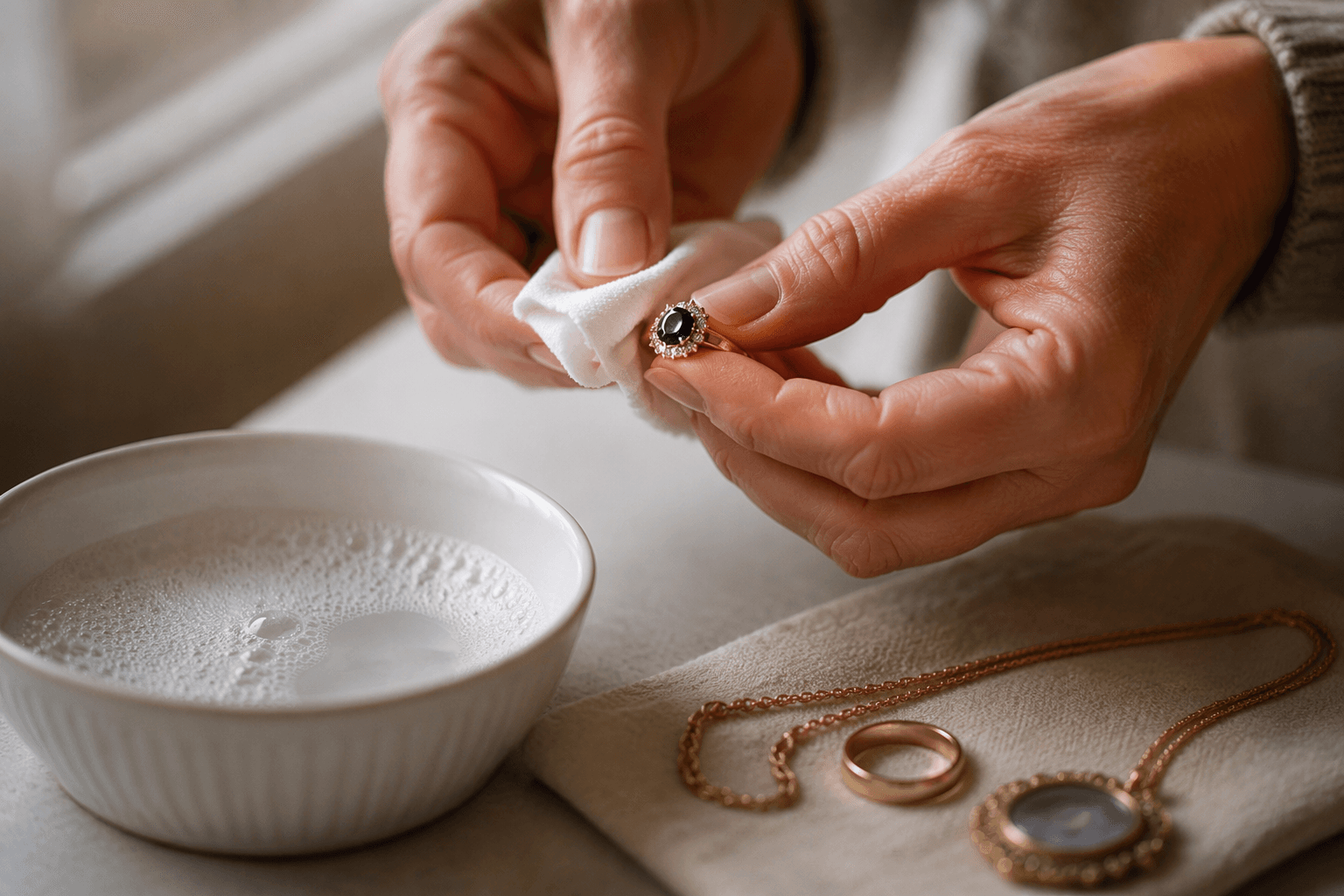
A ring passed down from a grandmother, a memorial pendant worn close to the skin, or a bracelet saved for decades can lose both beauty and history if the wrong cleaner, cloth, or repair method erases the details that made it matter in the first place. The safest approach is not to make a sentimental piece look brand new, but to keep it structurally sound, readable, and ready to be worn again.
Begin with the weakest component
Meaningful jewelry is often a mix of materials, and the weakest element sets the rules. A family ring may combine a diamond center, colored side stones, a thin gold shank, and old prong work; a memorial pendant may include a locket insert, pearl accents, or glued parts. GIA defines durability as a gemstone’s ability to withstand wear, heat, and chemicals, which means a piece is only as safe as its most vulnerable part.
Different materials fail in different ways. Diamonds can tolerate more than pearls, glue, or heat-sensitive stones, and some gemstones need special attention because of how they react to heat and light. If a piece includes a softer stone, an adhesive element, or a delicate antique setting, clean it as if that fragile piece were the whole story.
Use the gentlest home-cleaning method first
For diamonds, GIA and the American Gem Society recommend warm water and mild soap; GIA suggests either a soft toothbrush or a lint-free cloth, and the society specifies a soft-bristle toothbrush for hard-to-reach areas. That combination is enough for most routine grime, especially on rings and pendants that collect lotion, skin oil, and everyday dust in the back of settings.
Lift dirt without abrading metal or loosening stones. Avoid abrasive cleaners, chlorine, and other bleaching agents because they can damage gemstones and metal alloys, and the same caution applies to scrubbing pads or powders that seem harmless but wear away surface finish, the soft glow of old gold, and the crisp edges of an engraving.
Know when cleaning becomes a risk
Some jewelry can handle more than others, but ultrasonic and steam cleaning are not universal fixes. They can be fine for robust pieces, yet risky for stones with fractures, treatments, or loose settings. This is especially true for heirlooms.
Hardness is only part of the equation. GIA separates hardness from toughness, and some stones need extra care in display, repair, cleaning, and setting decisions because of heat, light, or both. The International Gem Society warns that softer or more porous stones may not belong in ultrasonic cleaning at all.

Protect the setting before you polish the surface
Settings are where sentimental pieces often fail first. The corners of princess-cut diamonds are vulnerable to chipping, and GIA’s diamond-setting guidance says V-shaped prongs can help protect them. The setting contributes to the survival of the stone itself.
Before any deep cleaning, inspect prongs, clasps, and stone security. If a prong looks worn, a clasp feels loose, or a stone shifts when tapped lightly, stop and take the piece to a jeweler. Polishing too aggressively can erase engraving, soften antique edges, and turn a carefully preserved finish into a generic shine that no longer looks like the piece your family remembers.
Build a routine around daily life, not occasional panic
The most useful care habits happen before grime builds up. Remove jewelry before swimming, cleaning, lifting weights, or applying lotions and perfumes, because chlorine, household chemicals, friction, and residue all work against longevity. Store pieces separately so stones and metal do not scratch one another in a drawer or box, especially when one piece has a harder surface and another has softer or porous material.
A ring that comes off before chores and a pendant that is stored away from chains and earrings will keep its shape, its finish, and the tiny signs of age.
Bring in a jeweler before damage becomes irreversible
The American Gem Society recommends a jeweler visit at least once a year for a professional check, and that interval makes sense for anything you wear often or pass down. A jeweler can test stone security, tighten worn prongs, and catch problems that are easy to miss until a stone falls out or a clasp fails. For older pieces, that check should happen before heavy wear, not after an accident.
Documentation helps too. GIA jewelry report services can include metal testing, item weight, markings, and a photo of the jewelry, with grading done as far as the mounting allows. That creates a record of what the piece is, not just how it looks after a cleaning. GIA is based in Carlsbad, California, with a New York campus at 50 W 47th Street in New York, New York 10036, and a London flagship scheduled to open in August 2026.
This article was produced by Prism’s automated news system from verified source data, official records, and press releases, then run through automated quality and moderation checks before publishing. The system is built and supervised by the people who set the standards it runs under. Read our full AI policy.
Did this article answer your question?