Jessica McCormack blends Georgian craftsmanship with modern diamond appeal
Jessica McCormack has made antique technique feel unmistakably now, turning Georgian settings and sharp styling into the language of a new diamond house.

Heritage that feels immediate
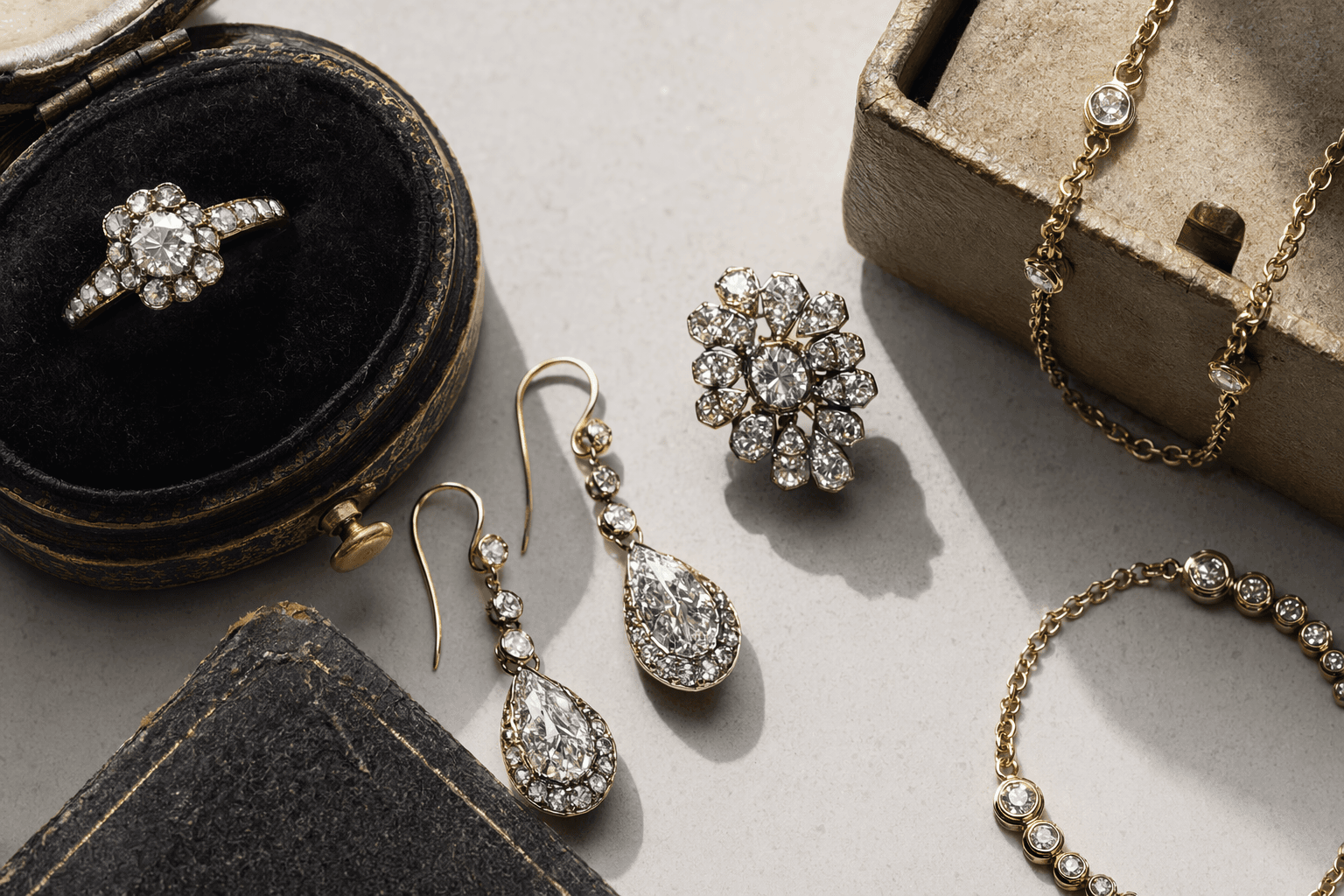
Jessica McCormack’s appeal starts with a tension that many fine-jewelry houses chase and few achieve: her pieces look old-world in the best possible way, yet they wear with the ease of modern life. The brand’s Georgian cut-down settings and Button Back construction give its diamonds a quietly architectural frame, but the styling is pointedly unprecious. That is the trick. McCormack has built a house that can sit comfortably with denim and tailoring, then move into evening without changing character.
What makes that formula resonate is that it does not treat craftsmanship as a museum exercise. The antique reference is real, and so is the attitude. In the current diamond market, where buyers want pieces that justify themselves emotionally and aesthetically, that balance has become a persuasive form of luxury.
The story behind the aesthetic
McCormack founded the brand in 2008 after arriving in London from New Zealand in 2007 for an internship in Sotheby’s jewelry department. That context matters because it explains why the work feels so informed by history without ever becoming nostalgic for nostalgia’s sake. She encountered antique and historic jewelry up close, and those objects clearly sharpened her eye for proportion, setting, and the drama of a well-placed stone.
Her aesthetic also comes from childhood. Growing up in New Zealand, she was surrounded by art, antiquities, and objects collected by her father, an auctioneer. That upbringing gives the brand a collector’s instinct, but the finished jewelry avoids stiffness. Instead, it translates those early influences into pieces that are specific, wearable, and easy to read at a glance.
Why the settings matter
The language of Jessica McCormack jewelry begins with the setting. Georgian cut-down settings and Button Back designs are not just decorative references; they shape the way the diamond sits, catches light, and feels on the body. A cut-down setting brings the metal close to the stone, creating a crisp, old-world outline that can make a diamond appear even more luminous. Button Back gives the reverse side of the jewel a distinct presence, a reminder that in fine jewelry, the back is part of the design story.
The brand says its in-house workshop includes goldsmiths, diamond setters, and polishers with more than 150 years of combined experience. That is the kind of bench depth that separates a fashion-driven jewelry label from a true craft house. The brand also maintains an apprenticeship scheme, which signals something more enduring than seasonal style: a plan to keep the technique alive, not merely market it.
The modernity is in the styling
If the workmanship is rooted in history, the styling is aggressively contemporary. McCormack’s diamonds are made to be lived in, not reserved for ceremonial occasions. That is one reason the brand reads as a “cool girl” diamond house rather than a traditional heritage jeweler. The pieces have enough precision to satisfy collectors, but enough ease to feel integrated into a real wardrobe.
This is also where the brand’s editorial power comes from. A diamond ring from Jessica McCormack does not announce itself through scale alone. It tends to signal taste through proportion, setting, and restraint. For modern buyers, especially those who want investment jewelry without the formality that often accompanies it, that distinction is decisive.
A business built beyond Mayfair
The brand’s retail expansion shows how deliberately that aesthetic has been scaled. Jessica McCormack operates from its townhouse flagship in Mayfair, opened a store on Sloane Street in 2023, and launched its first concession in Harrods. In 2025, it opened its first international store on Madison Avenue in New York City, marking a serious U.S. push rather than a tentative overseas test.
The New York store, at 743 Madison Ave., occupies two floors in a Beaux-Arts building established in 1879. That setting feels carefully chosen: the architecture reinforces the brand’s historic references while the merchandise keeps the mood current. The store carries the complete collection, plus a New York-exclusive selection called Exceptional Stones, a smart move for a market that expects both access and distinction.
A second U.S. store is already planned for South Coast Plaza, with a 1,600-square-foot opening targeted for summer 2026. That matters because it shows the American strategy is not centered on a single flagship moment. It is being built as a multi-city presence, which is how a niche luxury house becomes a recognizably national one.
Celebrity visibility, but with substance
The brand’s rise has also been helped by celebrity visibility that feels authentic to its aesthetic rather than forced onto it. In 2024, Jessica McCormack named Zoë Kravitz as its first global brand ambassador, a pairing that makes immediate visual sense. Kravitz carries the same blend of polish and edge that the jewelry does, and that resonance is worth more than a generic celebrity endorsement.
Later attention around Zendaya wearing an east-west diamond ring in the house’s Georgian-style cut-down setting only strengthened the brand’s image as something socially legible and stylistically current. This is the crucial difference between visibility and hype. The jewels are not being talked about because they are loud. They are being noticed because they photograph well, sit well, and imply taste in a way that feels effortless.
The numbers behind the momentum
The commercial picture is moving in step with the aesthetic one. WWD reported that sales rose 60 percent in 2025, while turnover increased from GBP 28 million in 2023 to GBP 36 million in 2024. The company employs about 100 people, which suggests a business that has grown beyond atelier scale while still remaining close enough to craftsmanship to protect its identity.
That growth is exactly what makes Jessica McCormack so instructive as a case study in modern luxury. The brand has not diluted its historical references to appeal to a broader audience. Instead, it has used antique technique as a point of difference and then dressed it in a language that feels relevant now. In a market crowded with diamond brands trying to look either precious or playful, McCormack has made both registers feel natural at once, and that is why it reads as the cool girl diamond house with staying power.
This article was produced by Prism’s automated news system from verified source data, official records, and press releases, then run through automated quality and moderation checks before publishing. The system is built and supervised by the people who set the standards it runs under. Read our full AI policy.
Did this article answer your question?