Jewelry trade marks Pride Month with panel, collections and donations
A Manhattan panel, a numbered pendant collection and direct donations show which Pride jewelry efforts are built to last beyond June.
A numbered pendant engraved on the back says more about Pride Month than a rainbow wash ever could. So does a Midtown panel that gathers LGBTQ+ voices from retail, design and editorial into one room, then follows the conversation with collections and fundraisers that send money to youth services in New York and Philadelphia.
Pride in the room
The most visible trade moment is “Pride in the Industry: LGBTQ+ Voices in Jewelry,” a free panel set for Thursday, June 11, from 5:30 to 8 p.m. at the Luminary, 1204 Broadway, on the fourth floor in New York City. Check-in begins at 5:30 p.m., the discussion starts at 6 p.m., and cocktails and networking follow, a format that makes the evening feel less like a formal lecture and more like an industry gathering with substance.
National Jeweler editor-in-chief Michelle Graff will moderate the discussion, which features Greenwich St. Jewelers co-owner Jennifer Gandia, Only Natural Diamonds contributor Grant Mobley, fine jewelry designer Kris Averi and Michael Coan, the former chair of FIT’s jewelry design department. The organizers, Mariana Russo and Andrea Lucille Pooler, built the panel around a simple but essential idea: LGBTQ+ voices in the trade deserve to be celebrated, amplified and heard. The subject matter matches that intention, with the conversation set to center identity, creativity, belonging, visibility and inclusion.
That matters because Pride programming in jewelry can easily drift into surface symbolism. A panel like this, by contrast, places the people behind the counter, at the bench and in the editorial chair at the center of the month’s narrative. It also gives the trade a public stage to talk about the realities of being seen in an industry that still benefits from clear, sustained representation.
Collections that carry a trace
The strongest Pride collections do not simply add color. They build meaning into the object itself, whether through numbering, engraving, reclaimed material or a collaboration with a cultural platform that already speaks to the community.
Fiametta’s second annual Pride collection does this with restraint and precision. It includes 10 pendant styles, each individually numbered and engraved on the back, which gives every piece the character of an edition rather than a costume accessory. Founder Merill Hollander has described the collection as reflecting the LGBTQ+ community’s “reverence and reinvention,” and that is exactly the kind of framing that lifts jewelry out of seasonal merchandising and into personal statement. A pendant can be worn publicly in June, but the numbering and back engraving make it feel collectible long after the month ends.
The collection also carries direct philanthropic weight. A portion of proceeds will benefit the Ali Forney Center, founded in 2002 in memory of Ali Forney. The organization’s mission is to protect LGBTQ+ young people from homelessness and help them live independently, and its Midtown Manhattan drop-in center is the nation’s first 24-hour drop-in program for homeless LGBTQ+ and at-risk youth. That combination of design and support gives the work real staying power: the jewel is the visible object, but the beneficiary is where the meaning lands.
Rebel Nell’s 2026 Pride additions take a different route. The brand worked with fragments from a Pride mural that once lived in its Detroit studio, turning a piece of local art into something wearable. Materially, that is a smart move. It gives the collection texture, provenance and a built-in story of place, which is far more compelling than a generic emblem printed onto metal.
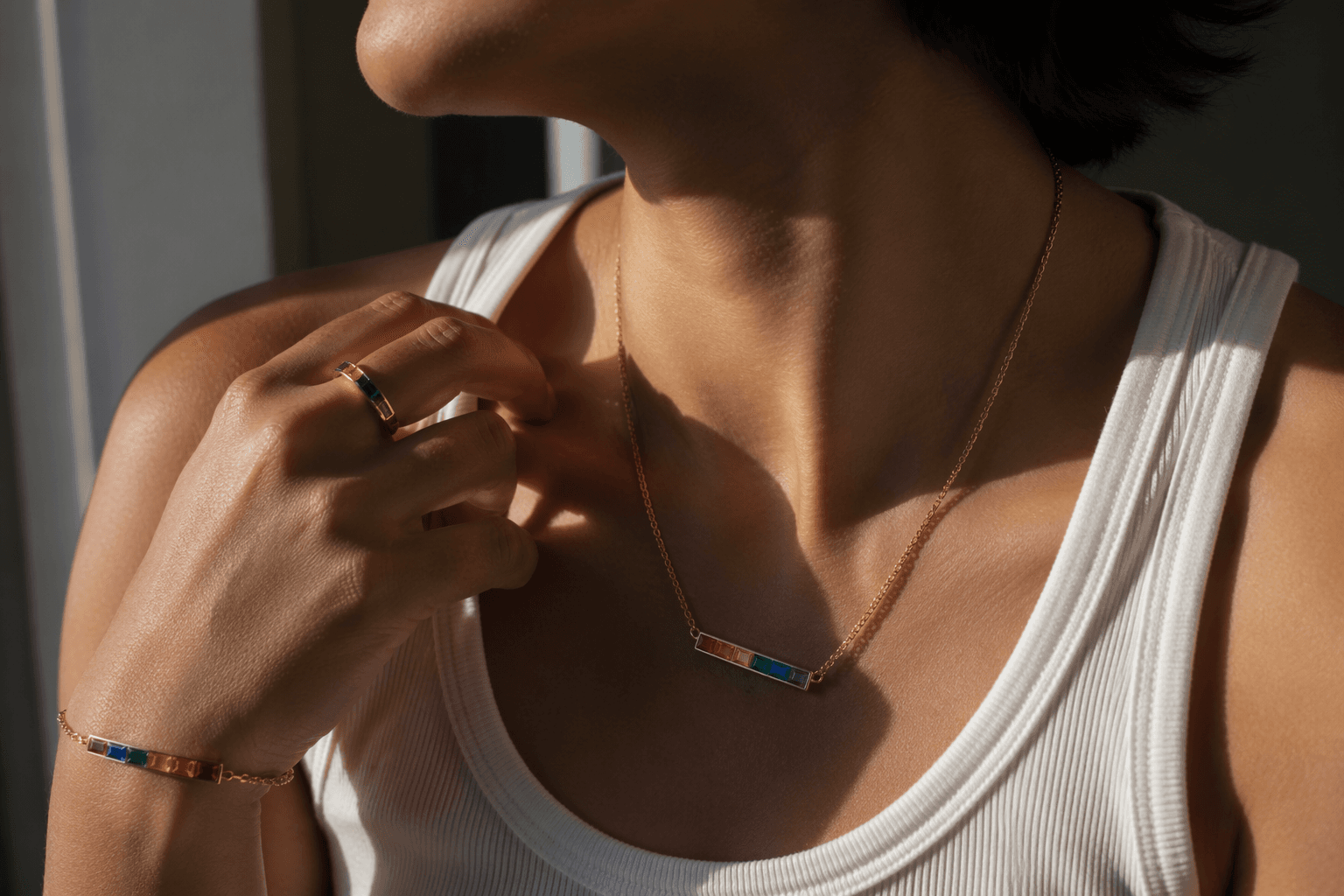
Banter, a Signet brand, has also approached Pride through partnership rather than decoration, collaborating with the Gaydar web series on a Pride edit of stackable jewelry, statement pieces and ear-styling essentials. The benefit of that approach is clarity of audience. Instead of treating Pride as a one-note palette, the edit meets customers where jewelry is actually worn: in layers, in curated ears and in pieces meant to be mixed with existing favorites.
Donations that outlast June
If symbolism gives Pride jewelry emotional charge, donations give it moral credibility. Bario Neal’s Pride charm is one of the cleanest examples in the trade: 100% of profits go to Philadelphia’s Attic Youth Center. That kind of commitment is easy to understand and hard to dismiss, because the purchase itself becomes the mechanism of support.
Greenwich St. Jewelers has also kept the cause local and specific, holding a raffle to raise money for Trans Lifeline. The organization is trans-led and peer-based, connecting trans people to community, support and resources. Jewelry retail is often at its best when it uses the customer’s attention and affection for objects to build a bridge to service, and this is a model that does exactly that.
These gestures matter because they move beyond the temporary optics of Pride month. A raffle, a charm with profits pledged to a youth center, or a collection that directs proceeds to a shelter and services organization creates a trail you can follow. That trail is what separates meaningful retail from a seasonal display.
Why these symbols endure
Earlier Pride coverage in the trade has also pointed to a deeper visual language, especially the reclaimed pink triangle. Its history reaches back to World War II persecution, then into ACT UP’s reclamation of the symbol in the 1980s. That makes it one of the most powerful motifs in jewelry because it is not just decorative. It carries memory, protest and a hard-won act of reclamation.
The broader Pride calendar in New York City gives these jewelry activations a larger civic frame. NYC Pride’s 2026 schedule is anchored by Youth Pride on June 27 and the Pride March on June 28, and the organization has awarded $75,000 to 11 local LGBTQIA+ nonprofits. In that context, the jewelry trade’s efforts feel most convincing when they echo the same values: visibility, support and money directed where it can do real work.
The pieces that linger are the ones with specificity. A numbered pendant, a mural fragment, a raffled jewel, a charm whose profits are pledged outright: these are not just Pride-themed products, but objects tied to names, places and services. That is where Pride jewelry earns its place in the case and in the conversation.
This article was produced by Prism’s automated news system from verified source data, official records, and press releases, then run through automated quality and moderation checks before publishing. The system is built and supervised by the people who set the standards it runs under. Read our full AI policy.
Know something we missed? Have a correction or additional information?
Submit a Tip