Marie Louise Mackay, the American patron behind Boucheron's archive
A 159-carat Kashmir sapphire necklace for Marie Louise Mackay turned a Brooklyn-born heiress into one of Boucheron's defining patrons.
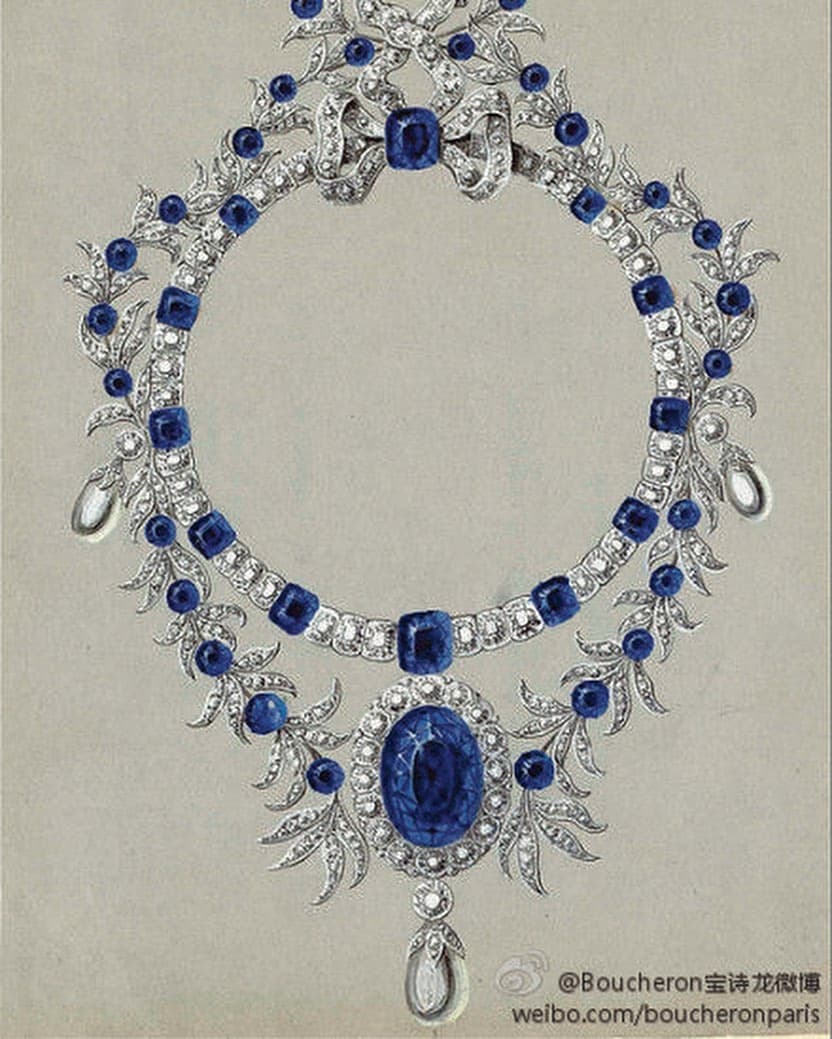
The sapphire that made an archive
A 159-carat Kashmir sapphire, mounted in 1878 for Marie Louise Mackay, is the kind of object that turns patronage into legacy. Boucheron created the necklace to match her deep-blue eyes, and that single commission still reads like a thesis on how a client can shape a house’s identity: through taste, scale, and repetition.
Mackay was not a decorative name in a ledger. Born Marie Louise Hungerford in Brooklyn on December 21, 1843, she became Madame Mackay in Paris after marrying mining magnate John W. Mackay and moving there in 1876. John Mackay’s fortune came from the Comstock Lode silver deposit in Nevada, and that wealth placed the couple inside the highest circles of late 19th-century luxury, where jewelry, furniture, and table services all served the same purpose: to make social power visible.
A patron with a designer’s eye
Boucheron’s own history treats Mackay as one of the maison’s important American clients, and the scale of her patronage makes clear why. Her name appears 102 times in the house’s special order books between 1876 and 1902, a remarkable paper trail that suggests not one isolated splurge but a long, continuous exchange between client and jeweler. That kind of relationship matters because it allows a house’s archive to become more than storage. It becomes a record of evolving taste, and in Mackay’s case, a record of how American money and Parisian craftsmanship fed each other.
The Place Vendôme and Hôtel de Nocé staircase was part of that world. Boucheron identifies the site as a destination for elite visitors, and Mackay belongs in that lineage of guests who turned a location into a stage set for prestige. Her presence there is part of the story Boucheron still tells about itself: not just a jeweler making objects, but a house hosting the clients who helped define its style.
What the Kashmir sapphire necklace tells us
The 1878 necklace is especially revealing because it shows Boucheron working around a person, not merely selling a stone. A 159-carat Kashmir sapphire already carries exceptional weight in gemological terms, but the detail that it was designed to echo Mackay’s eyes gives it a second life as portraiture. The stone was not chosen only for rarity; it was chosen for likeness, which is one of the most intimate forms of luxury.
That intimacy is what gives the piece its enduring power. Boucheron’s archive identifies the necklace as a special creation for Mackay, and the object later became iconic enough to be reproduced in scholarship and auction catalogues. When a jewel moves from private commission to published reference, it stops belonging to one wardrobe and starts belonging to the history of design.
The lesson for anyone drawn to meaningful jewelry is clear: the strongest pieces are rarely generic. They are specific in stone, specific in client, and specific in purpose. In Mackay’s necklace, the sapphire is not just precious. It is biographical.
The archive effect of one American client
Mackay’s importance to Boucheron goes beyond a single showpiece because her commissions helped build the house’s memory. Repeat clients shape house style in quiet ways, pressing for certain proportions, favored stones, or a particular balance of opulence and restraint. When a patron commissions again and again over decades, those choices harden into the archive, then into heritage, then into the brand’s public mythology.
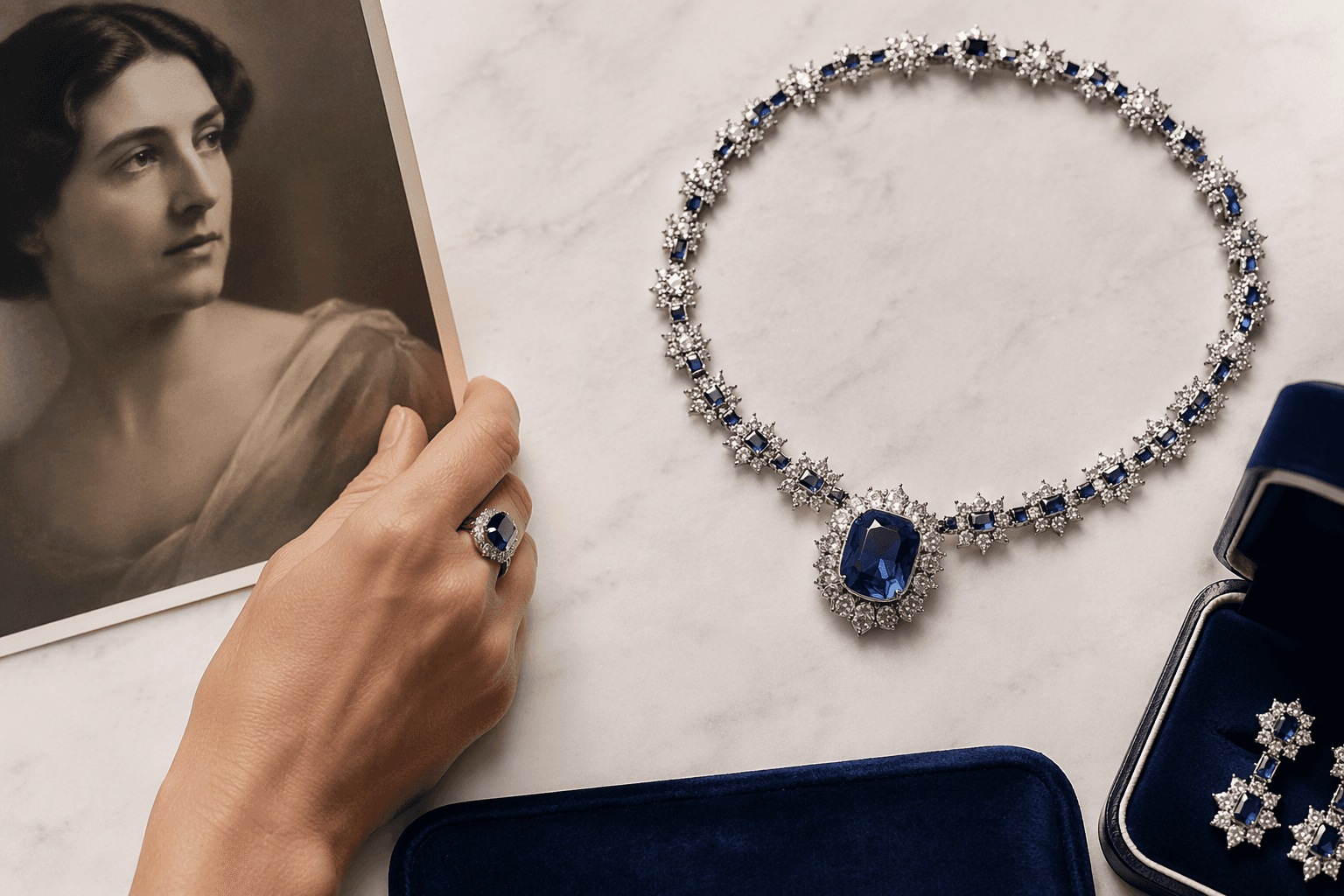
That is why Mackay still matters to Boucheron’s identity. Her name appearing 102 times in the order books is not just a statistic. It is evidence of a feedback loop in which the client’s preferences and the maison’s design language sharpened each other. In today’s luxury market, where heritage is often compressed into marketing shorthand, Mackay offers a more convincing model: heritage built line by line, order by order, jewel by jewel.
The afterlife of provenance
The Mackay story did not end in Paris. Sotheby’s records a Boucheron ruby-and-diamond necklace with provenance from Marie-Louise Mackay to Countess Mona Bismarck, and notes that it was later sold in Geneva in 1986 from Bismarck’s collection. That chain of ownership matters because provenance is not a footnote in fine jewelry. It is part of the value, part of the story, and sometimes part of the design’s survival.
The mention of Vincent Meylan’s *Boucheron: The Secret Archives* alongside that necklace reinforces the same point. Certain jewels persist because they are not only beautiful objects but documented ones, anchored by names that collectors recognize. A ruby-and-diamond necklace linked to Mackay and later to Mona Bismarck is not merely an antique. It is a passport through the social history of European luxury.
More than jewels: a taste for scale
The Mackays’ conspicuous consumption did not stop at the neck and wrist. In 1877, John W. and Marie Louise Hungerford Mackay commissioned a Tiffany dinner service for twenty-four people that comprised over 1,250 pieces, one of the most lavish dinner services ever created in America. That commission makes the jewelry feel even more legible. The same impulse that led to a bespoke sapphire necklace also led to a table laid with gilded and enameled cups, saucers, and serving pieces on an extraordinary scale.
This matters because it places Marie Louise Mackay inside a broader culture of Gilded Age display. She was not simply buying luxury; she was shaping an environment in which luxury became total, moving from the body to the table to the archive. In that sense, her influence on Boucheron was part of a larger pattern of taste-making. She did not just wear the house. She helped teach it how American grandeur could look in Paris.
Why Mackay still defines meaningful jewelry
Marie Louise Mackay is the rare patron whose importance can be measured in both objects and records. The Kashmir sapphire necklace, the ruby-and-diamond provenance trail, the 102 order-book entries, and the Tiffany dinner service all point to the same conclusion: meaning in jewelry comes from specificity, documentation, and the relationship between maker and wearer.
For collectors, that is the real standard. A strong piece carries named authorship, exceptional materials, and a traceable life. Mackay’s commissions meet all three, which is why they still anchor Boucheron’s heritage appeal. Her taste did more than fund beauty. It helped define the language Boucheron still uses to describe its own history.
This article was produced by Prism’s automated news system from verified source data, official records, and press releases, then run through automated quality and moderation checks before publishing. The system is built and supervised by the people who set the standards it runs under. Read our full AI policy.
Did this article answer your question?