Metal detectorist finds rare Evesham diamond ring headed to Noonans
A metal detectorist’s late-16th-century ring, with eight hogback diamonds around a rose-cut center, will head to Noonans with a £15,000 to £20,000 estimate.
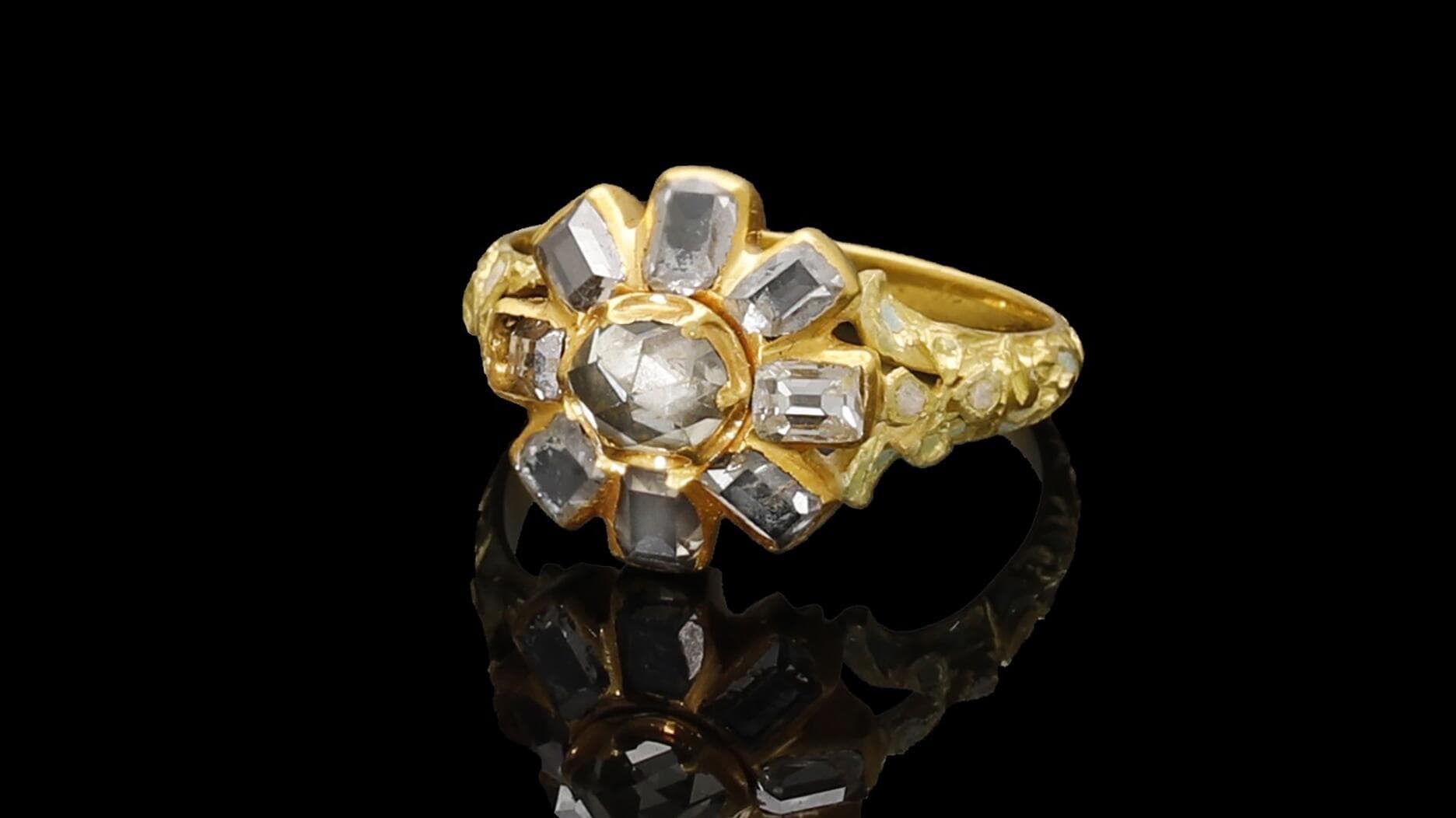
A rare diamond ring dug up near Evesham is about to test the market for historic jewels with visible provenance. The Evesham Diamond Ring, a late 16th- to early 17th-century diamond and enamel ring, will be offered at Noonans in London on June 23, 2026, with an estimate of £15,000 to £20,000.
The ring was found in November 2024 in the parish of Wormington, Gloucestershire, near Evesham and about four miles from Broadway, by Stuart Jones, a 42-year-old metal detectorist from Solihull. Noonans has identified it as lot 106 in its Jewellery, Silver and Objects of Vertu sale, and says it has now been disclaimed as Treasure, clearing the way for sale after the UK’s Treasure process.

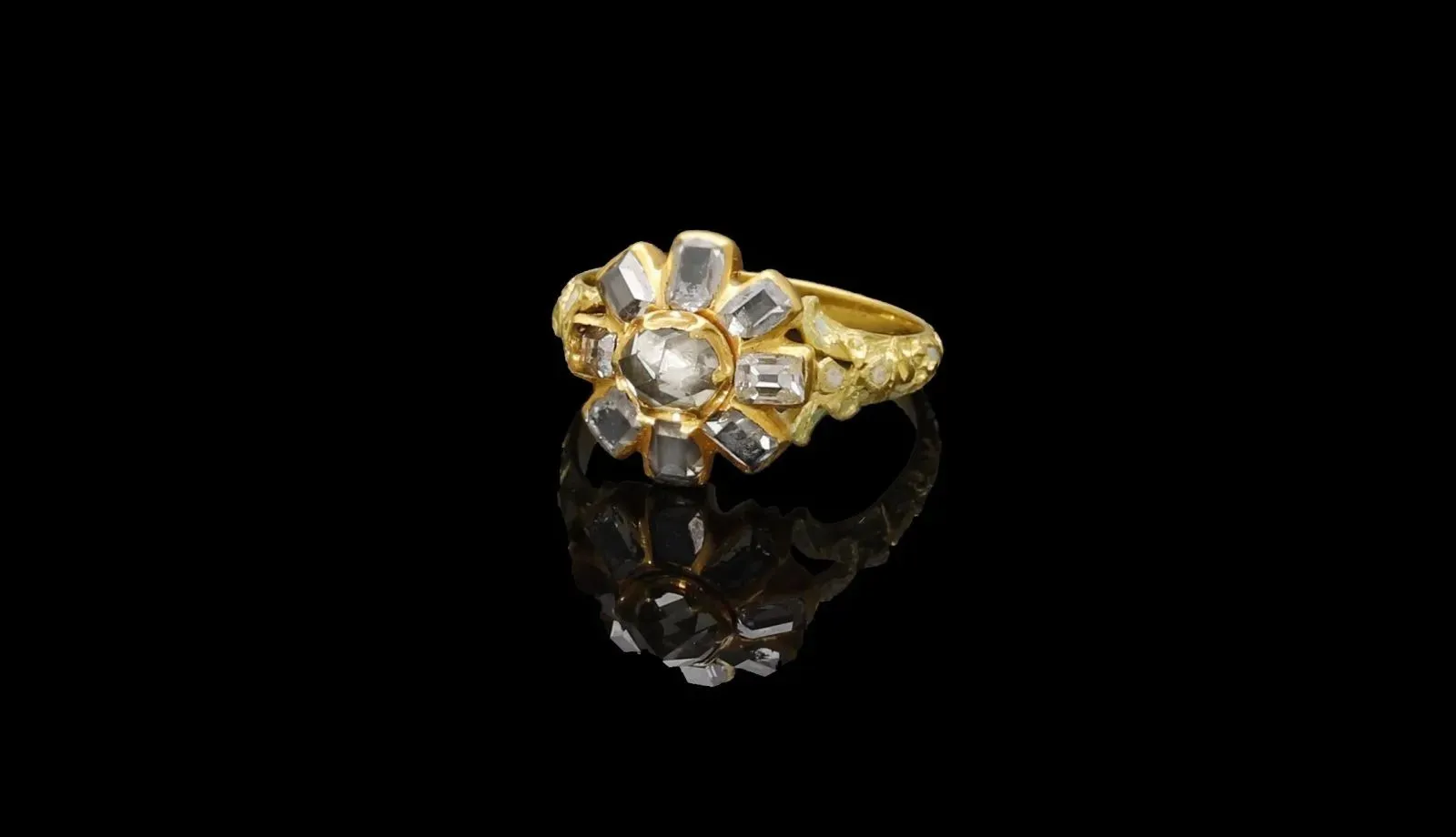
Its appeal is as much architectural as it is gemmological. Noonans describes the ring as a flowerhead bezel composed of eight hogback diamonds surrounding a central rose-cut stone, a layout that feels strikingly modern even as it belongs to the earliest history of diamond cutting. Laura Smith, a specialist at Noonans, notes that hogback diamonds are an early form of cut, shaped from the side of a crystal into a rectangular stone, when faceting was still in its infancy.
That detail matters because the ring shows how old design solutions continue to echo through contemporary jewelry. The flowerhead cluster, the raised bezel-like setting and the emphasis on a central stone surrounded by smaller diamonds all anticipate motifs that still dominate engagement rings and collectible period jewels today. Historical diamond symbolism also gives the piece extra charge: the ring’s clustered composition turns the stone into a sign of status, devotion and technical skill, not just sparkle.
The ring’s paper trail adds another layer of value. It is recorded on the Portable Antiquities Scheme database under ref. WMID-15FCDD, with the Treasure case listed as 2025 T300. Under UK rules, finders in England and Wales must report potential treasure to a Finds Liaison Officer within 14 days of finding it or realizing it might qualify.
Noonans has built a business around detectorist finds, from ancient jewelry to other artefacts, and says one recent sale of that kind was a Roman gold aureus that brought £460,000. Against that backdrop, the Evesham ring reads as more than a single discovery: it is a compact reminder that the market still prizes jewels with age, structure and a clear chain of custody.
This article was produced by Prism’s automated news system from verified source data, official records, and press releases, then run through automated quality and moderation checks before publishing. The system is built and supervised by the people who set the standards it runs under. Read our full AI policy.
Did this article answer your question?